
Performance coatings are engineered surface layers—thin PVD films (~2–5 µm) or thicker thermal‑spray overlays (~50–300 µm)—that cut wear, friction, and corrosion so parts last longer. For Woodbridge manufacturers, Sputtek runs both routes in one shop with in‑house prep and QC to stabilize uptime.
By Ron • Last updated: 2026-07-13
| Facility | Modern 15,000 sq ft Woodbridge operation |
|---|---|
| Technologies | PVD (incl. DLC), Thermospray & Pulsed HVOF |
| Certifications | ISO 9001:2015; Nuclear N299.3 approved vendor |
| Capacity | SPUN 2,000 up to ~1,200 kg/cycle; SPUN 4,000 up to ~3,000 kg/cycle |
| Industries served | Automotive, aerospace, oil & gas, nuclear, medical, pharma, food & packaging |
| Lifecycle support | Prototype to high-volume production |
| In-house steps | Sandblasting, microblasting, cleaning, stripping, polishing/lapping, QC lab |
Woodbridge operations advantage
Proximity to GTA tool rooms means shorter transit and less re-clean risk. We stage emergency triage slots and run cleaning/masking in-house so parts don’t bounce between vendors. When your die fails mid-run, fast local turns keep your line moving near Weston Rd / Highway 7 and SmartCentres Woodbridge.
Overview
This guide shows where PVD thin films (~2–5 µm, low Ra) or Thermospray/Pulsed HVOF overlays (~50–300 µm, high toughness) make parts last. You’ll get spec ranges, failure fixes we’ve run in Woodbridge, and a simple evaluation checklist for reliable, scalable coating partners.
- Who it’s for: Manufacturing engineers, tool/die makers, production and quality leaders.
- Pain we solve: Galling, sticking, flank wear, erosion, corrosion, and the downtime that follows.
- Why Sputtek: Canada’s largest PVD/DLC provider with ISO 9001:2015 and Nuclear N299.3 approvals—plus a dedicated Thermospray cell.
- Scale: Prototype to large batches on SPUN systems, controlled by in-house prep, finish, and QC.
Local considerations for Woodbridge
- Coordinate hot parts for same-week pilot runs; nearby teams can drop dies or inserts, review fixturing, and align specs in person to cut days out of the loop.
- Seasonal humidity swings can reintroduce contamination; our controlled cleaning and immediate load-in reduce rework risk after transit.
- Align courier windows with your shift changes; we can stage release so coated tools land before first article checks.
What Are Performance Coatings and Why the Process Choice Matters
Performance coatings are engineered layers—applied by PVD or thermal spray—to fight wear, friction, and corrosion. The right choice comes down to substrate heat limits, thickness needs, geometry, and surface finish. Get this match right and you stabilize output and extend tool life significantly.
We see this play out weekly. Parts don’t just “need a better coating”; they need the right process plus disciplined prep/finish. PVD lays down hard, thin, smooth films at lower temperatures. Thermospray builds thick, impact- and erosion-resistant overlays that you finish to spec. Pick wrong and you trade one failure for another.
For more background, our PVD coating complete guide and high performance coatings overview explain film behavior and applications.
PVD Coatings — Best Applications in Precision Manufacturing
Choose PVD for thin (≈2–5 µm), hard, low-roughness films that protect high-precision parts without shifting dimensions. It’s the go-to for stamping dies, cutting tools, and plastic molds where slick release and tight tolerances matter.
- Spec ranges we run: Thickness ≈2–5 µm; as-deposited Ra ≈0.05–0.2 µm; DLC and advanced nitrides deliver microhardness in the low‑thousands HV.
- Friction control: DLC and low-friction nitrides curb galling and pickup in progressive dies and mold gates.
- Low heat input: Suitable for heat-sensitive steels and finished components.
- What not to do: Don’t use basic TiN on abrasive, high‑load edges; step up to AlTiN/DLC or you’ll be back for rework.
Failure fix (stamping, HSLA 600 MPa): A draw die was galling by 50,000 hits. We switched to DLC at ~3 µm, polished/lapped to target Ra, and the line cleared 200,000+ hits before scheduled maintenance. Scrap dropped and changeovers stabilized.
For deeper thin‑film selection details local to our region, see our PVD thin films in Woodbridge and the broader PVD guide.
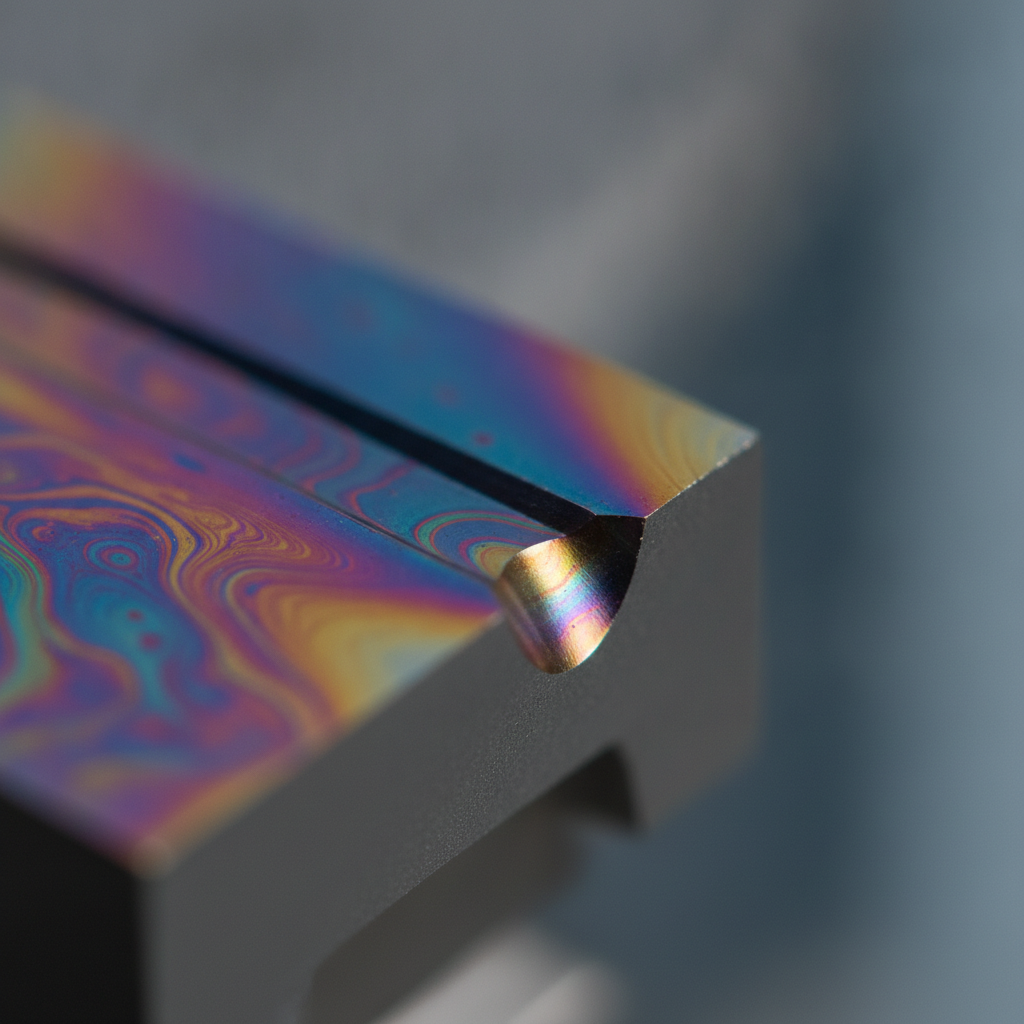
Thermospray and Pulsed HVOF — When Thermal Spray Outperforms PVD
Go thermal spray when you need thick (≈50–300 µm), tough overlays that shrug off abrasion, erosion, or impact. Carbides and cermets—finished to spec—protect extrusion hardware, die‑cast tooling, and flow‑exposed components that would overwhelm a thin film.
- Spec ranges we run: Overlay ≈50–300 µm; as-sprayed Ra ≈3–6 µm, typically ground/polished to ≈0.2–0.8 µm; cermet microhardness commonly around the 1,000 HV mark.
- Material palette: WC‑Co/Cr and Cr3C2‑NiCr for abrasion/erosion; metallics for corrosion and thermal cycling.
- Geometry wins: Scales to larger parts and targeted repair zones; masking defines keep‑out areas.
- What not to do: Don’t ask PVD to survive slurry erosion or shot impact—build a sprayed overlay and finish it right.
Failure fix (die cast/extrusion): Sleeve lands eroded in weeks. We applied WC‑Co‑Cr at ~200 µm, ground to Ra ≈0.4 µm. Service life extended through multiple campaigns with predictable inspections, eliminating mid‑run changeouts.
For cross‑process context, our high performance coatings page compares abuse modes across sectors.
Matching the Coating Process to Your Application (Stamping, Machining, Die Cast, Components)
Match failure to process: friction and sticking favor thin, slick PVD; heavy abrasion, erosion, and impact demand a thicker thermal‑spray overlay. Then lock in surface finish with the right post‑process to hit Ra and dimensional targets.
| Use case | Common failure | Recommended route |
|---|---|---|
| Stamping dies | Galling, pickup | PVD DLC or low‑friction nitride (~2–4 µm) + polish/lap |
| Cutting tools | Flank wear, chipping | PVD advanced nitride (≈2–3 µm) with edge‑prep control |
| Plastic molds | Sticking, gate wear | PVD DLC or nitride (~2–4 µm) + mirror finish |
| Die cast / extrusion | Thermal fatigue, erosion | Thermal spray carbide (≈150–250 µm) + grind/polish |
| Valve/flow components | Corrosion, erosion | Pulsed HVOF cermet (≈100–200 µm) + post‑polish |
To compare thin‑film options by application, see our vapor deposition guide and practical tool coating guide.

Need a quick read on your failure mode? Share photos, Ra targets, and duty cycle. Our Woodbridge engineers will recommend PVD vs. Thermospray and outline a pilot run to validate adhesion, thickness, and finish.
Pre- and Post-Coating Services That Determine Final Performance
Adhesion, thickness uniformity, and final Ra are made or lost in prep and finishing. Keep cleaning, blasting, masking, coating, and lapping under one quality system with documented checkpoints for repeatable results from trial to volume.
- Integrated prep: Sandblasting/microblasting, degreasing, precision masking—sequenced to control roughness and bond.
- Post‑finish: Stripping (when required), polishing, and lapping to dial friction or sealing performance.
- QC lab: Thickness verification and cross‑sections; surface measurements to confirm targets after finishing.
For broader manufacturing context, this overview of quality control principles and material behavior differences can help plan upstream steps that feed coating. Process automation examples in automation case studies may also spark smoother handoffs into finishing.
How to Evaluate a Performance Coating Service Provider
Favor single‑source partners that run both PVD and thermal spray, hold ISO 9001:2015 (and N299.3 if required), and prove scale with high‑capacity equipment plus in‑house prep/finish/QC. They should tell you what not to do—not just quote your spec.
- Process breadth: Can they choose PVD or thermal spray based on failure mode, not sales bias?
- Certifications: ISO 9001:2015; Nuclear N299.3 for regulated sectors.
- Capacity: High‑capacity PVD systems (SPUN 2,000/4,000) and a dedicated Thermospray cell for large batches.
- In‑house ecosystem: Prep, coating, finishing, and lab—documented and traceable.
- Local support: Woodbridge access to engineers for trials, fixturing, and fast iteration.
Global players like Oerlikon Balzers or Ionbond run excellent programs. The advantage of a Woodbridge single‑source shop is faster iteration and fewer handoffs—critical when a line is down and every hour counts.
FAQs
How do I decide between PVD and thermal spray?
If friction and galling are the issue on tight‑tolerance parts, choose PVD at ~2–4 µm and finish to low Ra. If erosion/impact is chewing parts, build a thermal‑spray overlay (≈100–200 µm) and grind/polish to spec. When in doubt, run a pilot on representative parts.
Will coatings change my dimensions?
PVD adds nanometers to a few microns and preserves geometry well. Thermal spray adds tens to hundreds of microns; you should plan post‑grind/polish to hit final dimensions and Ra targets.
What in‑house steps matter most?
Controlled cleaning, blasting, and masking set adhesion and thickness uniformity; lapping/polishing dial friction and sealing. A QC lab that documents thickness and surface finish closes the loop for repeatability.
Can you scale from trials to stable production?
Yes. Our high‑capacity PVD systems (SPUN 2,000/4,000) and dedicated Thermospray cell—plus in‑house prep, finishing, and QC—let us lock process windows and run consistent large batches for automotive, aerospace, and more.
Key takeaways
- PVD is ideal for thin, hard, slick films on precision parts; thermal spray builds thick, tough overlays for abrasion, erosion, and impact.
- Surface finish targets (e.g., PVD Ra ≈0.05–0.2 µm; finished HVOF Ra ≈0.2–0.8 µm) should be planned with post‑process steps.
- Single‑source providers with ISO/N299.3, capacity, and in‑house QC cut turnaround and risk.
Next steps
- Send failure photos, Ra/geometry targets, and duty cycle.
- Run a pilot on representative parts to validate adhesion, thickness, and finish.
- Lock specs and scale to volume with documented checkpoints.
Ready to protect parts and uptime? Connect with our Woodbridge engineering team for a fast, practical recommendation and pilot plan.