
PVD coating stainless steel is the vacuum deposition of ultra-thin ceramic or carbon-based films onto grades like 304, 316, and 17-4PH to boost hardness, cut friction, and enhance corrosion resistance. Done at Sputtek’s 110 Sharer Rd facility in Woodbridge, it delivers repeatable performance on tools and components. Manufacturers use it to extend life and stabilize quality.
By Ron • Last updated: 2026-06-22
Summary
PVD on stainless steel creates dense, adherent films (typically 1–5 μm) such as TiN, CrN, and DLC that raise surface hardness (up to ~3,000 HV), drop friction (as low as ~0.1), and add color or barrier properties. With proper cleaning, activation, and fixturing, it preserves stainless substrates while measurably increasing uptime and consistency.
This complete guide explains what PVD is, why stainless responds well, how deposition works, and which coatings to choose for stamping, molding, machining, food-contact, and general components. You’ll see real-world parameters, checklists, and mini case studies from Sputtek’s engineering-led practice.
- What PVD on stainless does, in plain terms
- How to prep 304/316/17-4 for strong adhesion
- When to pick TiN, CrN, TiCN, or DLC
- Typical numbers: thickness, hardness, friction, temperature limits
- Quality controls that keep lots consistent
- Application examples across tooling and components
For foundational context on vacuum deposition, see our concise PVD coating guide, and for ultra-low-friction use cases review our DLC coating overview.
What Is PVD Coating on Stainless Steel?
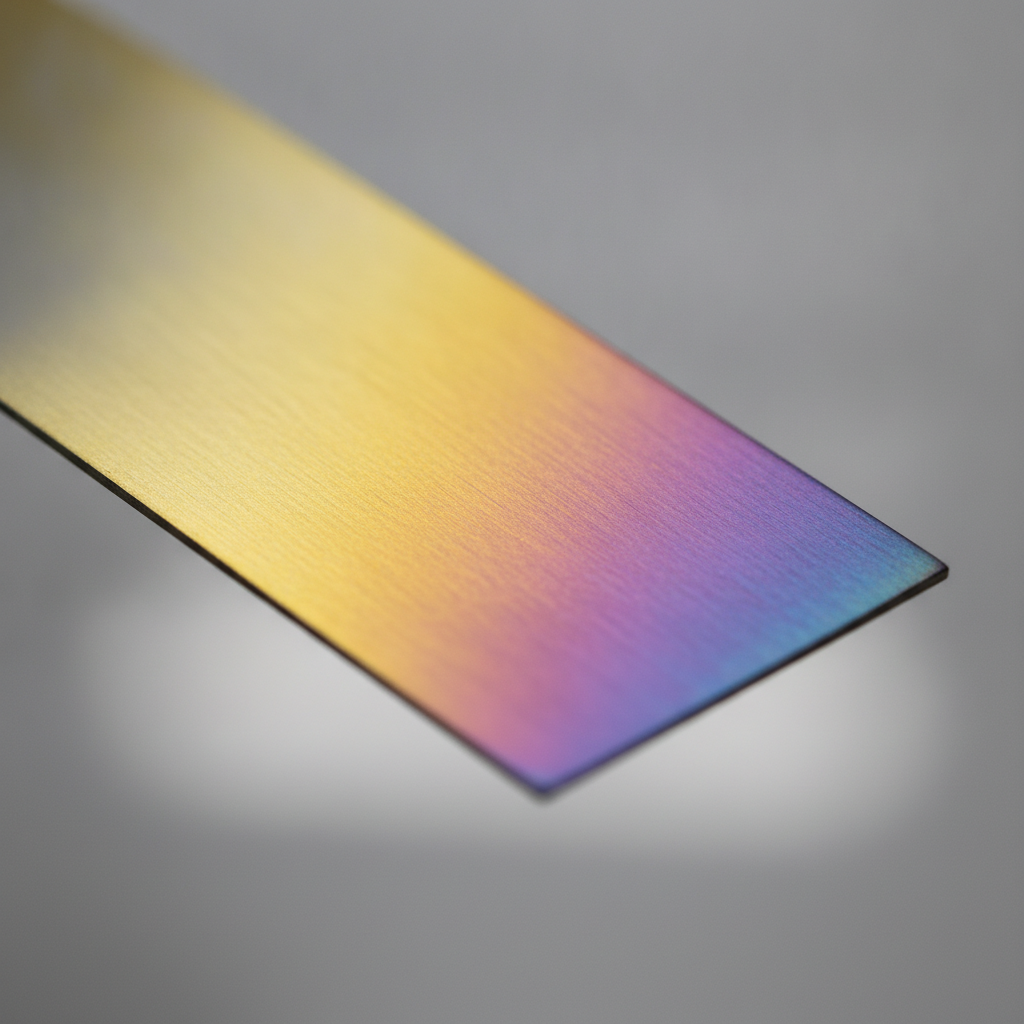
PVD on stainless steel is a vacuum process that evaporates metals or carbon and condenses them as a thin, hard, adherent film on grades like 304, 316, and 17‑4PH. Typical films (1–5 μm) include TiN, CrN, TiCN, and DLC, which can raise hardness above 2,000 HV and reduce friction below 0.2 without distorting parts.
Put simply, PVD creates a protective skin that stainless lacks at the surface scale where wear starts. Films grow atom‑by‑atom, so edges and fine features stay sharp. Coatings can be decorative (gold, graphite‑black) and functional (wear, galling, corrosion).
- Deposition temperature: ~180–500 °F (80–260 °C) depending on chemistry
- Typical thickness window: 1–4 μm for precision parts; thicker for aggressive wear
- Surface hardness: TiN/CrN ~1,500–2,300 HV; DLC up to ~3,000 HV
- Coefficient of friction (dry): DLC ~0.08–0.15; nitrides ~0.2–0.5
- Color options: golden (TiN), silver/gray (CrN), gunmetal (TiCN), black (DLC)
If you’re new to vacuum films, start with our plain‑English PVD process walkthrough to see how fixtures rotate and plasma cleans the surface before growth.
Why PVD on Stainless Steel Matters for Uptime and Compliance
PVD transforms stainless contact surfaces by curbing adhesive wear, fretting, and galling, which often drive unplanned downtime. In Woodbridge and the wider Regional Municipality of York, manufacturers use PVD to stabilize tool life, meet finish specs, and support regulatory expectations without changing base alloys or part designs.
The reality is simple: microscopic wear becomes macroscopic scrap. When edges round by just 5–10 μm, trim burrs rise, ejector marks print, and cycle times creep. A 2–3 μm nitride or DLC barrier interrupts metal‑to‑metal adhesion and keeps Ra stable (often holding within ±0.05 μm across runs).
- Less galling on austenitic stainless (e.g., 304/316) in sliding contact
- Higher surface hardness resists micro‑plowing in abrasive media
- Lower friction cuts heat generation; reduces lubricant dependence
- Consistent color/finish for customer‑facing stainless components
- Option to combine with post‑coat lapping to keep Ra under 0.1 μm
We’ve seen stainless tooling in packaging lines hold dimension over millions of cycles once PVD is paired with steady PM intervals (e.g., 250–500 hours) and documented cleaning steps.
How the PVD Process Works on Stainless Steel
PVD deposits thin films in vacuum using energetic vapor from targets or filaments. Stainless parts are cleaned, plasma‑activated, then coated as fixtures rotate. Control of temperature, bias voltage, and reactive gases sets adhesion, stress, thickness (1–5 μm), and phase—balancing hardness with toughness for the job.
In practice, robust adhesion lives or dies on preparation, not just chemistry. That’s why Sputtek runs end‑to‑end in‑house steps before any cycle begins.
- Degreasing and cleaning: Removes oils; residues below trace levels before vacuum load.
- Microblasting or lapping: Tunes Ra (often 0.05–0.2 μm for sealing surfaces; 0.2–0.6 μm for cutting edges).
- Ion/plasma activation: Bombards the surface to increase surface energy and anchor nucleation.
- Adhesion interlayers: Nanoscale bond layers (e.g., Cr, Ti) mitigate CTE mismatch and stress.
- Reactive deposition: Introduces N or C to form TiN, CrN, TiCN, or DLC stacks tailored to duty.
Well‑calibrated rotation yields uniformity within a few percent across complex racks. For production repeatability, cycle recipes track temperature ramps, arc/power curves, partial pressures, and deposition rate (e.g., 0.1–0.4 μm/min).
Types of PVD/DLC Coatings for Stainless Steel (Pros, Limits, Uses)
On stainless steel, TiN, CrN, TiCN, and DLC cover most needs. TiN adds wear and a golden color; CrN balances wear with corrosion; TiCN improves sliding abrasion; DLC delivers the lowest friction and dark aesthetics. Selection depends on temperature, contact mechanics, and cleanliness of the operating environment.
Choosing the right film is about contact stress, temperature, and chemistry. Here’s a practical comparison you can use in a design review.
| Coating | Hardness (HV) | Friction (dry) | Temp Limit | Color | Best For |
|---|---|---|---|---|---|
| TiN | ~1,800–2,300 | ~0.4–0.6 | ~900–1,050 °F | Gold | Stamping, trim steels, decorative wear |
| CrN | ~1,500–2,000 | ~0.3–0.5 | ~1,000–1,100 °F | Silver/Gray | Corrosion + wear, molds, food contact |
| TiCN | ~2,500–3,000 | ~0.25–0.4 | ~750–900 °F | Gunmetal | Sliding abrasion, high-edge retention |
| DLC | up to ~3,000 | ~0.08–0.15 | ~500–650 °F | Black/Graphite | Low friction, dry-running, clean optics |
For a deeper dive on carbon films, visit our DLC coating guide and our DLC process overview. If you’re balancing aesthetics with abrasion, our PVD finishing primer compares decorative and technical stacks.
Substrate Prep and Adhesion on 304, 316, and 17‑4PH
Strong adhesion on stainless steel comes from clean, activated surfaces and the right interlayers. Target Ra generally sits between 0.05–0.6 μm depending on function. With precise degreasing, microblasting/lapping, and plasma activation, well‑bonded films pass indentation checks and survive thermal cycling without flaking.
Adhesion is chemistry plus mechanics. Austenitic 304/316 are ductile with tough passive films; precipitation‑hardened 17‑4PH is stiffer and more tolerant of edge loads. We tune interlayers and bias to fit.
- 304/316: Watch for work‑hardening. Gentle media, controlled angle, and dwell keep edges intact.
- 17‑4PH (H900–H1150): Higher base hardness supports thinner films (~1–2 μm) for sharp features.
- Preclean metrics: Surface free energy rises measurably after plasma; water break‑free is a gate.
- Target Ra: Sealing faces often ≤0.1 μm after post‑coat lapping to protect elastomers.
- Masking strategy: Plug/passivate threads and fits to maintain tolerances (e.g., H7/H8).
Sputtek’s in‑house sandblasting, microblasting, cleaning, stripping, polishing, and QC shorten loops and keep quality consistent batch‑to‑batch.
Performance Metrics: Thickness, Hardness, Friction, Corrosion
Expect 1–5 μm thickness depending on duty, hardness from ~1,500 to ~3,000 HV, and friction as low as ~0.1 with DLC. Properly sealed stacks help stainless resist chloride staining and fretting; many users see double‑digit cycle life gains when PM and cleanliness protocols are enforced.
Numbers guide decisions. Calibrate to your failure modes, then choose a film and thickness to arrest them early.
- Thickness: 1–2 μm for precision edges; 3–5 μm for sliding abrasion or impact micro‑pitting.
- Hardness: Nitride stacks ~1,500–2,300 HV; DLC approaches ~3,000 HV on suitable interlayers.
- Friction: DLC ~0.08–0.15 dry; nitrides ~0.2–0.5; lubricated values trend lower.
- Corrosion: CrN is the most stainless‑friendly nitride; multilayers improve barrier tortuosity.
- Heat: Keep DLC below ~650 °F; TiN/CrN tolerate ~1,000 °F service peaks.
We verify film thickness by calibrated coupons, hardness via microindentation, and finish by profilometry—then log every lot for traceability under ISO 9001:2015 controls.
Applications on Stainless: Stamping, Molds, Cutting, and Components
PVD on stainless steel shines wherever stainless meets stainless or aluminum. Stamping inserts avoid galling, molds eject cleaner, cutters keep edges, and components maintain appearance. TiN/CrN handle hot work and abrasion; DLC handles sliding, hygiene, and low‑lube environments across packaging and medical devices.
Here’s how manufacturers put coatings to work across daily operations.
- Stamping and forming: CrN or TiCN on stainless dies reduces pickup and keeps burrs low (often <50 μm). Review our PVD finishing guide for edge prep tips.
- Plastic injection molds: CrN improves release and resists corrosive volatiles; DLC on pins and slides lowers stick‑slip.
- Machining and cutting: DLC on stainless blades/saws cuts drag; TiCN holds edges in abrasive fiber‑filled polymers.
- Food and packaging components: DLC’s black, low‑friction film supports cleaner, dry‑running mechanisms.
- Decorative/architectural stainless: TiN delivers durable gold without plating baths or peeling paint.
When parts see mixed modes—abrasion plus corrosion—multilayer stacks combine CrN bases with DLC topcoats to balance barrier, hardness, and friction.
Process Control and Quality: Repeatability at Scale
Repeatable PVD on stainless depends on closed‑loop recipes, clean fixtures, and metrology. Sputtek’s SPUN 2,000 and SPUN 4,000 systems support high‑capacity cycles (up to thousands of kilograms per run) with logged parameters, coupon tracking, and QC gates that keep film thickness and color within tight bands.
Consistency matters more than hero parts. That’s why we built capacity and controls around production realities.
- High‑capacity tooling: SPUN 2,000 (up to ~1,200 kg/cycle) and SPUN 4,000 (up to ~3,000 kg/cycle) for large batches.
- Recipe management: Temperature ramps, power curves, gas ratios, and bias voltage recorded each cycle.
- Coupons and witnesses: Mounted with parts to verify thickness and adhesion via indentation checks.
- Post‑coat lapping: Brings sealing faces back to Ra ≤0.1 μm when needed.
- Documentation: Lot records align with ISO 9001:2015 and industry QA expectations.
When needed, we complement PVD with Thermospray/Pulsed HVOF to rebuild or overlay features before applying a thin film, handled in the same facility for speed.
Best Practices for Specifying PVD on Stainless Steel
Write simple, measurable specs: define substrate grade/condition, target Ra, film family (e.g., CrN, DLC), thickness range, and critical no‑coat areas. Add acceptance tests (thickness, finish, adhesion checks) and cleaning instructions. This clarity cuts iteration time and reduces variation across lots and suppliers.
Good specs read like checklists, not essays. Here’s a field‑tested starting point.
- Substrate: 304 2B, 316L, or 17‑4PH H900/H1025; note any welds or heat tint.
- Finish target: Pre‑coat Ra 0.1–0.3 μm (sealing) or 0.2–0.6 μm (edges); post‑coat lapping if required.
- Film: CrN 2–3 μm (corrosion + wear) or DLC 1.5–2.5 μm (low friction); color acceptance band.
- Masking: Threads/press fits masked; datum surfaces protected.
- Verification: Thickness on coupons, Rockwell indentation check, profilometry before/after.
- Cleaning care: Neutral pH detergents; avoid chlorine bleach; lint‑free wipes to preserve Ra.
Want a broader context before you spec? Our PVD coating overview and process guide break down methods and tradeoffs.
Food-Contact and Clean Environments
For food-contact and clean applications, DLC and CrN are common on stainless because they run clean, resist sticking, and tolerate frequent washdowns. Keep films thin (often 1.5–3 μm), specify smooth Ra (≤0.1–0.2 μm), and define cleaning chemistry to protect both the film and stainless passivation.
In packaging lines, low friction cuts drive torque and steadies registration. In pharmaceutical equipment, a darker DLC top layer reduces glare and facilitates visual inspection.
- Typical washdown chemistry: neutral pH; avoid chloride‑rich agents on hot stainless.
- Preferred films: DLC on slides/cams; CrN on contact faces for barrier and clean release.
- Finish maintenance: lint‑free wipes; micro‑polish if Ra drifts after long campaigns.
If you’re evaluating DLC’s benefits broadly, our DLC overview compiles practical hygiene and wear notes in one place.
Troubleshooting: Common Stainless/PVD Mistakes to Avoid
Most PVD issues trace to surface prep, masking, or unrealistic film choice. Fix adhesion with better cleaning/activation, protect functional fits with masking, and pick films by contact mechanics—not color. Document PM and cleaning; thin films can’t fix bad lubrication or misalignment.
Here are problems we’re asked to diagnose most often—and how to solve them fast.
- Flaking at edges: Often over‑thick film on sharp corners; reduce thickness to 1–2 μm and add slight edge radius (~0.02–0.05 mm).
- Streaky color: Fixture shadowing or mixed loads; improve rack density/rotation and load geometry.
- Poor release in molds: Ra too rough or contaminated; micro‑lap to ≤0.1 μm and relaunch.
- Unexpected rust spotting: Chlorides and heat; favor CrN bases and verify washdown chemistry.
- High friction after install: Film wrong for duty; move to DLC where sliding dominates.
When root cause sits upstream (material condition, machining burrs), tightening the pre‑coat workflow typically recovers performance in the next cycle.
Mini Case Studies (Woodbridge Manufacturing)
Across stamping, packaging, and medical assemblies, stainless parts coated with CrN, TiCN, or DLC routinely show measurable stability—lower burrs, cleaner release, and steadier torque. Leveraging Sputtek’s in‑house prep and SPUN systems, local teams move from prototype to production without changing base alloys or prints.
These brief, anonymized scenarios reflect common questions we get from manufacturers around Woodbridge.
- Stamping inserts, 316L: Pickup on 300‑series blanks caused burrs >80 μm. CrN at 2.5 μm plus edge prep held burrs under ~40 μm over extended runs.
- Packaging slides, 304: Drag spiked after washdowns. DLC at 2 μm dropped startup torque and kept Ra ≤0.15 μm for longer intervals.
- Ejector pins, 17‑4PH H900: Sticking in filled resin. TiCN at 2 μm held polish and limited stick‑slip, extending cleaning intervals.
- Decorative bezels, 316: Color wear at touch points. TiN at 2 μm preserved gold tone and resisted micro‑scratches in handling.
Because all prep, coating, and post‑processing happen under one roof, feedback cycles are short and repeatable from first article to high‑volume lots.
Tools and Resources You Can Use Right Now
Start with simple matrices, fixture checklists, and spec templates to tame variables. Use coupon data, profilometry logs, and adhesion checks to close the loop. When duty demands it, combine PVD with Thermospray overlays—all coordinated from one floor to reduce handoffs and risk.
- Selection matrix: Map duty (sliding vs impact), heat, and cleanliness to TiN/CrN/TiCN/DLC.
- Fixture checklist: Load density, line‑of‑sight, and rotation arcs; avoid shadowing.
- Spec template: Substrate, Ra targets, film, thickness, masking, acceptance tests.
- Process pairings: Thermospray rebuild → finish → PVD topcoat for hybrid durability.
- Systems insight: Our SPUN 2,000 and SPUN 4,000 platforms were designed for repeatable adhesion and color uniformity on large mixed loads.
To explore aesthetic and technical finishes side‑by‑side, scan our PVD finishing primer and DLC overview.
Implementation: From Sample to Stable Production
Pilot with a small rack, lock parameters, then scale. Document substrate condition, fixture orientation, plasma settings, film recipe, and QC results on each run. In our experience, two iterative pilots (1–2 μm then 2–3 μm) reveal the sweet spot for wear, friction, and finish without over‑coating.
- Define failure modes: Galling? Burr height? Torque spikes? Rank them.
- Pick candidate films: CrN for barrier, DLC for sliding, TiCN for abrasion.
- Set targets: Thickness, Ra, color window; define acceptance tests.
- Pilot #1: 1–2 μm; validate burr, torque, or Ra drift against baseline.
- Adjust: Tune thickness/interlayers/finish based on data.
- Pilot #2: 2–3 μm; confirm stability across a fuller duty cycle.
- Release: Freeze the recipe; launch production with coupons and logs.
Keep a simple dashboard: burr μm, torque %, Ra change, and cleaning interval hours—numbers that make decisions obvious.
Local considerations for Woodbridge
- Plan pickups and dropoffs around traffic near Weston Rd / Highway 7; steadier logistics shorten turnarounds and protect fixtures in transit.
- Winter humidity swings affect surface prep; store parts sealed, and load warm to avoid condensation before vacuum.
- When coordinating large mixed racks near SmartCentres Woodbridge, align delivery windows with our production schedule to keep batch density optimal and colors consistent.

Frequently Asked Questions
Engineers ask about adhesion, thickness, food‑contact suitability, and whether PVD changes stainless corrosion behavior. The short answers: clean prep drives adhesion; 1–3 μm is common; DLC/CrN are frequently used around food gear; and well‑sealed PVD stacks can complement stainless passivation when cleaned correctly.
Will PVD change the corrosion resistance of 304 or 316 stainless?
When applied over clean, activated stainless with the right interlayers, CrN and well‑sealed multilayers add a physical barrier. They don’t replace stainless passivation, but they can help resist fretting and chloride staining when you use compatible washdown chemistries.
How thick should we make the coating on precise edges?
For sharp edges and tight tolerances, 1–2 μm is typical. It adds hardness and lowers friction without rounding features. Go thicker (3–5 μm) only when sliding abrasion dominates and you can accommodate slight radius growth.
Is DLC safe for food-contact mechanisms?
DLC is widely used on stainless in packaging and processing equipment for its low friction and clean running. Specify smooth Ra (≤0.1–0.2 μm), thin films (often 1.5–3 μm), and compatible cleaning agents to protect both the film and the base stainless.
Can we combine Thermospray with PVD on stainless?
Yes. When dimensions are worn or need reinforcement, a Thermospray or Pulsed HVOF overlay can rebuild, then a thin PVD film adds hardness or low friction. Keeping both steps in one facility reduces handoffs and improves timing.
Which stainless grades respond best to PVD?
Austenitic 304/316 and precipitation‑hardened 17‑4PH are common. 17‑4PH’s higher base hardness supports very thin films on sharp features. With proper prep and activation, 304/316 achieve strong adhesion and benefit greatly from DLC or CrN in sliding or washdown service.
Conclusion and Next Steps
PVD turns stainless steel’s good base properties into great surface performance. By pairing clean prep, the right film (CrN, TiCN, or DLC), and measurable QC, you’ll cut galling, stabilize finish, and extend life—without changing alloys or prints. Pilot small, tune thickness, then lock recipes for production.
- Key takeaways
- 1–3 μm films often deliver the best balance of edge retention and durability.
- DLC is your low‑friction workhorse; CrN is your stainless‑friendly barrier.
- Finish targets (Ra) and masking details make or break results.
- Coupons, logs, and PM schedules keep performance repeatable.
- Action steps
- Define primary failure modes and metrology you’ll track.
- Select a candidate film and thickness range for a pilot run.
- Align cleaning chemistry and PM with coated surfaces.
- Book a technical review at 110 Sharer Rd in Woodbridge to align specs and fixtures.
Soft CTA: Want an engineering‑led opinion on your stainless tooling or components? Call (416) 213‑9833 or visit our site to request a technical assessment and sample rack plan.
Context notes and external references for stainless steel varieties and end‑of‑life handling are available through general industry resources such as stainless steel grade overviews, broader steel usage references, and practical stainless recycling guides.