
High performance coatings are engineered surface treatments that reduce wear, friction, and corrosion to extend component and tool life. At 110 Sharer Rd in Woodbridge, Sputtek applies PVD, DLC, and Thermospray (including Pulsed HVOF) to improve uptime and quality for manufacturers. These coatings deliver harder surfaces, lower friction, and more stable production windows.
By Ron | Last updated: June 12, 2026
Above-Fold: Why this guide matters
This complete guide explains how high performance coatings like PVD, DLC, and Pulsed HVOF increase durability, stabilize cycle times, and improve yield. You’ll learn what they are, how they work, and how Sputtek applies them from prototype to volume production in Woodbridge.
Here’s the thing: downtime and scrap eat margins. The right coating program turns variable performance into stable, predictable output — while protecting tools and components in harsh conditions.
- Understand the differences between PVD, DLC, and Thermospray (Pulsed HVOF)
- Learn preparation, masking, and QA practices that prevent failures
- See where coatings pay off in stamping, molding, machining, and extrusion
- Use a step-by-step checklist to qualify coated parts faster
At a glance (quick summary)
- PVD films often run 1–5 micrometers (µm) thick with hardness commonly reported up to ~3000 HV; DLC can drop friction to ~0.05 against steel.
- Pulsed HVOF produces dense, low-porosity layers (often under 1% porosity) for erosion and corrosion resistance.
- Sputtek’s SPUN 2,000 and SPUN 4,000 systems enable up to roughly 3,000 kg/cycle capacity for consistent large-batch results.
Contents
- Overview
- What are high performance coatings?
- Why they matter (Woodbridge focus)
- How they work
- Types and approaches
- Best practices
- Procurement, value, and ROI (no pricing)
- Tools and resources
- Troubleshooting and maintenance
- Case studies and examples
- Frequently Asked Questions
- Conclusion and next steps
Overview
High performance coatings are thin, engineered layers applied to tools and components to boost hardness, reduce friction, and resist corrosion. They stabilize production by lowering wear rates and keeping surfaces clean. The result is longer intervals between maintenance events and more predictable cycle-to-cycle behavior.
In our experience supporting 100+ industrial clients, the fastest wins happen where abrasion, heat, or sticking limit throughput. A stable coating stack-up maintains edge integrity, mitigates galling, and reduces heat-affected failure. That’s how you turn short-lived tooling into reliable assets.
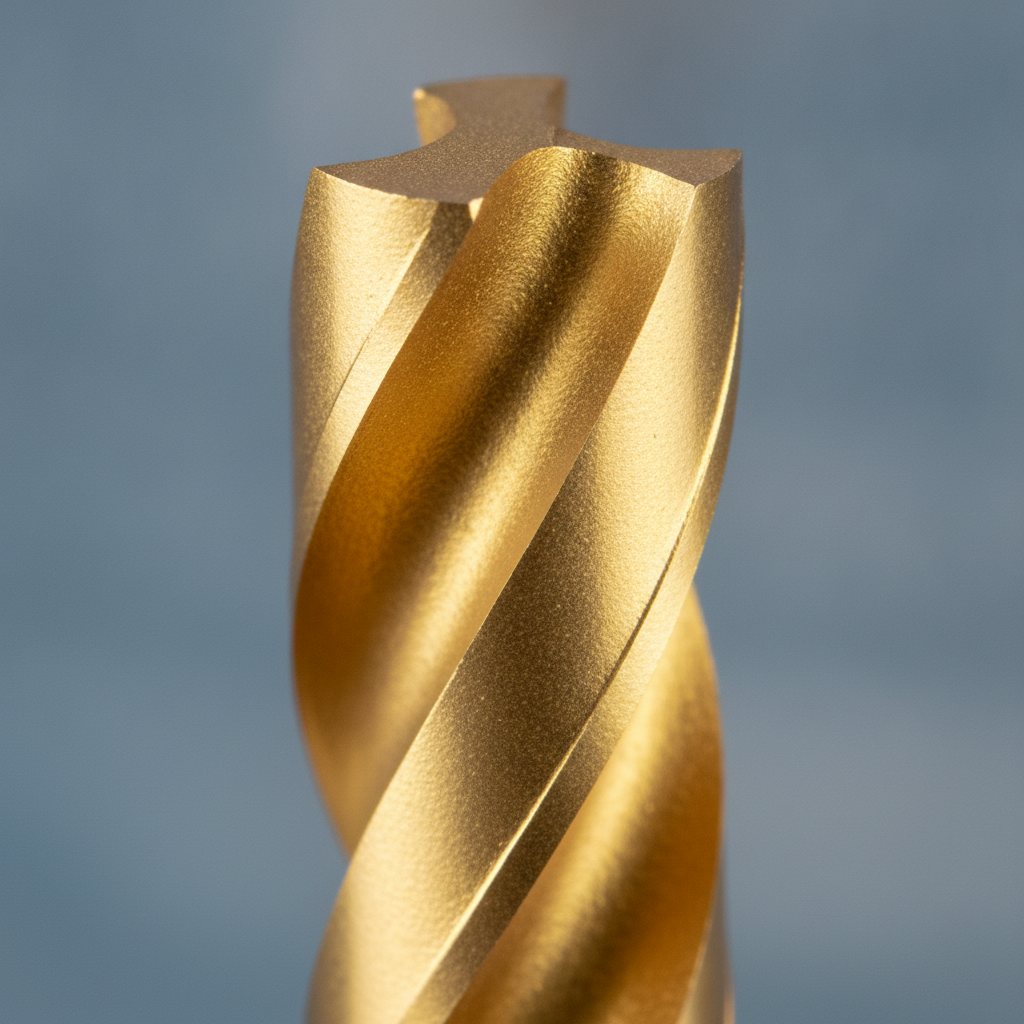
- Hardness uplift: Many nitride-class PVDs reach around the 2000–3000 HV range; DLC variants go higher in effective wear reduction through ultra-low friction.
- Friction control: DLC often achieves about 0.05–0.12 coefficient of friction versus steel, enabling cleaner release and less heat.
- Barrier performance: Thermally sprayed cermets form dense, tough shields against erosion, cavitation, and corrosive attack.
Local considerations for Woodbridge
- Schedule coating runs to avoid regional shutdown periods; many plants in Woodbridge ramp maintenance around the Regional Municipality of York holiday windows.
- Plan drop-offs and pickups around traffic near SmartCentres Woodbridge to keep takt time predictable.
- For tight-tolerance jobs, confirm humidity and storage conditions during summer heat spikes along Weston Rd / Highway 7 routes.
What are high performance coatings?
High performance coatings are engineered thin films and sprayed barriers applied to metal components to improve wear, friction, and corrosion behavior. Common families include PVD nitrides/carbides, DLC (diamond-like carbon), and Thermospray cermets. Typical thickness ranges from about 1 to 500 µm depending on process and duty.
Let’s define the core families Sputtek provides and where each shines. We’ll keep jargon simple, but we’ll include practical specs so you can qualify parts fast.
PVD thin films (nitrides, carbides, multilayers)
- Process: Physical Vapor Deposition forms films in high-vacuum chambers via sputtering/arc sources.
- Typical spec: 1–5 µm thickness, nominal hardness in the low-thousands HV, strong adhesion on tool steels and hardened alloys.
- Use cases: Cutting tools, stamping dies, mold cores/cavities, ejector pins, wear inserts.
- Learn more: See our PVD coating guide and PVD methods overview.
DLC (diamond-like carbon) for ultra-low friction
- Process: Carbon-based PVD/PECVD films with high sp3 content for exceptional tribology.
- Typical spec: Effective friction down to roughly 0.05 vs. steel; excellent release in polymer forming.
- Use cases: Medical components, plastic injection tooling, sliding pairs, intricate ejector geometry.
- Learn more: Explore our DLC coating process and DLC services guide.
Thermospray & Pulsed HVOF for impact, erosion, and corrosion
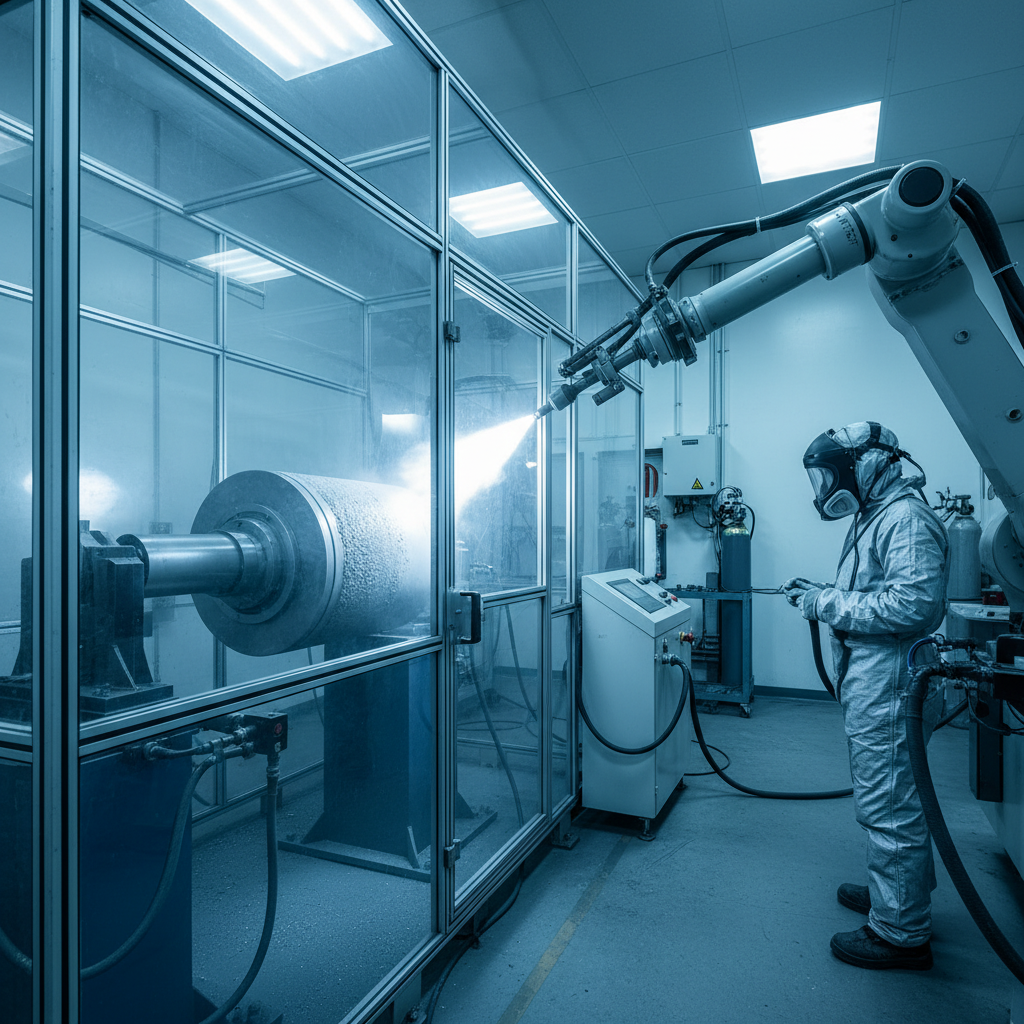
- Process: High-velocity thermal spray projects powder particles to build dense, thick layers.
- Typical spec: 50–500 µm thickness; porosity often under 1%; superb bond strength after correct prep.
- Use cases: Pump shafts, valve components, extrusion tooling, wear sleeves, and corrosive environments.
Why high performance coatings matter (Woodbridge focus)
In Woodbridge and the wider Regional Municipality of York, manufacturers use high performance coatings to cut unplanned downtime, stabilize takt times, and extend tool change intervals. These films reduce friction heat, block corrosion, and keep edges sharp—resulting in more consistent parts per shift.
Here’s why this matters on your floor. All variability eventually shows up in OEE. By lifting surface hardness and lowering stick-slip, you protect edges and keep heat out of the substrate. Fewer setup interventions mean steadier cycle targets and calmer SPC charts.
- Throughput: Lower adhesion and galling mean faster runs without sacrificing finish.
- Quality: Cleaner release reduces witness marks and polymer burn, improving first-pass yield.
- Maintenance: Longer intervals between polish/regrind preserve geometry and metrology intent.
For corrosion-intensive scenarios, epoxy-based protections are common in civil applications. This overview of rebar protection highlights how barrier layers mitigate chloride attack — a similar principle applies when industrial parts face chemical ingress.
How high performance coatings work
High performance coatings work by creating hard, adherent, low-friction or corrosion-resistant surfaces. PVD and DLC modify near-surface mechanics at microns of thickness, while Thermospray builds dense, impact-tough layers tens to hundreds of microns thick for barrier and load sharing.
Think in mechanisms. If your failure mode is abrasive wear, you want high hardness and a microstructure that resists plowing. If it’s adhesive wear, you want clean release and a surface chemistry that won’t weld. If it’s corrosion, you want a dense, sealed barrier with strong bond strength.
Five mechanisms that move the needle
- Hardness and modulus: High HV values curb abrasive grooving and protect edge radii.
- Low friction: DLC and certain PVD stacks reduce heat generation at contact.
- Diffusion barrier: Dense layers slow oxygen, water, and ions from reaching the substrate.
- Compressive stress: Proper film stress can blunt microcrack initiation.
- Thermal stability: Multilayers and cermets maintain properties at elevated temperature.
Spec ranges you can design around
- PVD thickness: 1–5 µm; edge rounding typically minimal if prepped correctly.
- DLC friction: about 0.05–0.12 vs. steel; helps prevent polymer sticking in molds.
- Thermospray build: 50–500 µm; bond strength and porosity depend on prep, powder, and gun energy.
If you’re exploring PVD families, our PVD types overview and types of PVD articles detail common stacks for heat, abrasion, and chemical exposure.
Types and approaches (PVD, DLC, Thermospray)
Choose PVD for thin, hard films on precision geometry, DLC when friction dominates, and Thermospray (Pulsed HVOF) for thick, dense barriers in erosive or corrosive duty. Matching process to failure mode is the fastest route to stable throughput and fewer emergency interventions.
PVD families you’ll actually use
- TiN / TiCN / TiAlN: General-purpose wear and heat resistance for cutting and forming.
- CrN: Food-contact friendliness and balanced wear/corrosion behavior.
- Multilayers and doped systems: Tuned for thermal stability, edge retention, or lubricity.
DLC variants worth considering
- a-C:H, ta-C, WC/C: Trade-offs in hardness, hydrogen content, and toughness for sliding pairs.
- Mold release: DLC on cores/ejectors reduces sticking and burn; smoother demold lowers rework time.
Thermospray & Pulsed HVOF use cases
- Cermets (WC-Co, Cr3C2-NiCr): Aggressive abrasion/erosion resistance on shafts and sleeves.
- Stainless overlays: Extra corrosion margin where chemicals or salt spray are persistent.
- Thick build: Restore OD/ID and add robust barrier layers with high deposition efficiency.
| Property | PVD (incl. DLC) | Thermospray (Pulsed HVOF) | When to pick |
|---|---|---|---|
| Thickness | 1–5 µm | 50–500 µm | Thin precision films vs. thick barrier/restore |
| Hardness / Wear | Often up to the low-thousands HV | High toughness; erosion/impact capable | Edge retention vs. impact/erosion |
| Friction | DLC down to ~0.05 vs. steel | Depends on topcoat; typically higher than DLC | Sliding parts vs. abrasive/corrosive streams |
| Geometry sensitivity | Minimal edge rounding when prepped | Can change diameters; good for build-up | Precision features vs. wear sleeves/ODs |
Best practices (design, prep, QA)
Best-in-class coating programs start with the failure mode, then lock in surface prep, masking, and QA. Specify radii, roughness, and cleanliness targets in writing. Validate adhesion and thickness on witness coupons before moving to production hardware.
Design and print notes that prevent surprises
- Edge radii: Call out minimum edge breaks (for example, 0.02–0.05 mm) to reduce stress concentration.
- Surface roughness: Target substrate Ra suited to process (many PVD stacks prefer 0.05–0.2 µm pre-coat).
- Mask line placement: Define keep-out zones on fits and datum surfaces.
- Material callouts: Provide heat-treat state; some stacks want mid-40s to 50+ HRC for adhesion.
Preparation and handling
- Cleanliness: Oils and entrained abrasives cause pinholes; require validated degrease/ultrasonic steps.
- Blasting: Use controlled media and pressure to set anchor profile for Thermospray; microblast for fine PVD features.
- Fixturing: Orient for line-of-sight in PVD; ensure even coverage and minimized shadowing.
- Reference: See our practical PVD guide for prep do’s and don’ts.
Quality assurance and validation
- Witness coupons: Verify thickness, hardness, and adhesion before release.
- Roughness after coat: Confirm Ra/Rz meet function; polish/lap if needed.
- Documentation: Maintain ISO 9001:2015 traceability and lot records; for nuclear, align to N299.3 documentation control.
For a broader view on material and process QA concepts, this quality control overview outlines inspection and process checks that parallel metal-coating workflows.
Procurement, value, and ROI (no pricing)
Value from high performance coatings shows up as fewer changeovers, lower scrap, and steadier takt time. Build a simple ROI model using tool-life multiples, planned vs. unplanned downtime, and first-pass yield uplift. Keep dollar figures out—focus on the performance inputs you control.
What to include in your internal business case
- Baseline data: Current tool life, changeover minutes per week, and scrap rate by failure mode.
- Improvement deltas: Expected life multiple (e.g., 1.5×–4×), scrap reduction, and setup-time reduction after coating.
- Quality impact: Cosmetic defects, dimensional drift, and any clean-room handling benefits for medical/pharma.
- Supply assurance: ISO 9001:2015 and (if required) N299.3 documentation paths for audits.
Procurement tips that speed qualification
- Bundle pre- and post-processing (cleaning, stripping, polishing, lapping) with the coating run to avoid fragmented vendors.
- Request witness coupons and a one-page traveler with thickness, hardness (if applicable), and adhesion checks.
- Freeze a recipe after pilot success; require change control for future tweaks.
A short, data-first justification is easier to approve than a lengthy narrative. Show where you remove firefighting and create schedule stability—those are the operational wins most plants feel immediately.
Tools and resources (capacity, checklists)
Sputtek’s 15,000 sq ft Woodbridge facility runs multiple PVD machines, a Thermospray cell, and assembly units. SPUN 2,000 handles up to about 1,200 kg/cycle; SPUN 4,000 scales to around 3,000 kg/cycle—enabling consistent large-batch throughput for OEM and Tier-1 lines.
- In-house capability: Sandblasting, microblasting, degreasing/cleaning, stripping, polishing, lapping, and QC lab testing.
- Engineering support: Application reviews that map failure modes to coating stacks.
- Scalability: Prototype to high-volume with identical recipes for repeatability.
Qualification checklist you can copy
- Define failure mode: abrasion, adhesion, erosion, corrosion, or heat.
- Pick process: PVD, DLC, Thermospray (Pulsed HVOF) to match the mode.
- Set specs: thickness range, roughness targets, mask lines, critical fits.
- Plan prep: cleaning, blasting/microblasting, fixturing.
- Run coupons: measure thickness, hardness, adhesion; adjust if needed.
- Coat pilot parts: verify function; inspect Ra/Rz and edges.
- Freeze recipe: document ISO/N299.3 package and release to production.
For materials perspective, see this brief on emerging materials trends; many QA ideas carry over when qualifying surface-engineered parts for regulated industries.
Troubleshooting and maintenance
If a coating underperforms, check prep, geometry, and load case first. Most issues trace to contamination, insufficient edge break, or a mismatch between film and failure mode. Validate with coupons, adjust prep or stack, and re-run before scaling.
Common issues and quick checks
- Poor adhesion: Investigate cleanliness, blast profile, or heat-treat state; confirm masking didn’t trap residues.
- Premature wear: Revisit hardness and chemistry; for sliding contact, consider DLC or a lubricious top-layer.
- Dimensional drift: For Thermospray, confirm masking and planned re-machining of critical fits.
- Sticking/polymer burn: Smooth/lap pre-coat, then use DLC on cores/ejectors with targeted Ra.
Care and cleaning for coated tools
- Use neutral pH detergents; avoid aggressive chemicals that attack sealants or top layers.
- For molds, adopt non-abrasive wipes and scheduled light cleaning to prevent residue bake-on.
- Track cycles to plan maintenance around predictable intervals rather than emergency stops.
Healthy coated surfaces keep heat down and edges clean. A little discipline on handling and cleaning extends the gains you bought with the coating step.
Case studies and examples
These brief examples show how matching the coating to the failure mode stabilizes output. From stamping dies to medical components, choosing PVD, DLC, or Thermospray appropriately removes the root cause (wear, sticking, or corrosion) and frees up capacity.
Stamping dies (automotive)
- Problem: Edge rounding and galling created burrs and rework.
- Approach: TiAlN-class PVD on tool steel with microblast prep and defined mask lines.
- Result: Cleaner edges over longer runs; fewer emergency stoppages.
Explore options in our PVD types overview tailored to forming heat and abrasion.
Plastic injection molds (consumer and medical)
- Problem: Sticking in deep cores, ejector scuffing, polymer burn.
- Approach: DLC on cores and ejectors; polish/lap to target Ra before coat.
- Result: Smoother release, lower scrap, easier demold at steady cycle times.
Cutting tools (machining)
- Problem: Flank wear and built-up edge at higher SFM.
- Approach: Multilayer PVD; recipe tuned for heat and chip friction.
- Result: Sharper edges maintained; more consistent surface finish.
Aluminum die cast and extrusion
- Problem: Soldering and washout on gates and dies.
- Approach: PVD with chemistry aimed at aluminum non-wetting plus DLC where sliding dominates.
- Result: Reduced buildup and longer intervals before planned maintenance.
Components in corrosive duty (oil & gas, process)
- Problem: Pitting and erosion on shafts and valves.
- Approach: Pulsed HVOF cermet layer over proper blasted substrate; seal as required.
- Result: Improved uptime by resisting slurry abrasion and chemical ingress.
Frequently Asked Questions
Engineers ask about fit impact, surface finish, and which process to pick. The quick rule: PVD/DLC for thin, precise films and sliding; Thermospray for thick, tough barriers. Always lock in prep, masking, and QA — then prove it with coupons before moving to production parts.
How do I choose between PVD, DLC, and Thermospray?
Match the coating to your failure mode. Use PVD for thin, hard films on precision geometry, DLC for ultra-low friction and release, and Thermospray (Pulsed HVOF) when you need thick, dense barriers against erosion or corrosion. If unsure, start with coupons to validate adhesion, thickness, and finish.
Will coatings change my dimensions or tolerances?
PVD/DLC typically add 1–5 µm and have minimal edge rounding when parts are prepared correctly. Thermospray can add 50–500 µm, so mask and re-machine critical fits after coating if required. Document mask lines and plan any post-coat finishing.
How should I prepare parts for coating?
Specify cleaning and blasting/microblasting on the drawing, and ensure parts arrive free of oils and embedded abrasives. Define surface roughness, edge breaks, and masking zones. Good fixturing and orientation improve coverage uniformity in PVD, while anchor profile is critical for Thermospray adhesion.
What about quality records for regulated industries?
Work with a partner that maintains ISO 9001:2015 traceability and, if applicable, Nuclear N299.3 controls. Keep thickness, adhesion, and roughness records tied to lot numbers. Use witness coupons, retain samples, and sign off recipes before scaling to production.
Conclusion and next steps
High performance coatings deliver harder, lower-friction, and more corrosion-resistant surfaces that extend tool life and stabilize production. Start with the failure mode, pick PVD, DLC, or Thermospray accordingly, and validate with coupons before scaling to volume.
Key takeaways
- Match process to failure: PVD/DLC for thin precision films; Thermospray for thick barriers.
- Lock in prep: cleaning, blasting/microblasting, fixturing, and masking are non-negotiable.
- Measure early: witness coupons de-risk adhesion, thickness, and finish.
- Document for scale: freeze recipes under ISO 9001:2015 (and N299.3 where needed).
Action steps
- Send drawings with material, heat treat, and target failure mode.
- Request a coupon run with the intended coating stack.
- Plan pilot builds and SPC checks before full production release.
Ready to stabilize your line? Visit us at 110 Sharer Rd in Woodbridge for a hands-on application review, or explore our in-depth PVD guide to get started.