
PVD stainless steel is stainless steel enhanced with a thin, vacuum-deposited coating that increases hardness, reduces friction, and adds durable color without altering the base alloy. Typical layers are 1–5 microns and can exceed 2,000 HV in surface hardness. For Woodbridge manufacturers, this means longer tool life, fewer changeovers, and steadier throughput.
By Ron • Last updated: July 2, 2026
Above-Fold Guide + What You’ll Find
Use this guide to make fast, confident decisions about PVD on stainless steel. We define the process, explain where it wins, and show how to apply it to tools and components. You’ll see practical specs (thickness, hardness, friction), step-by-step workflows, and examples from stamping, molding, machining, and medical applications.
Here’s the quick path to what you need:
- What PVD stainless steel is and why it matters for uptime and quality.
- How coatings bond atom-by-atom and why prep drives adhesion.
- Which coatings (TiN, CrN, DLC) to use by temperature, wear, and finish.
- Best practices we follow at Sputtek—from cleaning to lapping.
- Real-world examples from automotive, pharma, and medical devices.
- Jump to: Summary • What is PVD stainless • Why it matters • How it works • Types of coatings • PVD vs. alternatives • Best practices • Tools & resources • Case studies • FAQ
Summary
PVD on stainless steel deposits 1–5 μm hard, inert films (e.g., TiN, CrN, DLC) that cut wear, lower friction, and maintain corrosion resistance. In our experience at Sputtek, coated stainless tools often last 2–4× longer with smoother process control, especially in stamping, molding, machining, and hygienic applications.
In our production environment, we regularly see:
- Coating thickness: 1–5 μm, optimized to load and geometry.
- Surface hardness: ~1,200–3,000 HV (material and stack dependent).
- Friction: DLC stacks as low as ~0.1 in dry sliding on polished stainless.
- Temperature: many stainless+PVD stacks run reliably to ~400–500°C.
- Adhesion: critical loads improve when base Ra ≤ 0.2–0.4 μm and edges are honed.
Why this matters: fewer tool pulls, steadier Cpk, and less scrap. Teams in Woodbridge that run multi-cavity molds or high-stroke presses tell us that a dependable, repeatable surface is worth more than one big win—it protects every shift.
What Is PVD Stainless Steel?
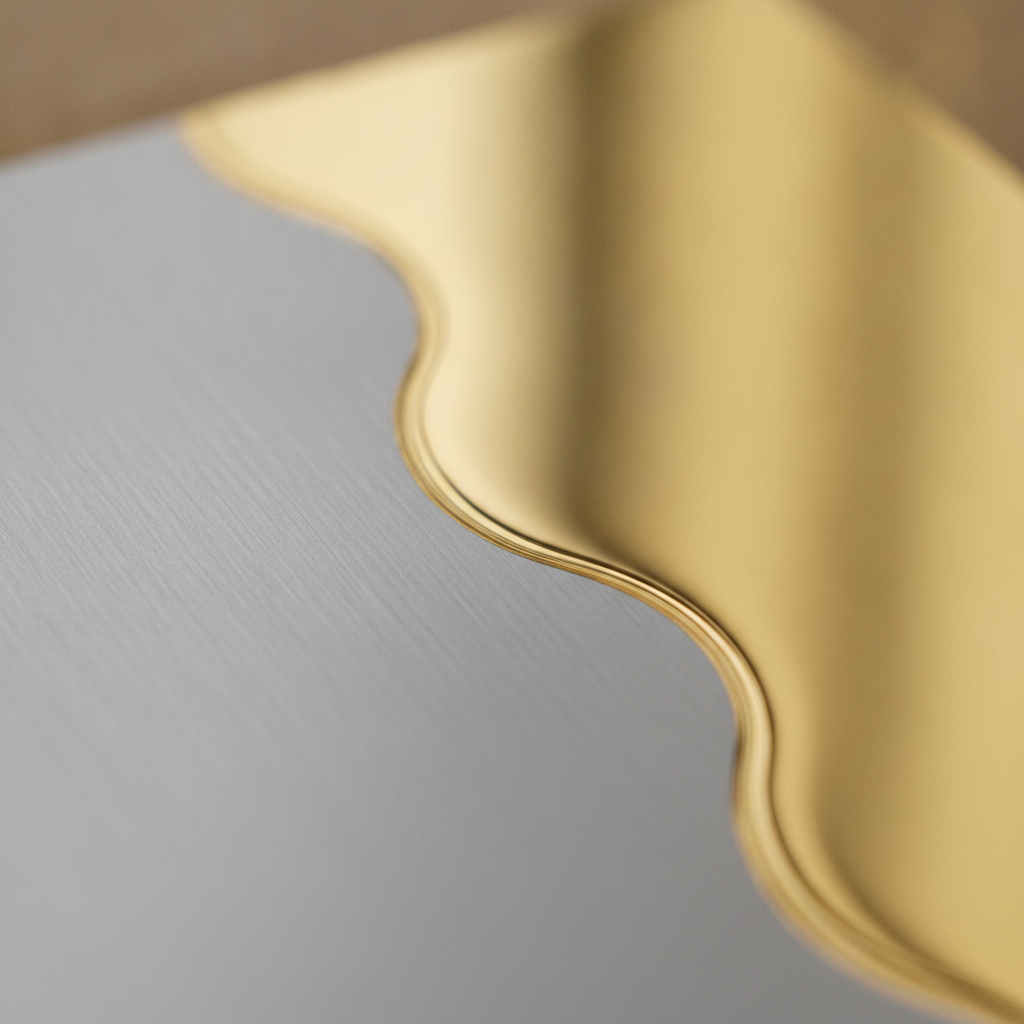
PVD stainless steel is stainless steel with a Physical Vapor Deposition coating grown in vacuum from metal or carbon targets. The film bonds at the atomic level, adding hardness, color, and tribological benefits while preserving the stainless alloy’s corrosion resistance and core dimensions.
Let’s define it in practical terms you can spec:
- Base: 300- and 400-series stainless steels are common; precipitation-hardened grades are also used with process adjustments.
- Film families: Nitrides (TiN, CrN, ZrN), carbon-based (DLC), and multilayers (e.g., CrN+DLC topcoat).
- Typical thickness: 1–5 μm; we tune to cutting edges, radii, and contact pressure.
- Adhesion drivers: Cleanliness, surface profile, bias/temperature, and interlayers.
In our experience, when we hold pre-clean specs tight and lap after coating where needed, stainless parts achieve consistent critical-load performance in scratch and Rockwell indentation tests. For deeper primers, see our stainless steel with PVD coating explainer.
Why PVD on Stainless Matters
PVD converts stainless surfaces into low-friction, wear-resistant interfaces. That reduces galling, sticking, and micro-welding—failure modes that drive downtime and scrap. The result is extended tool life, cleaner part-off, improved finish, and greater stability across shifts and material lots.
Here’s why operations leaders prioritize it:
- Wear and galling resistance: CrN and DLC stacks protect against adhesive wear—a frequent issue in stainless-on-stainless contact. We often measure 2–4× life gains on sliding components.
- Lower friction: DLC top layers can bring coefficients toward ~0.1–0.15 on polished stainless, easing release in molding and reducing cutting heat.
- Color-stable aesthetics: TiN (gold), ZrN (champagne), and carbon-rich blacks provide durable architectural finishes with good UV stability.
- Hygienic durability: Dense, inert films tolerate routine cleaning chemicals and sterilization cycles when spec’d correctly.
For Woodbridge teams running high-cavitation injection molds or progressive dies, fewer stoppages per 100,000 cycles translate to steadier OEE. That’s why pvd stainless steel has become a standard upgrade path on bottleneck tools.
How PVD on Stainless Works
In PVD, a vacuum chamber energizes a target (e.g., titanium, chromium, carbon), ejecting atoms that condense onto stainless parts. With bias voltage, heat, and reactive gases, a hard compound film (like TiN or CrN) grows conformally, achieving strong adhesion and precise thickness control.
At Sputtek, we control the full stack, end to end:
- Surface prep: Degreasing, ultrasonic cleaning, microblasting (when appropriate), and plasma activation. We track residues to ppm-level traces.
- Masking & fixturing: Tooling design maintains line-of-sight and uniform flux; we balance rotation/planetary motion to hold ±10–15% thickness on target features.
- Deposition: Cathodic arc and sputtering recipes set energy, temperature, and stoichiometry. Many stainless stacks run near 200–450°C to protect base temper.
- Post-processing: De-burring, edge honing, and after-coating lapping restore sharpness and surface finish. We target Ra for function (often ≤ 0.2–0.4 μm for sliding pairs).
Process stability matters. In our facility, high-capacity SPUN systems (2,000 and 4,000 series) help us keep cycle-to-cycle variation tight even on large batches—critical when you need hundreds or thousands of identical coated components.
Types of PVD Coatings for Stainless
Select coating chemistry by failure mode and temperature. Use CrN for galling and general wear, TiN/TiCN for cutting edges, ZrN where light color is needed, and DLC for low friction and clean release. Multilayers often balance toughness with lubricity.
Common chemistries and where they win
- CrN (Chromium Nitride): Tough, galling-resistant; good to ~700–800°F on stainless tooling with proper interlayers.
- TiN (Titanium Nitride): Hard (often 1,800–2,500 HV); classic gold finish; strong on cutting and forming edges.
- TiCN (Titanium Carbonitride): Lower friction than TiN; useful on high-load slides and certain machining inserts.
- ZrN (Zirconium Nitride): Champagne/gold tone with good corrosion behavior; common in food-contact hardware when specified appropriately.
- DLC (Diamond-Like Carbon): Very low friction; excellent for sliding/reciprocating stainless pairs, medical tools, and ejection systems.
Thickness, friction, and finish targets
- Thickness: 1–3 μm for sharp edges; 3–5 μm for sliding components with higher contact stress.
- Friction: DLC stacks ~0.1–0.2 against polished stainless in dry contact; CrN typically higher but more temperature-tolerant.
- Finish: Polished bases (Ra ≤ 0.2–0.4 μm) minimize asperity shear and improve release in molding.
Need a deeper overview of finishes and stacks? Our PVD plating overview outlines how we tune recipes for stainless tools and components.
PVD vs. Alternatives on Stainless Steel
Compared with electroplating or chemical conversion, PVD adds thin, hard, inert films with superior wear and color control while preserving stainless corrosion resistance. Nitriding hardens near-surface but risks passivity changes; black oxide changes appearance but adds little wear protection.
| Parameter | PVD on Stainless | Electroplating | Nitriding | Black Oxide |
|---|---|---|---|---|
| Typical thickness | 1–5 μm | 5–25+ μm | Diffuse layer | Very thin |
| Surface hardness | ~1,200–3,000 HV | Varies by metal | High near-surface | Minimal change |
| Friction (dry) | Low (DLC ~0.1–0.2) | Varies | Moderate | Moderate |
| Corrosion behavior | Preserves stainless base | Can introduce galvanic risk | Can affect passivity | Cosmetic only |
| Color options | Wide (TiN, ZrN, DLC) | Metal-dependent | Gray/brown | Black |
Teams choose PVD when they need thin, precise, and durable layers that don’t compromise stainless properties—especially where hygiene, sliding contact, or cosmetic finishes matter.
Best Practices for Stainless + PVD
Success starts with preparation and ends with verification. Control contamination, finish to function, specify edges, choose the right stack, and validate with measurable tests. The result is predictable wear, stable release, and repeatable runs across lots and shifts.
Preparation that drives adhesion
- Specify pre-clean and passivation states. Avoid residues from coolants, drawing soaps, or EDM recast.
- Target surface finish to function: sliding pairs often benefit from Ra ≤ 0.2–0.4 μm; cutting edges need controlled hone.
- Define edge conditioning: micro-chamfers or hones reduce stress concentration and micro-chipping under load.
Recipe and verification
- Choose chemistry by failure mode: CrN for galling; DLC for low friction; TiN/TiCN for edges.
- Validate thickness with coupons or witness parts; maintain ±10–15% where possible on critical features.
- Test adhesion via scratch, Rockwell, or bend tests; document critical load or qualitative outcomes.
In-process control
- Use consistent fixturing and orientation; planetary motion helps uniformity on complex stainless shapes.
- Manage heat input to protect base temper; many stainless tools run best below ~450°C deposition temperatures.
- Plan post-process steps: light polish or lapping to restore sharpness and target release.
We follow this blueprint across stainless programs because it scales—from a one-off prototype to thousands of components in a SPUN 4,000 run.
Tools, Capacity, and Helpful Resources
Sputtek combines in-house preparation, multi-machine PVD capacity, Thermospray (pulsed HVOF) capability, and a QC lab. For stainless programs, that means we control cleanliness, film growth, and verification under one roof, from sample runs to high-volume batches.
- Capacity: SPUN 2,000 (up to ~1,200 kg/cycle) and SPUN 4,000 (up to ~3,000 kg/cycle) support large-batch consistency.
- In-house steps: Sandblasting, microblasting, degreasing, stripping, polishing, and after-coating lapping.
- QC lab: Thickness measurement, adhesion checks, and surface finish metrology for traceable outputs.
If you’re mapping supply and end-of-life, these contextual resources can help you understand the broader stainless ecosystem: local availability of stainless steel stock, industry stories on metal product innovation, and considerations for stainless recycling logistics.
Local considerations for Woodbridge
- Plan drop-off and pickup windows around traffic near Weston Rd / Highway 7 to keep coating cycles and changeovers on schedule.
- For seasonal production ramps (e.g., automotive), pre-book coating slots so PVD batches align with your die or mold maintenance windows.
- When piloting a new stack, run coupon testing first; we can coordinate quick-turn meetings near SmartCentres Woodbridge to review early data and samples.
Case Studies and Examples
Below are real scenarios representative of what we deliver for clients. While every application is unique, the patterns repeat: define the failure mode, choose the chemistry, validate the stack, and then scale with consistent fixturing and QC.
Automotive stamping – stainless inserts that stopped galling
A Tier‑1 running progressive dies on stainless sheet battled galling on draw beads. We applied a CrN-based stack at ~3 μm with controlled edge honing. In our follow-up tracking, downtime events related to sticking dropped markedly, and bead rework intervals extended by multiple campaigns.
Plastic injection molding – cleaner release from polished cores
Multi-cavity stainless cores showed occasional part hang-up. A DLC topcoat over a CrN foundation lowered friction noticeably. Ejection force measurements stabilized, cosmetic rejects trended down, and maintenance logs showed fewer emergency pulls over the next several hundred thousand shots.
Machining and cutting – sharper edges for longer
Stainless-cutting inserts needed better heat control. We tuned TiCN/TiN layers to ~2 μm total and restored edge polish after coating. Operators reported more predictable tool life windows, and SPC charts tightened around target surface finish on turned stainless components.
Medical tools – repeated sterilization without finish loss
A set of stainless surgical instruments required low glare and durability through repeated cleaning cycles. A black carbon-rich stack was specified. Inspections after multiple sterilization cycles showed the finish intact, with no flaking and consistent appearance on high-touch areas.
Across these programs, the common thread is disciplined prep and verification. That’s the backbone of reliable pvd stainless steel performance when you scale from trials to production.
Implementation Checklist (Step by Step)
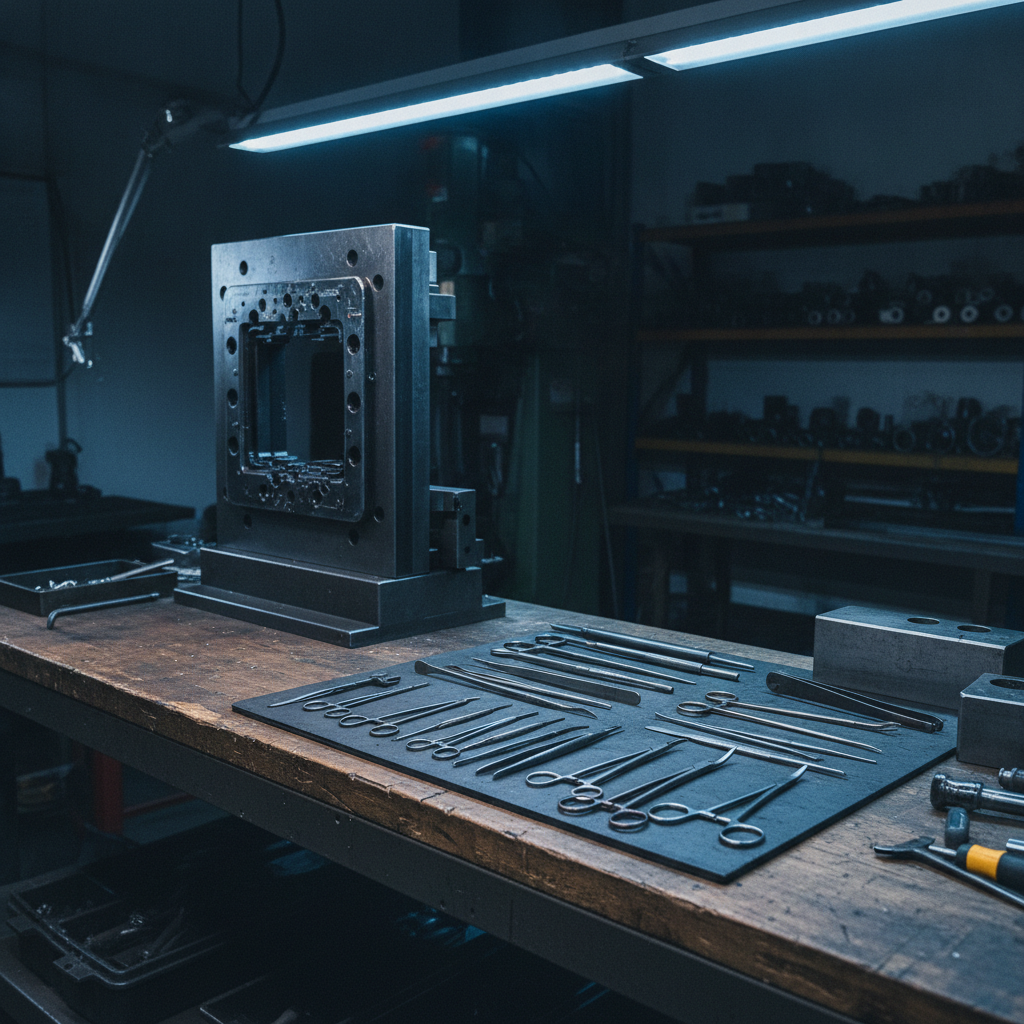
Use this 8-step workflow to launch or optimize your stainless PVD program. It aligns engineering, maintenance, and production so validation data flows into stable, repeatable coating cycles.
- Define failure mode: Galling, abrasive wear, heat, release, or cosmetics.
- Pick chemistry: CrN, TiN/TiCN, ZrN, or DLC; consider multilayers.
- Set finish targets: Ra for function; edge hones for durability.
- Prep protocol: Cleaning, microblast (if needed), plasma activation.
- Fixture plan: Orientation for line-of-sight and uniformity.
- Pilot coupons: Thickness and adhesion checks; adjust bias/temperature.
- Run sample parts: Measure ejection force, wear marks, or finish.
- Scale volume: Lock process window and document QC checkpoints.
Frequently Asked Questions
These are the questions engineers and tooling managers ask most often about PVD on stainless steel. Each answer is concise and practical so you can make a fast, confident call and move your project forward.
Will PVD affect stainless corrosion resistance?
PVD films are thin and inert, so the stainless base retains its corrosion behavior. The key is adhesion and integrity—when prep and deposition are correct, the coating enhances wear without compromising stainless passivity.
How thick should a coating be on stainless tools?
Most stainless tools perform well at 1–3 μm for edges and 3–5 μm for sliding components. Thicker isn’t always better—choose thickness based on contact stress, geometry, and desired friction.
What temperatures can stainless+PVD stacks handle?
Many stainless+PVD stacks run reliably below ~400–500°C during service. Above that, pick chemistries and interlayers with higher thermal stability, or consider process changes to reduce heat at the interface.
Can you rework or strip PVD from stainless parts?
Yes. We routinely strip and recoat stainless tools. Proper stripping, cleaning, and surface reconditioning recover function while avoiding dimensional changes to the base stainless component.
Conclusion and Next Steps
PVD on stainless steel delivers thin, hard, and predictable surfaces that reduce wear and friction while preserving the stainless base. With disciplined prep, tuned chemistries, and measurable QC, teams achieve longer life, steady release, and consistent quality from prototype to high-volume runs.
Key takeaways
- PVD adds 1–5 μm hard films that fight galling and reduce friction.
- CrN, TiN/TiCN, ZrN, and DLC cover most stainless applications.
- Prep, edge control, and finish targets drive adhesion and function.
- Validation via coupons and QC metrology keeps runs repeatable.
Action steps
- Map your failure modes and choose a candidate stack.
- Plan coupon validation and a sample batch.
- Document prep, fixturing, and QC checkpoints before scaling.
If you want a fast starting point, our team can review a part print, propose a stack, and run proof-of-concept coatings aligned to your maintenance windows. When you’re ready, explore stainless steel with PVD coating or scan our PVD plating overview to align options with your tooling goals.