
This article defines pulsed HVOF and explains practical pulsed HVOF coating uses for wear, erosion, and rebuild work. You will get a seven‑point decision checklist to screen parts quickly, a short comparison to other thermal spray and PVD options, and a precise list of what to send a coating supplier to get a technically accurate quote or trial. For related first-party details, review PVD Coating: Choose Better Wear Protection in.
What pulsed HVOF coating is and why it matters
HVOF stands for high‑velocity oxygen fuel, a thermal spray family that heats and accelerates powder particles in a high‑pressure gas stream to form a dense, low‑porosity deposit on a substrate. Pulsed HVOF is a variant that applies the same principle using pulsed firing or controlled intermittent energy input to tighten process control and reduce heat load on the part. Standard HVOF particle velocities are commonly reported in the 600 to 900 m/s range, producing hard, well‑bonded carbide and cermet coatings suitable for aggressive wear situations.
Engineers choose pulsed HVOF when they need a hard, impact and erosion resistant surface with low porosity and strong bond strength, or when they want to rebuild worn geometry before machining to final dimensions. Practical decision frameworks for thermal spray selection show how to match coating function to process choice and which engineering inputs matter for quoting and inspection.
For technical primers and supplier options see the Thermach overview on process selection and a general HVOF description, and consult coating resources that compare HVOF, plasma spray, and other thermal spray variants.
How pulsed HVOF differs from conventional HVOF and other coatings
At a practical level pulsed HVOF gives operators finer control over heat input and deposition dynamics than continuous HVOF. That control helps with adherence on heat‑sensitive substrates and can reduce microstructural defects on certain alloys. Compared with plasma spray, HVOF deposits are generally denser and harder, making HVOF preferable for heavy wear and erosion resistance. Compared with PVD and DLC coatings, thermospray deposits are thicker and intended for bulk wear, rebuild, and erosion protection rather than ultra‑thin friction control films. Versus hard chrome plating, dense HVOF carbide overlays can provide a chromium‑free option with comparable wear resistance in many applications, subject to validation and inspection.
See Sputtek’s Thermospray page for local pulsed HVOF capability and our PVD coating guide to map thin‑film options against thermal spray uses.
Decision checklist: seven criteria to decide whether to use pulsed HVOF
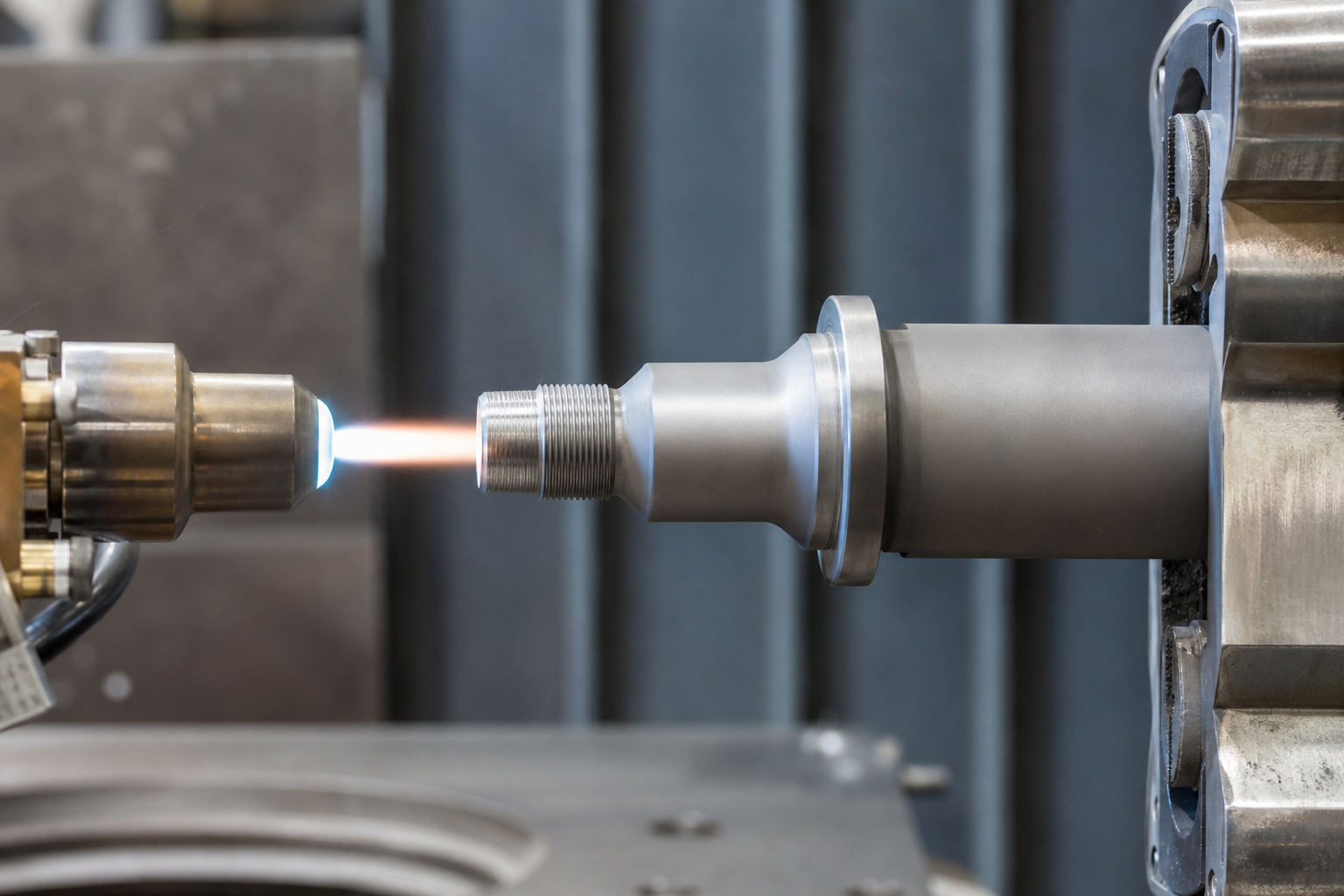
Use these criteria as a quick screen. If most answers point to heavy wear, erosion, rebuild, or repeated repair cycles, pulsed HVOF is likely worth a trial.
1. Primary function required: wear, erosion, or rebuild
If the core objective is abrasion resistance, impact erosion resistance, or restoring worn dimensions for subsequent machining, pulsed HVOF is a strong candidate. Thermal spray decision frameworks start with this question because function drives material and process choice.
2. Required coating properties: hardness, porosity, and adhesion
Target metrics to request in a quote include deposit hardness, porosity percentage, and bond strength or adhesion test method. Pulsed HVOF typically delivers very low porosity and high hardness for carbide cermets, which suits applications demanding dense, load bearing overlays.
3. Substrate heat sensitivity and metallurgical risk
Thermal spray adds heat to the part. Use pulsed HVOF if you need to limit continuous heat exposure or when the substrate is moderately heat sensitive. For very heat sensitive or precision‑tempered components you may need chill fixtures, staged passes, or alternative processes. A supplier should evaluate heat history and propose mitigation steps during the engineering review.
4. Part geometry, size, and fixturing complexity
Complex internal bores, tight internal passages, or very intricate shapes increase cost and time. Pulsed HVOF works well on accessible external surfaces, rotating parts, and larger components that need thick, wear resistant overlays. Provide photos and CAD to expedite fixturing estimates.
5. Production volume and batch scaling considerations
Pulsed HVOF is cost effective when recurring repairs, salvage cycles, or production runs justify tooling and process setup. For one‑off prototype tests the per‑part cost is higher but still useful for qualification. Consider lifecycle cost rather than only per‑part coating price when you evaluate ROI.
6. Inspection, regulatory, and OEM acceptance needs
If your part must meet nuclear, oil and gas, or OEM acceptance criteria specify those requirements upfront. Ask for relevant non‑destructive testing, microstructural reports, and process traceability in the RFQ. Industry decision checklists highlight the importance of regulatory and inspection needs early in the supplier selection process.
7. Cost versus expected life extension and repair strategy
Frame the commercial decision as a trade off between coating cost and expected extension of service life or reduced replacement frequency. Request sample trials and life‑cycle scenarios from the supplier to compare options such as pulsed HVOF, continuous HVOF, PVD, or rebuild and machine strategies.
Common pulsed HVOF uses and industry examples
Typical pulsed HVOF applications include:
- Pump and valve internals subject to slurry erosion in oil and gas
- Forming dies and extrusion tooling that need wear resistance and occasional rebuild
- Stamping and die components where sliding wear shortens tool life
- Shafts and sleeves exposed to abrasive media
- Rebuild of worn surfaces followed by finish machining for dimensional restoration
Carbide cermets such as tungsten carbide with cobalt and chromium binders are common HVOF feedstocks when high wear resistance is required. Supplier guides and technical resources discuss material choices and process routes for dense carbide overlays.
What you must send for an accurate quote and engineering review
Providing complete engineering inputs reduces back‑and‑forth and produces a technically reliable quote. Include the items below when you submit a request for pulsed HVOF coating.
Drawings, tolerances, and target dimensions
Provide CAD or detailed drawings that show critical tolerances and final dimensions. Indicate whether the coated surface will be machined to size afterwards and the required machining allowance or final tolerance band.
Substrate material, heat treatment history, and surface condition
State the base alloy, heat treatment condition, and any surface contamination or prior coatings. Substrate chemistry and hardness guide blasting, bond coat decisions, and whether preheating is allowable.
Operating environment and expected loads
Describe temperature range, chemical exposure, impact, sliding directions, particle concentrations, and any cyclical loads. These operational details guide feedstock selection and target thickness.
Inspection and acceptance criteria to specify in the RFQ
Ask for thickness mapping, bond testing method, porosity measurements, microhardness, and any NDT required by your industry. Specifying tests up front prevents surprises during qualification.
Common objections and how to validate pulsed HVOF for your application
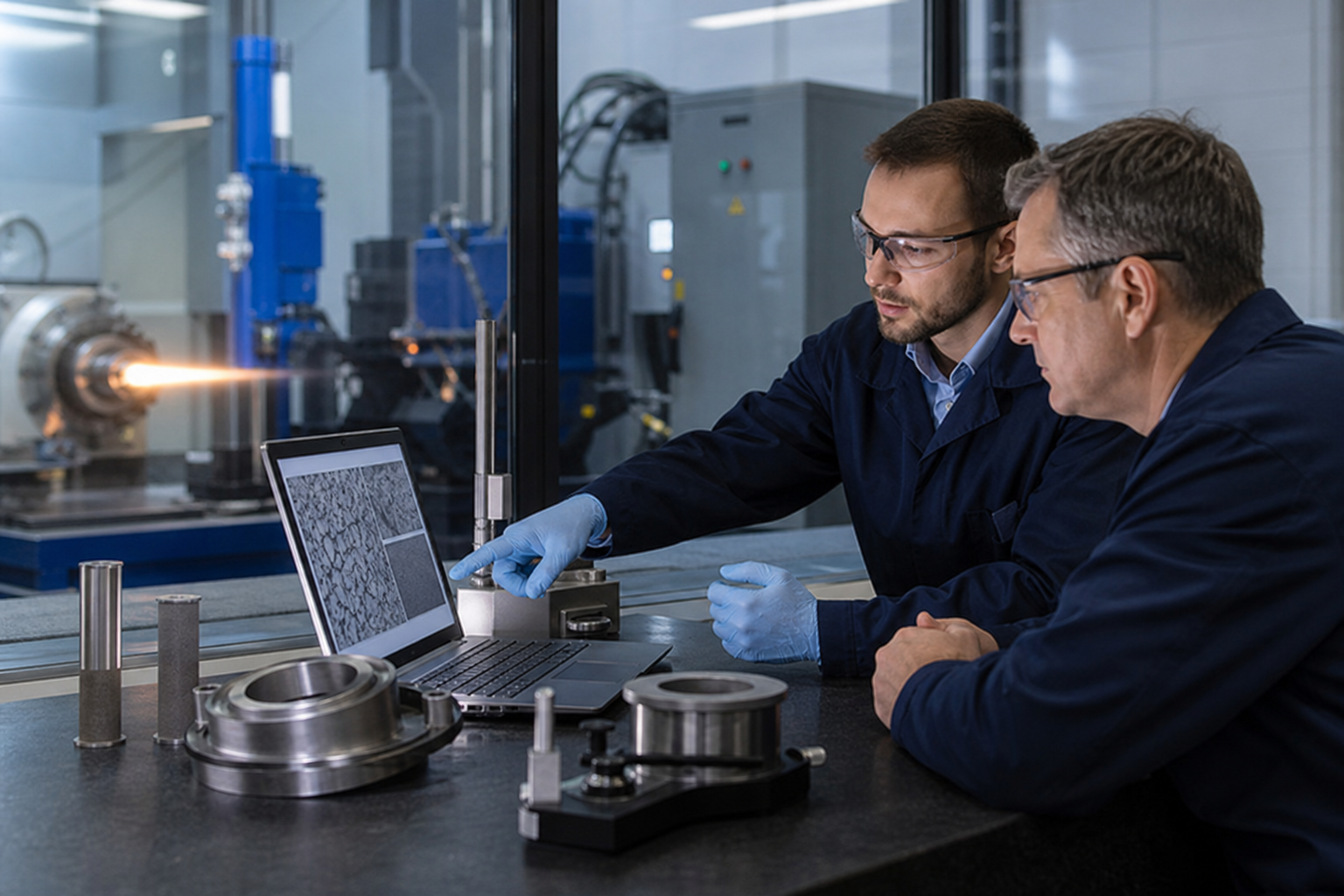
Here are typical concerns and validation steps you can require to reduce risk before full production.
Adhesion and bond strength concerns
Request bond testing and documentation of surface preparation. Common acceptance methods include tensile or pull off tests and cross sectional metallography to show a continuous, well adhered interface. A supplier with in‑house preparation and QC can control these variables tightly.
Porosity, roughness, and sealing requirements
If porosity or surface sealing matters specify porosity limits and roughness targets. When necessary ask for post‑deposition sealing or machining. Process selection and feedstock both influence deposit porosity and surface finish.
Dimensional control and rebuild tolerances
For rebuilds specify required oversize and final grind or lapping allowances. Suppliers should offer recommended deposit thickness and finishing steps to achieve final dimensions consistently.
How local capabilities and certifications reduce project risk
Working with a local, certified vendor that provides end to end capabilities lowers program risk. Sputtek operates a modern 15,000 sq ft facility in the Greater Toronto Area and lists Thermospray with pulsed HVOF among its services, backed by in‑house prep and post processing such as sandblasting, microblasting, degreasing, stripping, polishing, lapping, and a QC laboratory. Sputtek also holds ISO 9001:2015 certification and Nuclear N299.3 vendor approval which are relevant for regulated sectors and qualification traceability.
When you need to compare thin film choices versus thermal spray, our PVD guide helps map those alternatives and shows when a thin PVD or DLC film is preferable to a thicker thermospray overlay.
Next steps: how to request a trial, submit drawings, or get an engineering review
To move from checklist to test, prepare the engineering intake described above and submit it with part photos and quantities. Expect an initial technical review that recommends feedstock, target thickness, required inspections, and sample options. A trial or coupon run is the lowest risk path to validate pulsed HVOF before committing to production scale.
Ready to request a pulsed HVOF trial, submit drawings, or get an engineering review? Start on the Thermospray page or contact Sputtek for a local technical review and sample options.
Frequently asked questions
Can pulsed HVOF replace hard chrome plating for my application?
Pulsed HVOF can be a chromium free alternative in many wear and erosion scenarios, but replacement depends on geometry, required surface finish, and qualification. Ask your supplier for side by side test coupons and NDT reports to validate equivalence for your specific load case.
Will pulsed HVOF damage heat sensitive or tempered substrates?
Pulsed HVOF reduces continuous heat input compared with some spray variants but it still introduces thermal exposure. For heat sensitive or precisely tempered parts discuss chill fixtures, staged passes, or alternative processes with the coating supplier to mitigate metallurgical changes.
What feedstock materials are commonly used in pulsed HVOF coatings?
Common feedstocks include carbide cermets such as tungsten carbide with cobalt and chromium binders for heavy wear resistance. Supplier resources can recommend specific compositions and particle sizes for your application.
Which inspection tests should I require to validate pulsed HVOF performance?
Typical tests include thickness mapping, bond strength or pull off testing, porosity measurement, microhardness, and cross sectional metallography. Specify any OEM or industry NDT requirements in the RFQ to ensure conformity during qualification.
What information and sample quantities should I send to get an accurate pulsed HVOF quote?
Submit CAD and drawings with tolerances, photos, substrate chemistry and heat treatment, operating environment and loads, desired coating thickness, finishing requirements, inspection criteria, and suggested sample quantities for a coupon or pilot run so the supplier can price trials and scale up correctly.