
DLC coating services are professional thin-film treatments that deposit diamond-like carbon onto tools and components to reduce friction and wear. Delivered via PVD systems in controlled vacuum, DLC improves uptime and consistency for manufacturers. At 110 Sharer Rd in Woodbridge, Sputtek provides engineered DLC programs aligned to certified quality requirements.
By Rosen Tovbin • Last updated: 2026-06-05
Start here: what this guide covers and how to use it
This complete guide explains diamond-like carbon (DLC) coatings in practical terms: why they matter, how they’re applied, where they work best, and how to select a qualified service partner. Use it as a field reference for engineering, quality, and procurement teams planning DLC programs from prototype to stable production.
Use this guide to understand how DLC fits your parts and processes, then move into selection and implementation steps. We wrote it for manufacturing engineers, toolmakers, production leaders, and quality managers who need repeatable results under certified systems.
- Audience: Automotive, aerospace, oil & gas, nuclear, defense, medical, pharma, and packaging teams
- Scope: What DLC is, why it matters, methods, best practices, tools/resources, case examples, and FAQs
- Standards: Built around ISO 9001:2015 controls and Nuclear N299.3 vendor expectations
- Facility context: Sputtek’s 15,000 sq ft Woodbridge operation with multiple PVD machines and a thermospray cell
Quick summary
DLC is a hard, low-friction carbon coating applied by PVD in vacuum to extend tool life and stabilize production. It’s ideal for sliding/adhesive wear and sensitive surfaces. Success comes from part preparation, fixture design, coating recipe control, and documented QC—applied consistently from trials to volume.
In one place, you’ll find definitions, selection criteria, practical steps, and local considerations for teams operating in Woodbridge and the wider Regional Municipality of York. Bookmark this as your working reference across new product introduction and continuous improvement projects.
What is DLC coating?
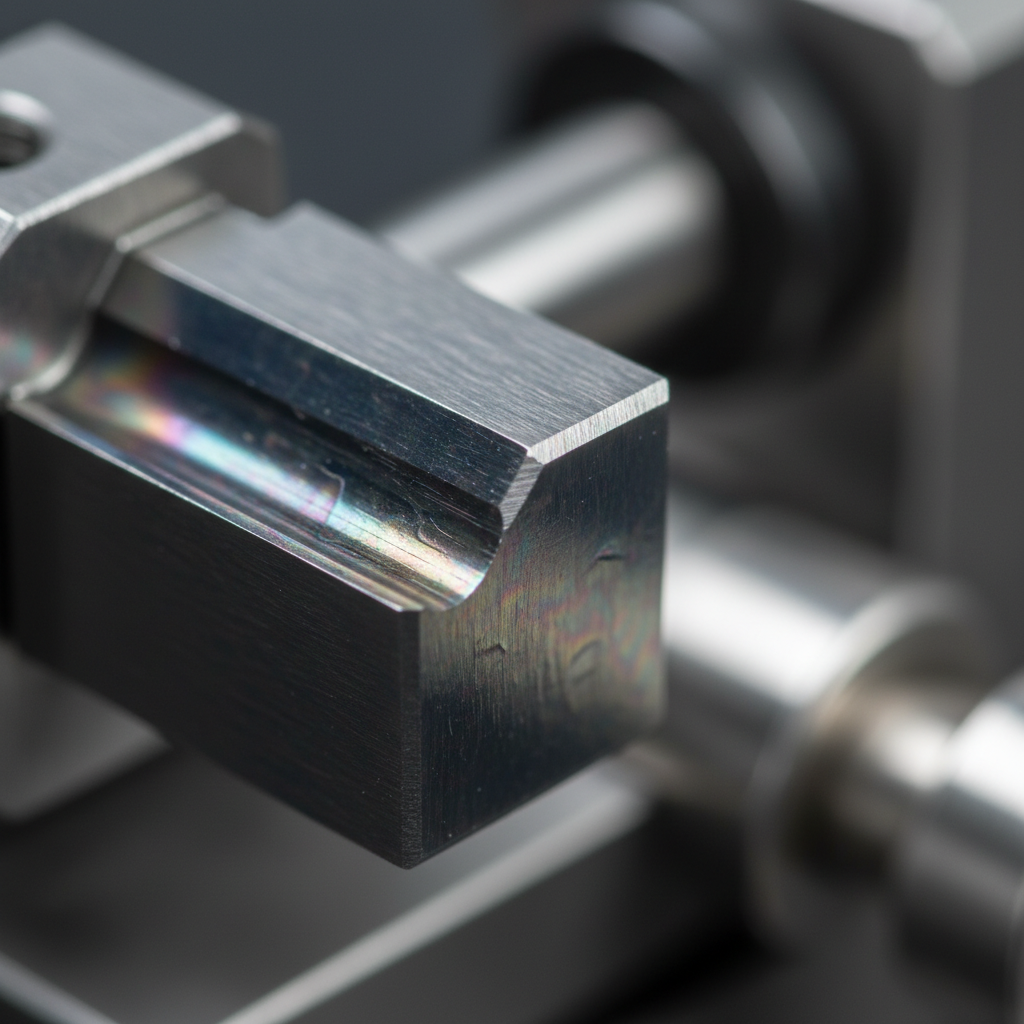
Diamond-like carbon (DLC) is a thin, amorphous carbon film engineered to deliver high surface hardness and ultra‑low friction. Applied by PVD at low substrate temperatures, it protects tools and components from sliding wear, scuffing, and galling without altering base dimensions or metallurgy.
DLC refers to a family of carbon-based films with diamond-like bonds. In practice, it’s a dark, mirror-like surface that resists adhesive wear and reduces friction against metals, polymers, and elastomers. Because it’s applied in vacuum, thickness uniformity and adhesion depend on meticulous cleaning, activation, and fixturing.
- Core properties: High hardness, low coefficient of friction, chemical stability, and smooth finish
- Application window: Sensitive to geometry, surface state, and base material (steels, carbides, titanium, some aluminum grades with proper interlayers)
- Common outcomes: Longer tool intervals, fewer startup adjustments, cleaner part ejection, and steadier SPC
Sputtek integrates DLC within a broader surface engineering toolkit—PVD hard coatings and thermospray (including Pulsed HVOF)—so engineering teams can select the right protection mechanism by failure mode, not by habit.
Why DLC coating matters for manufacturing
DLC coating matters because it reduces friction-driven losses, stabilizes wear, and preserves critical surfaces. In production, that translates to longer intervals between tool service, lower scrap, and fewer unplanned resets—benefits you can standardize across cells and suppliers under ISO-driven controls.
Friction and adhesive wear quietly drain uptime. Ejector pins stick. Draw beads polish. Sealing edges scuff. DLC addresses these failure modes without heavy re-engineering.
- Stability you can measure: Cleaner ejection and release behavior manifest as steadier cycle times and narrower capability spreads.
- Protection without bulk: Thin-film application preserves tolerances, which matters on precision cavities and sharp cutting edges.
- Certified delivery: Sputtek operates ISO 9001:2015 systems and holds Nuclear N299.3 approval—vital for regulated sectors.
Within Sputtek’s 15,000 sq ft operation, multiple PVD machines and a dedicated thermospray cell support both quick-turn prototypes and high-volume cycles. High-capacity SPUN systems (2,000 and 4,000 series) enable consistent runs and traceable results from batch to batch.
Protective coatings also play a role beyond discrete manufacturing. For example, protective layers are applied in construction to mitigate surface degradation; see this overview of coated rebar use for contextual parallels in different environments.
How DLC coating works (PVD fundamentals)
DLC is deposited in vacuum by physical vapor deposition (PVD). The process cleans and activates parts, then generates a carbon plasma that condenses onto surfaces. Fixture motion and recipe control drive film density, adhesion, and coverage, while low temperatures protect base metallurgy.
At a high level, DLC deposition follows a repeatable sequence that controls cleanliness, energy, and line-of-sight exposure. The specifics—pre-clean chemistries, plasma activation time, interlayer selection, bias power, and rotation kinematics—determine adhesion and uniformity on real-world geometries.
- Pre-clean and activation: Degreasing, microblasting where appropriate, then vacuum plasma to remove trace films and energize the surface.
- Interlayer engineering: Application of adhesion-promoting layers tuned to the base metal or carbide.
- Carbon plasma deposition: Controlled power and gas flows to build the target DLC structure while rotating parts for coverage.
- Cool-down and unload: Managed ramp-down preserves film stress state and minimizes handling marks.
- Post-process finishing: Light lapping or polishing when ultra-smooth finishes are required.
Because DLC is line-of-sight, fixture design and part presentation are critical. Sputtek’s engineering team optimizes rack layouts and motion strategies so edges, bores, and complex features receive the film characteristics your application requires.
Types of DLC and related coatings you should know
DLC exists in several formulations (hydrogenated, tetrahedral, doped) that trade off hardness, toughness, and friction. It’s part of a wider toolbox with PVD hard films (e.g., TiN, TiAlN) and thermal spray options like Pulsed HVOF, selected by dominant failure mode and operating temperature.
Not all “DLC” behaves the same way. Recipes, interlayers, and process energies produce distinct structures—each with preferred use cases. Understanding the family helps you map film choices to failure modes.
- a‑C:H (hydrogenated DLC): Versatile, low-friction film for sliding pairs and release-critical surfaces.
- ta‑C (tetrahedral DLC): Very hard carbon networks suited to abrasive contact when temperatures are moderate.
- Doped DLC variants: Tailored chemistry to influence stress, lubricity, or compatibility with specific alloys.
- PVD hard coatings (TiN, TiCN, TiAlN): High-temperature wear barriers for cutting and forming under heat.
- Pulsed HVOF (thermospray): Thick, bonded layers for erosion/corrosion or impact wear where film mass is advantageous.
Selection is about matching mechanism to mode: adhesive vs. abrasive wear, temperature envelope, counterface material, and whether thickness is a feature or a constraint. When in doubt, prototype two candidates on worst-case geometry and instrument the run.
How to choose DLC coating services in Woodbridge (and beyond)
Choose a DLC service partner by verifying certifications, process control, fixturing expertise, and capacity. Demand prototype-to-production continuity, in-house prep/post capability, and documented QC. For Woodbridge teams, local support and rapid logistics reduce downtime and make engineering trials faster.
For teams in Woodbridge and across the Regional Municipality of York, proximity shortens loops. You can move prototypes, tweak fixtures, and sit in on first-article reviews without disrupting operations. Beyond location, selection hinges on a few durable criteria.
- Certifications that matter: ISO 9001:2015 and, for regulated work, Nuclear N299.3 vendor approval.
- Capacity and scale: SPUN 2,000 (up to 1,200 kg/cycle) and SPUN 4,000 (up to 3,000 kg/cycle) support consistent large-batch runs.
- In-house ecosystem: Sandblasting, microblasting, cleaning, stripping, polishing, lapping, and QC lab work under one roof.
- Engineering-led process: Fixture design, recipe development, and failure-mode analysis built into the engagement.
- Cross-process breadth: Access to PVD hard films and thermospray (Pulsed HVOF) expands viable solutions.
Ask for case examples proven on parts like yours, with data logs from prototype through validation. Continuity is the secret to repeatability: same fixtures, same recipes, same QC checkpoints.
Local considerations for Woodbridge
- Plan drop-offs and pick-ups around traffic near Weston Rd / Highway 7; early morning windows help keep lines moving.
- Build trial runs before peak holiday periods; winter logistics can add handling time for sensitive fixtures.
- When coordinating multi-vendor builds near SmartCentres Woodbridge, consolidate inbound parts to reduce staging time at receiving.
Best practices: design, preparation, and quality control
DLC success comes from surface prep, fixturing, and recipe fidelity. Define critical surfaces, mask what must not coat, remove embedded contaminants, and stabilize geometry. Then lock settings in a controlled traveler and verify with documented metrology and functional checks.
In our experience, great DLC is mostly great preparation plus consistent execution. The more you invest up front in part presentation and acceptance criteria, the less you fight variability downstream.
- Design for coating: Add handling flats and maskable lands on precision faces; avoid deep blind features when possible.
- Surface readiness: Specify Ra/Rz targets; confirm bulk hardness and heat treatment, which influence adhesion strategies.
- Cleanliness chain: Eliminate drawing compounds and silicones; introduce validated cleaning that survives shipping.
- Fixture intent: Present edges and bores to line‑of‑sight; define rotation axes that resolve shadowing.
- Documentation: Traveler with checkpoints for prep, activation, interlayers, deposition, and final inspection.
- Verification: Combine optical inspection with functional tests (ejection force, torque-to-seize, start-up scrap charts).
For continuous improvement, treat DLC as a controlled process, not a black box. Minor changes in part supply, deburring, or cleaning often explain run-to-run shifts. Capture them.
Tools and resources: fixtures, PVD systems, and QC
Effective DLC programs rely on engineered fixtures, high-capacity PVD systems, and a capable QC lab. Sputtek’s SPUN 2,000 and SPUN 4,000 systems, in-house blasting/cleaning, and metrology close the loop from prototype to volume with repeatable settings and traceable results.
Tooling and measurement underpin consistency. The right racks, rotation, and test methods turn a coating recipe into a reliable manufacturing process that scales.
- Fixtures: Rigid, repeatable, and marked for orientation; designed to expose critical features.
- Systems: SPUN 2,000 (high throughput, up to 1,200 kg/cycle) and SPUN 4,000 (very high throughput, up to 3,000 kg/cycle).
- Prep capability: Sandblasting, microblasting, stripping, cleaning, and controlled drying to prevent re‑contamination.
- QC lab: Optical microscopy, thickness checks as specified, surface roughness, adhesion indicators, and functional gauges.
- Documentation: Work instructions, recipe parameters, and acceptance criteria versioned under ISO controls.
For broader context on automated coating workflows in industry, review an industrial coating automation example that illustrates how robotics and fixtures stabilize repeat work in production cells.
Use cases and mini case studies
DLC shines where sliding contact, stick‑slip, or scuffing limits output. These short examples show how teams apply DLC across stamping, molding, machining, die casting/extrusion, medical, pharma, and packaging—moving from trials to stable runs under documented controls.
Below are representative scenarios we see in the field. Each one starts with a clear failure mode and acceptance criteria, then proves stability before rollout.
- Stamping draw beads: Reduced adhesive wear on AHSS; steadier lube behavior, fewer panel wash marks.
- Ejector pins: Lower ejection force in multi-cavity molds; cleaner part release and fewer gate smears.
- Core/cavity inserts: Protected shut-offs with smoother finish; startup scrap narrows after tool changeovers.
- Valve spools: Mitigated stick‑slip against seals; improved hysteresis in test benches.
- Medical mandrels: Surface integrity maintained during forming; easier cleaning between lots.
- Pharma punches: Less sticking on excipient-rich blends; wear pattern stabilizes across long campaigns.
- Seaming rolls: Smoother metal flow; fewer surface defects on food & packaging lines.
- Cutting tools: Edge protection for ductile, gummy alloys; quieter chips and improved finish at equal feeds/speeds.
- Robot grippers: Reduced marring on cosmetic plastics; better grip consistency over time.
- Guide rails: Less fretting in high‑cycle assemblies; steadier positional accuracy.
- Die casting pins: Release enhanced in aluminum die casting; deposit build‑up attenuated between services.
- Extrusion mandrels: Smoother aluminum flow with fewer pickup lines; extended cleaning intervals.
- Threaded fastener tooling: Galling resistance on stainless; torque scatter reduced in torque‑angle tests.
- Optical components: Handling marks minimized on sensitive mounts; cleaning steps simplify between builds.
Each example is most valuable when combined with data from first-article reports and production logs. Standardize what worked: fixtures, recipes, prep, and QC—the exact combination you validated.
Implementation process: from sample to stable production
Lock in performance by running a structured, traceable DLC program: define failure modes, select candidates, run instrumented trials, and scale with unchanged fixtures and recipes. Document what you’ll hold constant and what you’ll adjust—and keep that discipline in production.
Here is a field-proven flow you can adapt to your operation. Keep it simple, visible, and controlled.
| Step | Objective | Owner | Evidence |
|---|---|---|---|
| 1. Define failure mode | Describe wear, friction, or release problems; specify acceptance criteria. | Manufacturing + Quality | Photos, SPC charts, gage plan |
| 2. Select candidates | Choose 1–2 coatings (e.g., DLC vs. TiAlN) mapped to mechanisms and temperature. | Engineering | DFMEA excerpts, selection rationale |
| 3. Prepare parts | Clean, strip (if needed), microblast, verify surface state and hardness. | Coating vendor | Traveler sign-offs, pre‑inspection |
| 4. Fixture and deposit | Present critical surfaces, apply recipe, record run parameters. | Coating vendor | Run log, recipe version |
| 5. Inspect | Visual/optical checks; functional tests aligned to acceptance. | Quality | FAI, photos, gauges |
| 6. Pilot run | Run worst-case geometry and materials; monitor behavior. | Manufacturing | Run report, SPC deltas |
| 7. Scale & standardize | Freeze fixtures/recipes; integrate travelers and checks into production. | All stakeholders | Controlled docs, training |
Keep procurement looped in so part flow, staging, and packaging match the prep you validated—small changes to bags, oils, or separators can undo the cleanliness you need for adhesion.
Turnaround, capacity, and scheduling signals
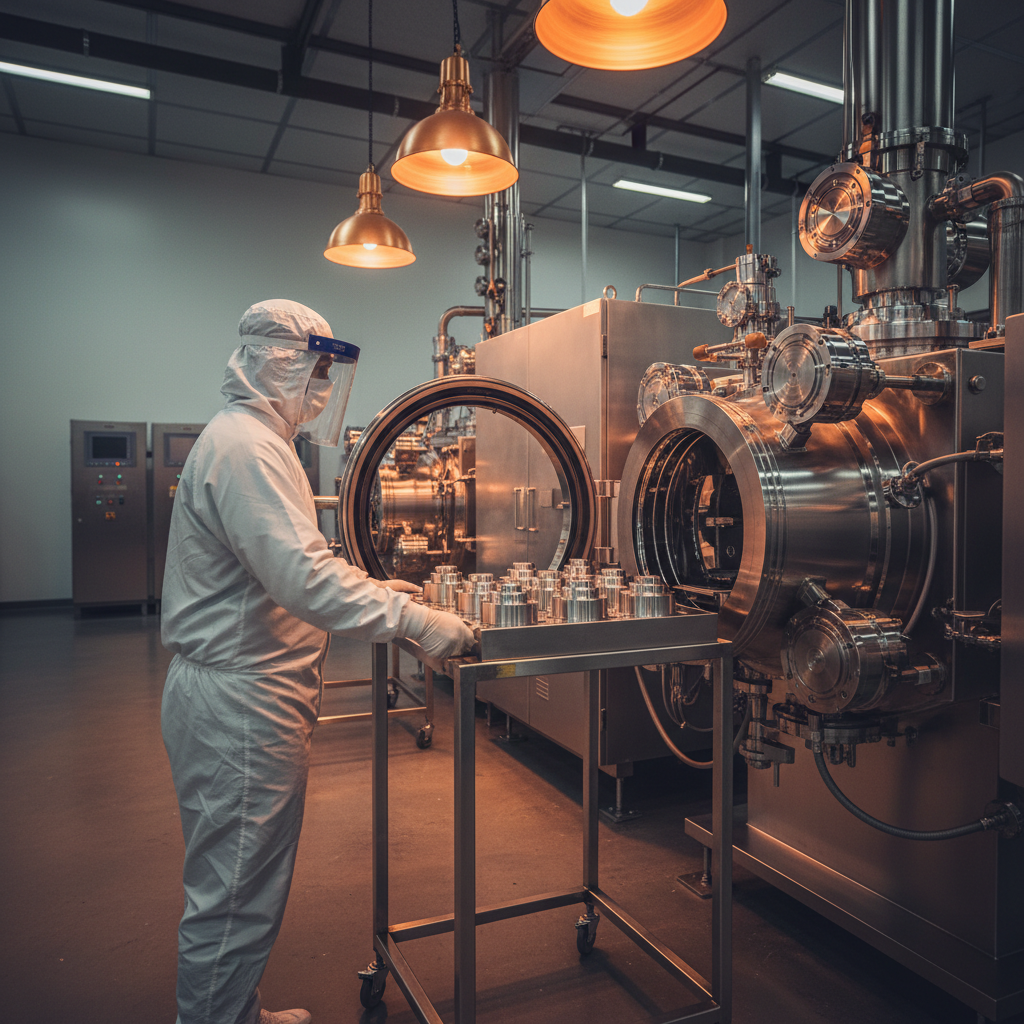
Reliable DLC timelines depend on in‑house prep/post steps, machine availability, and batch strategy. High-capacity systems (up to 3,000 kg/cycle) and standardized fixtures shorten queues. Define packaging and cleanliness rules early to avoid rework and keep cycles predictable.
Scheduling is smoother when you plan around real cycle times and prep steps. The more you control upstream variability, the easier it is to keep coating runs on cadence.
- Batch strategy: Group like materials, geometries, and recipes to limit changeovers and tuning time.
- Prep bottlenecks: Sand/microblasting and validated cleaning often gate throughput—align delivery with that reality.
- Fixture reuse: Standardized racks accelerate loading and reduce handling defects.
- Capacity signals: SPUN 4,000 (up to 3,000 kg/cycle) supports large-batch stability; SPUN 2,000 (up to 1,200 kg/cycle) balances agility with volume.
- Documentation: Clear travelers and acceptance criteria speed quality release and ship dates.
Protective coating concepts appear across sectors; for another domain view, this steel framing systems overview shows how standardized components and process discipline drive predictable outcomes—principles that also apply to DLC programs.
Frequently asked questions (FAQ)
These concise answers address the questions manufacturing and quality teams ask most about DLC: where it works best, how it affects tolerances, and how to prove value before scaling. Use them to kick-start internal discussions with stakeholders.
Where does DLC outperform other coatings?
DLC excels in sliding and adhesive wear scenarios—ejector pins, shut-offs, valve components, and sealing interfaces. When heat is moderate and you need a thin, smooth, low-friction surface, DLC is often the most reliable option to stabilize cycles without changing part geometry.
Will DLC change my tolerances or edge sharpness?
DLC is applied as a thin film in vacuum and is chosen specifically to preserve dimensions and sharp edges. With the right recipe and controlled prep, you retain functional geometry while gaining a harder, lower-friction surface that resists scuffing and pickup.
How do we validate DLC before wide rollout?
Run side-by-side trials on your worst-case geometry with agreed acceptance criteria—ejection force, start-up scrap, visual defects, or torque-to-seize. Capture logs from prep to inspection, then freeze fixtures and recipes for production. That continuity is what makes results repeatable.
When is a PVD hard coating or Pulsed HVOF better?
If operating temperatures are high or you need a thicker erosion/corrosion barrier, a PVD hard film (like TiAlN) or a thermospray option (such as Pulsed HVOF) can outperform DLC. Pick by failure mode, temperature, and whether thickness helps or hurts your design.
Key takeaways
DLC is a thin, hard, low‑friction film that stabilizes production when adhesive wear and stick‑slip cause downtime. Success relies on prep, fixtures, and documented recipes under certified quality systems. Validate on worst‑case parts, then standardize what works from prototype through volume.
- Match coating to failure mode and temperature window.
- Control cleanliness and geometry before the chamber—not after.
- Design fixtures for line‑of‑sight coverage and repeatable orientation.
- Standardize recipes, travelers, and QC for scale-up.
- Use local logistics to tighten engineering loops in Woodbridge.
Conclusion and next steps
Treat DLC as a controllable manufacturing process—not an afterthought. Define problems clearly, select coatings by mechanism, validate on tough parts, and lock in recipes and fixtures. With certified systems and high-capacity PVD, you can turn DLC into a dependable lever for throughput and quality.
Sputtek is Canada’s largest PVD/DLC service provider with ISO 9001:2015 and Nuclear N299.3 approvals. From our 15,000 sq ft Woodbridge facility, we support prototype to high-volume production with in-house prep, PVD systems (SPUN 2,000 and SPUN 4,000), a thermospray cell, and QC lab. If you want a quick overview of protective surface use in another industry, this coated steel example shows how controlled processes extend service life—an idea that translates well to tooling and components.
Ready to evaluate a part? Bring your drawings and failure modes to 110 Sharer Rd, Woodbridge, or call (416) 213-9833. We’ll outline a DLC trial that respects your tolerances, throughput targets, and regulatory requirements.