
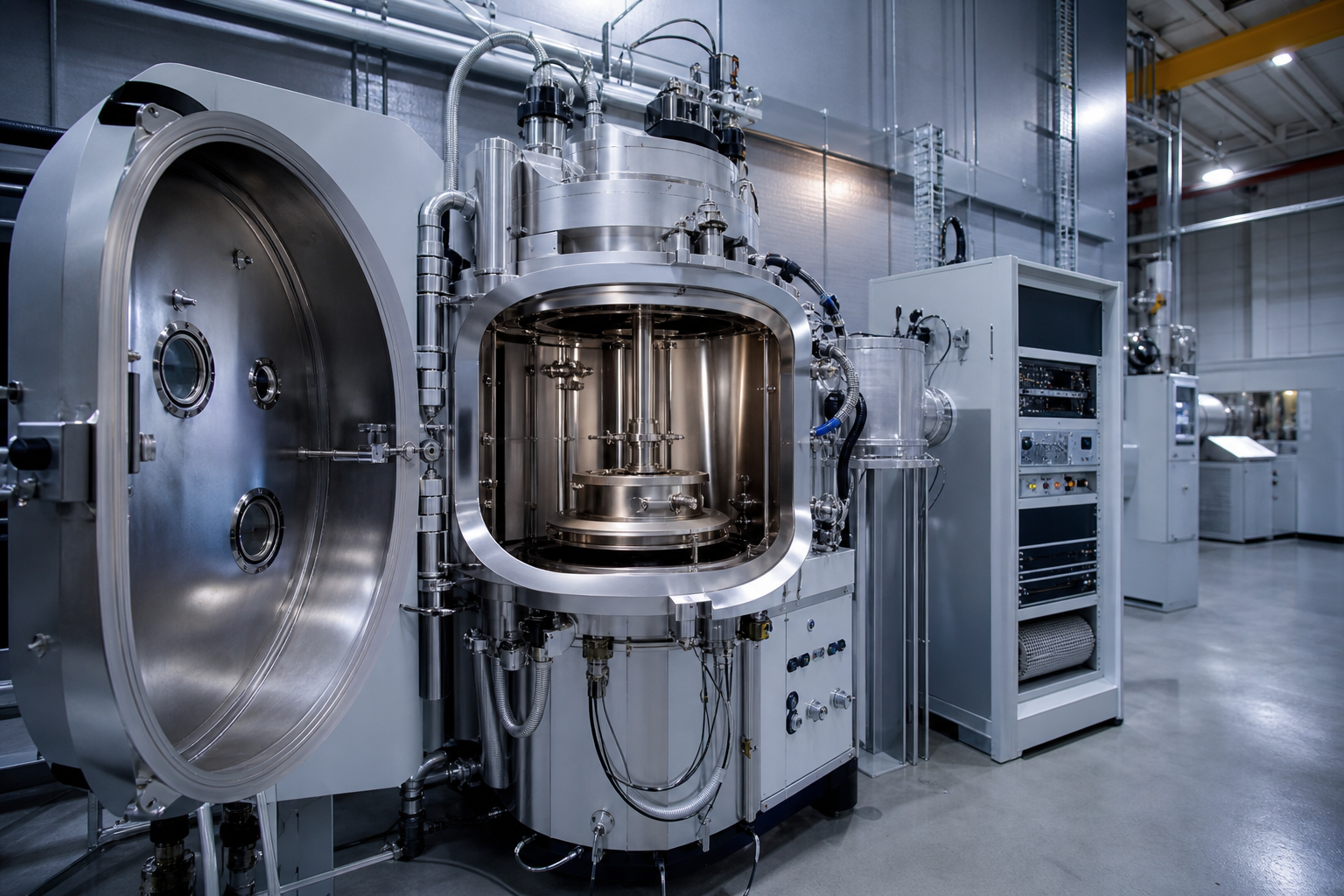
A Practical Guide to Coating Equipment
Coating equipment turns surface engineering intent into repeatable, production-grade results. Whether you are preparing to specify a new line or to upgrade an existing cell, the goal is the same: consistent surfaces that meet functional targets from prototype through volume manufacturing. This guide focuses on two families of coating equipment referenced in the supplied data—PVD (Physical Vapor Deposition) coating systems and Thermospray equipment (including Pulsed HVOF)—and the supporting preparation and post-processing steps that enable stable outcomes in demanding applications.
What coating equipment does
At its core, coating equipment enables controlled deposition onto tools, components, and assemblies so that surfaces exhibit the required wear, friction, and corrosion behavior for their intended use. In industrial settings, equipment choices are shaped by the end part and its environment—automotive, aerospace, oil and gas, nuclear, defence, medical, pharmaceutical, and food & packaging are all listed in the supplied data as sectors where precision and durability are mission-critical.
Two equipment categories appear prominently in the data:
- PVD coating systems, including systems referred to as SPUN 2,000 and SPUN 4,000, as well as custom-designed solutions.
- Thermospray coating equipment, including Pulsed HVOF.
These systems can be paired with in-house preparation and finishing capabilities listed in the data—sandblasting, microblasting, degreasing and cleaning, stripping and polishing, after-coating polishing (lapping), and quality control laboratory testing—to support end-to-end process reliability.
PVD coating systems: basics that matter
PVD (Physical Vapor Deposition) coating systems are referenced as advanced PVD coating systems and explicitly named in the data as SPUN 2,000, SPUN 4,000, and custom-designed solutions. The systems are used to produce high-performance coatings, including DLC (diamond-like carbon is referenced in the supplied material as a service area within PVD/DLC). While specific machine internals are not provided in the data, planning for PVD equipment generally revolves around the parts you will run and the operational profile you need to support—from prototyping to high-volume manufacturing, both of which are called out.
When aligning needs with PVD equipment referenced in the data, consider:
- Batch size expectations: The data references high-capacity systems by name; matching batch size to system scale is a core planning step.
- Coating portfolio: PVD and DLC appear in the data. Ensure your chosen platform and target configurations support the portfolio you intend to run.
- Lifecycle coverage: The supplied information highlights support from prototype through high-volume production. Plan for fixture flexibility and process documentation that can scale.
- In-house process alignment: The data lists preparation, stripping, polishing, lapping, and QC testing. Map these steps to your routing so the equipment cell is not a bottleneck.
Typical applications mentioned in the data include stamping, plastic processing, machining and cutting, aluminum die cast and extrusion, and general components. Use this list to stress-test your part mix against the fixturing, throughput, and coating variants you will need from your PVD cell.
Thermospray and Pulsed HVOF: overview
Thermospray coating equipment, including Pulsed HVOF, is also present in the supplied data. These systems deposit coatings suitable for harsh industrial environments where wear and corrosion performance are critical. Because the data references Thermospray and Pulsed HVOF side by side, treat them as a complementary equipment family to PVD when building a broader surface engineering toolkit.
When scoping Thermospray equipment based on the provided information, plan around:
- Coating objectives: The data references wear-resistant and corrosion-resistant outcomes. Align feedstock selection and process windows with these goals.
- Part categories: As with PVD, the same industries and applications appear. Confirm handling, masking, and post-processing fit your parts.
- Pre- and post- steps: The data explicitly lists sandblasting, microblasting, and after-coating lapping—these are common companions to sprayed coatings and should be scheduled and capacity-matched.
Production workflow: from prep to post
The supplied data emphasizes in-house steps that frame coating quality. Use them to define a durable, auditable workflow:
- Surface preparation: sandblasting and microblasting are listed, along with degreasing and cleaning. Use these to establish a clean, conditioned surface prior to coating.
- Coating: run the selected PVD or Thermospray (including Pulsed HVOF) process according to your defined part families and coating recipes.
- Stripping and polishing: stripping may be required during rework or refurbishment; polishing can refine surface finish before or after coating per your specification.
- After-coating polishing (lapping): explicitly noted in the data and commonly used to achieve tight surface finish targets on coated parts.
- Quality control laboratory testing: the data lists QC lab testing as an in-house capability; establish inspection and test plans that confirm conformance before release.
Document each step so prototype findings can be transferred into stable, high-volume routines. The data’s emphasis on prototype-to-production continuity makes this documentation essential when scaling.
Equipment selection checklist
Use this concise, data-aligned checklist to structure your selection process for PVD systems and Thermospray equipment:
- Applications covered in the provided data: stamping, plastic processing, machining and cutting, aluminum die cast and extrusion, and components—confirm that fixtures, tooling, and part sizes fit.
- Industry alignment: automotive, aerospace, oil and gas, nuclear, defence, medical, pharmaceutical, food & packaging—verify documentation and process controls match the expectations in these sectors.
- Coating families: PVD (including DLC) and Thermospray (including Pulsed HVOF)—ensure the equipment supports the specific variants you plan to run.
- Scale: the data references systems by name (SPUN 2,000, SPUN 4,000) and custom designs; map your batch weights and cycle cadence accordingly.
- Supporting processes: sandblasting, microblasting, degreasing, stripping, polishing, lapping, QC lab testing—confirm these are planned and capacity-matched.
- Quality expectations: establish inspection and test checkpoints that reflect your parts’ acceptance criteria.
- Prototype-to-volume pathway: plan fixtures, recipes, and documentation so early runs translate directly into production.
Integration and scaling considerations
The information provided references a full production lifecycle—from prototyping to high-volume manufacturing. Translate that into practical integration steps:
- Routing design: place preparation, coating, and post-processing in a contiguous flow so coated parts are not waiting on upstream or downstream steps referenced in the data.
- Fixture strategy: prepare universal and part-specific fixtures that handle the application types mentioned. This reduces changeover friction as you move from samples to larger batches.
- Recipe control: link part numbers to coating recipes and post-processing parameters. Keep these documents synchronized across PVD and Thermospray cells.
- Capacity modeling: use named system scales (e.g., SPUN 2,000 and SPUN 4,000) as anchors when estimating batch cadence and staffing.
- Feedback loops: incorporate QC lab data into recipe updates so process windows remain aligned with acceptance limits.
Quality assurance and QC lab
Quality control laboratory testing is explicitly called out in the supplied data. Treat QC as integral to equipment planning rather than an afterthought:
- Define incoming, in-process, and final checks that reflect your coated part families.
- Align QC sampling plans with batch sizes and application severity in the listed industries.
- Ensure traceability from prototype experiments to production lots so lessons learned carry forward.
Because the data spans regulated and high-performance sectors, keep your documentation and test evidence organized to support internal reviews and customer audits.
Applications and part families
The supplied data identifies several coating application areas. Use them to frame fixturing, masking, and throughput planning:
- Stamping applications
- Plastic processing applications
- Machining and cutting tools coatings
- Aluminum die cast and extrusion coatings
- Components coating services
For each application group, maintain a part family matrix that links geometry ranges, surface finish requirements, coating selection (PVD, DLC within PVD, or Thermospray/Pulsed HVOF as cited in the data), and post-processing steps such as lapping. This matrix becomes your blueprint for scheduling, fixture readiness, and QC checkpoints.
Operational readiness and changeover
Moving from prototype to production requires predictable changeovers. With the processes explicitly listed in the data, you can build a readiness checklist:
- Preparation cell status: sandblasting, microblasting, degreasing and cleaning are configured for the incoming part materials and geometries.
- Coating cell status: confirm recipe documentation is current for the selected PVD or Thermospray (including Pulsed HVOF) process.
- Post-processing readiness: stripping and polishing procedures are available for rework; lapping parameters are verified for target surface finishes.
- QC alignment: sampling plans and test methods are linked to the lot size and part family.
This structured handoff shortens learning curves and stabilizes takt as you scale.
Risk reduction and contingencies
Because the listed industries often operate under strict performance expectations, a simple risk plan helps keep production on track:
- Alternative routing: if a polishing or lapping asset is down, establish contingency routing that maintains finish requirements.
- Rework limits: define clear, documented criteria for when to strip and recoat based on part criticality.
- First-article confirmation: for each part family, lock a first-article record so future runs can be quickly verified against known-good targets.
FAQ: coating equipment
What coating equipment types are referenced here?
The supplied data references PVD coating systems (including SPUN 2,000, SPUN 4,000, and custom-designed solutions) and Thermospray coating equipment (including Pulsed HVOF). It also lists related in-house process steps such as sandblasting, microblasting, degreasing and cleaning, stripping and polishing, after-coating lapping, and quality control laboratory testing.
Which industries and applications does the information cover?
Industries cited include automotive, aerospace, oil and gas, nuclear, defence, medical, pharmaceutical, and food & packaging. Application areas listed include stamping, plastic processing, machining and cutting tools, aluminum die cast and extrusion, and general components.
How should I plan from prototype to high-volume production?
The provided material highlights a full production lifecycle from prototyping to high-volume manufacturing. Align fixtures, recipes, preparation steps (such as sandblasting, microblasting, degreasing and cleaning), coating processes (PVD and Thermospray including Pulsed HVOF), post-processing (stripping, polishing, lapping), and QC laboratory testing so that documentation and capacity scale together.
What post-processing is mentioned for achieving final surface finish?
After-coating polishing (lapping) is explicitly listed in the data and is commonly used to meet tight surface finish targets. Polishing and stripping are also referenced for preparation and rework as needed.
Where can I learn more about PVD systems and Thermospray equipment?
The official website URL provided in the data is a direct next step for additional information.