
PVD coating systems explained for technical buyers
This article defines PVD coating systems, summarizes the common process variants, compares PVD with thermal spray and plating, and gives the technical and procurement criteria engineering teams need when deciding to buy equipment or use a contract coater. Use the decision checklist to map application requirements to system capabilities and to validate local vendor fit.
What a PVD coating system is and how it works
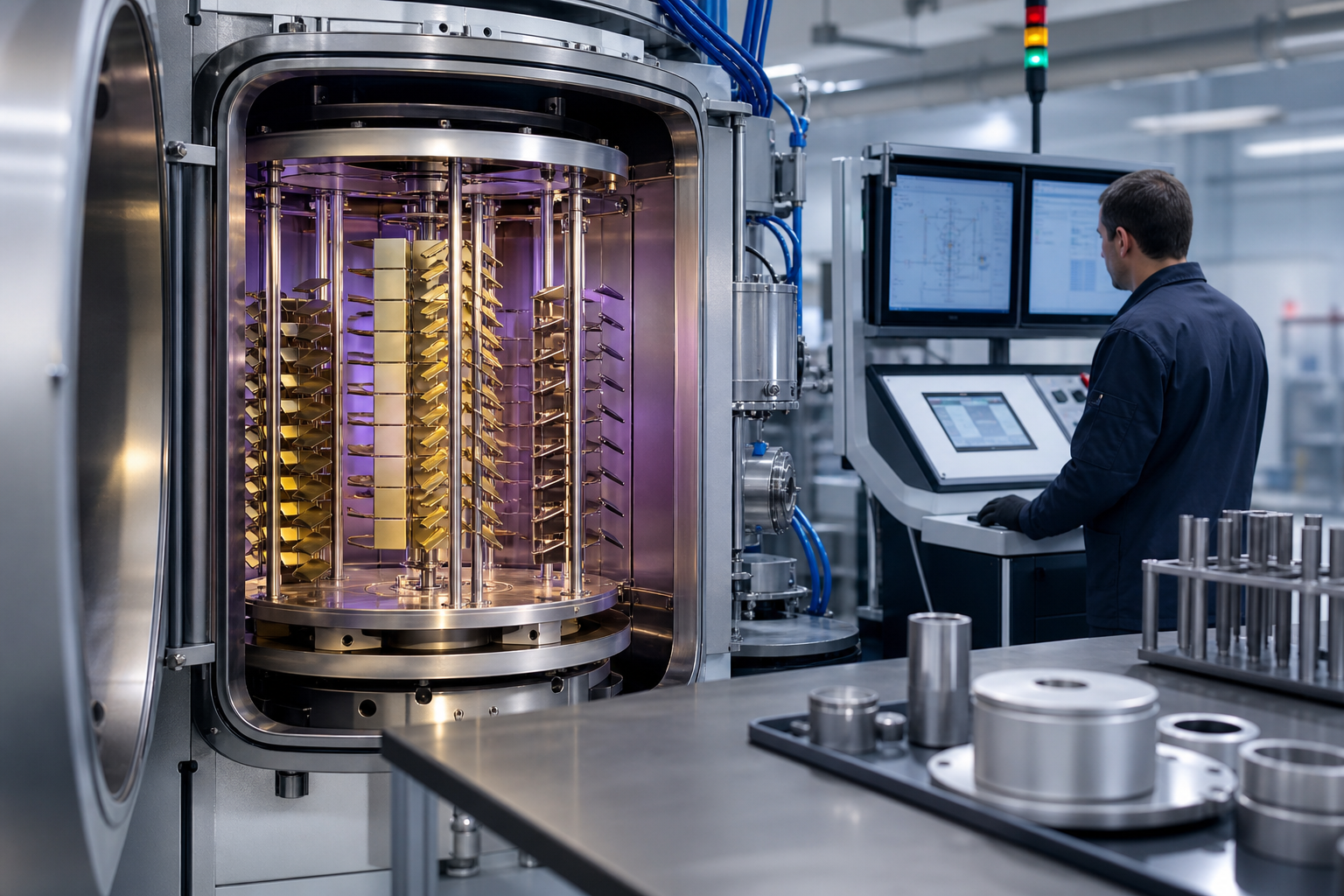
Physical vapor deposition, or PVD, is a family of vacuum deposition technologies in which coating material is vaporized and condensed on a substrate to form a thin, solid film. PVD methods operate inside a controlled vacuum chamber and typically do not require subsequent heat treatment of the coated component. A concise primer on the basic PVD principle and how it differs from other coating approaches is available from the Open University.
At the system level the workflow is consistent across vendors: load fixtures or a batch, pump to vacuum, perform ion or plasma cleaning, vaporize the target material by sputtering, cathodic arc evaporation, or thermal evaporation, deposit the film while controlling energy and reactive gases, then vent and unload. Each step determines what materials, substrate types, and part geometries the system will handle reliably, and what process control data you can expect for repeatability.
Common PVD process variants and when each fits
Three PVD families dominate industrial coating work for tooling and components: sputtering, cathodic arc evaporation, and evaporation. Each has trade offs engineers should weigh against application requirements.
- Sputtering produces dense, uniform films and works well for metals, alloys, and some ceramics. It adapts to complex shapes with good adhesion, though deposition rates can be moderate.
- Cathodic arc evaporation offers higher deposition rates and dense coatings such as titanium nitride or chromium nitride. Arc processes can introduce macroparticles that require filtration or post processing for cosmetic finishes, but they are widely used where robust wear resistance is the priority.
- Evaporation yields very pure films and is effective for thin, uniform functional or decorative layers. It is less common where reactive compound formation is required for heavy wear resistance.
Select a process by matching the required chemistry, microstructure, and deposition rate to part geometry and tolerance needs. Manufacturer buyer guides and system documentation are useful when mapping scale and materials to application requirements.
How PVD compares with thermal spray, plating, and DLC
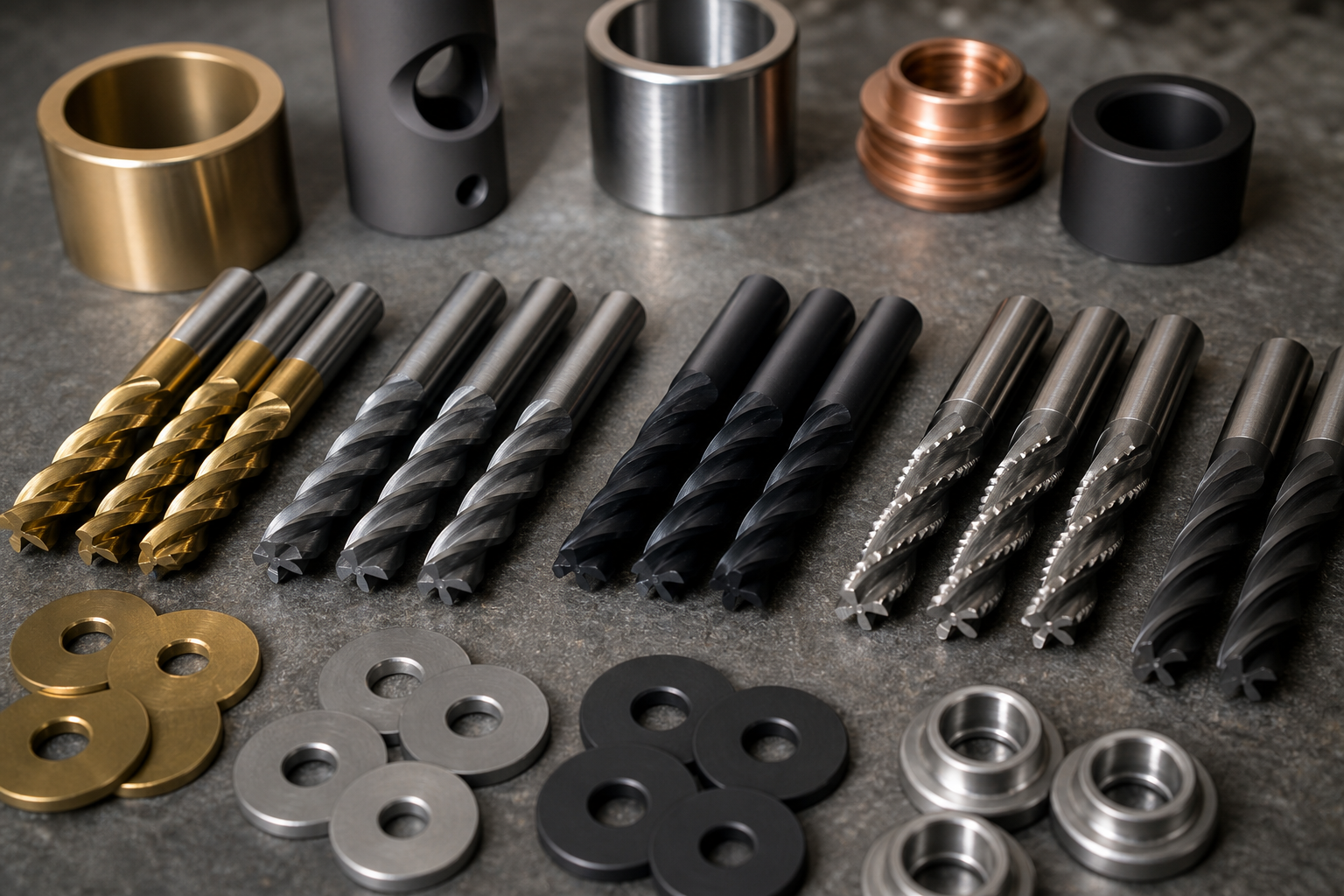
When deciding between surface treatments, compare these practical attributes: thickness range, substrate heating, adhesion mechanism, ability to coat complex geometries, and suitability for tooling versus large structures.
- Thickness — PVD films are thin, typically a few nanometers to a few micrometers, which preserves dimensional tolerances. Thermal spray and HVOF produce much thicker builds for heavy wear layers or dimensional restoration.
- Wear resistance and microstructure — PVD nitrides offer hard, low friction surfaces in thin cross sections. Thermal spray and pulsed HVOF deposit ceramic and cermet layers with different fracture and impact resistance. Use thermal spray when thickness and impact resistance are primary needs; use PVD when thin, low friction films are required.
- Substrate heating — PVD in vacuum generally minimizes substrate heating compared with some thermal spray methods that can introduce higher thermal loads and affect heat treated parts.
- Complex geometries — PVD vapour can reach recessed areas but fixturing and line of sight matter for deep cavities. Thermal spray is also line of sight and is often preferable for large structural parts or thick overlays.
- DLC and hybrid approaches — Diamond like carbon, or DLC, is selected for very low friction and chemical inertness and can be deposited by some PVD methods. Suppliers often combine PVD, DLC, and thermal spray in evaluations to meet specific wear, friction, and corrosion requirements.
Industry decision checklists for thermal spray and thin film systems help clarify trade offs between methods and guide lab testing of candidate solutions.
System components and specifications to insist on when buying or specifying
Not all PVD systems deliver the same performance. When writing requirements or comparing proposals require clear answers on these technical items.
- Chamber size and load capacity, shown as usable dimensions and maximum gross part weight per cycle, determines batch throughput and fixturing options.
- Target or cathode types and material compatibility, including reactive gas capability for nitrides, oxides, or carbides.
- Power supplies and process control, including power ranges, pulsing ability, and recipe storage for reproducible runs.
- Fixture rotation and masking to ensure uniform film thickness on complex parts.
- Preconditioning modules such as ion cleaning, plasma activation, or bias capability to improve adhesion.
- Automation and loading options that reduce operator handling and cycle time variability.
- Deposition rate and in situ monitoring so you can estimate cycle time and reproducibility.
- Maintenance access and consumable life to plan operating costs and downtime.
- Process qualification and documentation that enable traceability, recipe lock down, and handover to production teams.
System manufacturers publish buyer guides that explain how these specifications translate to production outcomes. For example, specification sheets should allow you to calculate throughput in parts per hour or kilograms per cycle.
Operational and procurement criteria engineering and purchasing teams need

Translate technical features into procurement questions and measurable targets so quotes are comparable.
- Throughput, expressed as parts per hour or kilograms per cycle, is essential for comparing buy versus outsource economics. High capacity systems reduce per part cost for large batches but increase capital expense.
- Repeatability and process control measured by coating thickness variance, hardness, and adhesion across runs.
- Pre and post processing such as sandblasting, degreasing, stripping, polishing, and lapping. In house availability reduces logistics and lead times.
- Quality and regulatory approvals required by your contracts, for example ISO 9001:2015 and Nuclear N299.3. Request documented certificates and scope during supplier evaluation.
- Scalability from prototype to volume with consistent recipes so qualification transfers cleanly to production.
- Total cost of ownership including capital, utilities, consumables, maintenance, operator training, and compliance costs versus the unit price a contract coater charges.
Buy versus outsource decision checklist
Use these concise criteria to decide whether to invest in a PVD system or contract coating with a qualified supplier.
- Annual volume — If you anticipate consistent multi shift production and large batch cycles, buying may be viable. If volumes are intermittent, outsourcing avoids idle capital.
- Part complexity and tolerance — If you need tight dimensional control and thin functional films integrated into assemblies, in house control of fixturing and recipes is valuable.
- In house expertise — Assess whether you can staff process engineers and maintenance technicians or whether vendor training and support would be more cost effective.
- Capital and operating budget — Compare equipment acquisition, facility modifications for vacuum and utilities, and expected maintenance against contract pricing across forecasted volumes.
- Risk tolerance for downtime and process drift — If you cannot tolerate line downtime from equipment failure, outsourcing to a certified provider with redundancy can mitigate that risk.
- Qualification and testing — Require adhesion, hardness, and wear test results on representative coupons and process data sheets that show repeatability.
For buyers in the Toronto and Greater Toronto Area who prefer to validate a supplier before investing, request a local feasibility trial and ask about high capacity system fit for large batches. Some suppliers operate SPUN systems rated for roughly 1,200 kilograms per cycle on SPUN 2,000 and up to about 3,000 kilograms per cycle on SPUN 4,000, which supports larger production runs. When regulated approvals matter request copies of ISO 9001:2015 and Nuclear N299.3 evidence during vendor evaluation.
Common objections and how engineers typically address them
Engineering and procurement teams raise repeat concerns. Below are typical objections and practical mitigations.
- High capital cost — Start with contract coating or lease models, or pilot a small in house cell while demand is validated.
- Perceived long cycle times — Specify automation and larger chamber capacity to reduce handling time, or schedule batches to avoid bottlenecks.
- Material limits — Lock required chemistries during vendor selection and request sample coupons to verify performance.
- Maintenance complexity — Require a documented maintenance plan, spare parts list, and vendor training and support agreement when purchasing equipment.
- Process qualification — Use vendor or third party qualification trials with repeatability data and signed process control plans before committing to production.
Next steps and quick vendor validation for Toronto manufacturers
Follow this prioritized sequence to move from problem definition to a validated coating solution.
- Collect baseline metrics on the failure mode you intend to solve, including wear rate, friction, cycle life, and dimensional tolerances.
- Request process data sheets, copies of ISO 9001:2015 and Nuclear N299.3 certificates when applicable, and representative sample coupons from prospective suppliers.
- Ask for deposition capacity details and load weight per cycle to match your batch sizes and throughput needs. For larger batches check whether the supplier operates SPUN systems or equivalent high capacity machines.
- Arrange a feasibility trial or lab test with your top two suppliers and require adhesion, hardness, and wear testing on parts or coupons.
- Compare the total cost of ownership for buying a system against three years of outsourcing costs including freight, lead time risk, and quality control overhead.
To help you evaluate processing choices, read the PVD Coating Guide and consult manufacturer buyer guides and thermal spray decision checklists during supplier selection.
Frequently asked questions
What is the difference between PVD and DLC coatings
Diamond like carbon, or DLC, is a family of low friction, hard coatings that can be deposited by some PVD methods. The distinction is that DLC describes the coating chemistry and tribological function, while PVD describes the deposition family. In procurement specify both the deposition method and the functional requirements such as coefficient of friction and targeted wear life.
When should I choose PVD instead of thermal spray or plating
Choose PVD when you need thin, dense films with tight dimensional control, low friction, and minimal substrate distortion. Choose thermal spray or pulsed HVOF when you need thick overlays, dimensional restoration, or coatings with impact resistance. Use plating when electrochemical bonding or specific corrosion protection is required.
What minimum information should I request from a PVD supplier to evaluate capability
Request chamber dimensions and load capacity, process recipes and repeatability data, sample coupons with test results for adhesion, hardness, and wear, maintenance and spare parts plans, and copies of ISO 9001:2015 and any sector specific approvals your procurement requires.
Can PVD coat nonmetal substrates such as plastics or polymers
PVD can coat some polymers, but success depends on the substrate’s thermal sensitivity and proper fixturing. Perform part level feasibility tests to verify adhesion and film performance before production runs.
What do ISO 9001:2015 and Nuclear N299.3 approvals mean for procurement
ISO 9001:2015 documents that a supplier follows a certified quality management system. Nuclear N299.3 indicates vendor approval to provide services for nuclear industry components under a defined quality framework. When working in regulated sectors request certified documentation and confirm the approvals cover the scope of work you plan to award.
Key references used for technical context include an overview of PVD technology from the Open University, process selection guidance from PVD system manufacturers, and thermal spray selection checklists from industry sources. These resources are useful when planning lab trials and comparing supplier data.
If you are ready to validate a coating solution or request a feasibility trial from a certified local provider, contact Sputtek to discuss application requirements, capacity fit, and available lab testing.