
Physical vapor deposition coating is a vacuum process that deposits thin, hard films like TiN, TiCN, and DLC onto tools and components to improve wear resistance and reduce friction. It forms dense, adherent layers measured in microns that extend service life and stabilize quality. For teams in Woodbridge, this means longer runs and fewer changeovers.
By Ron, Sputtek • Last updated: 2026-06-30
At a Glance: What this guide covers
This complete guide explains what PVD coating is, why it matters for uptime and quality, how it works step-by-step, when to choose each method, and the best practices we use at Sputtek. You’ll see practical examples across stamping, molds, cutting tools, and aluminum die cast/extrusion applications.
Use this as your working playbook. We focus on clear definitions, actionable checklists, and engineering context you can put to work the same day.
- What physical vapor deposition coating is and how it builds durable thin films
- When PVD outperforms alternatives on wear, adhesion, and friction control
- How to prepare parts, choose recipes, and verify quality in production
- Application notes for stamping, plastic injection molds, and cutting tools
- How Sputtek’s SPUN systems and ISO/N299.3 processes support scale-up
As you read, you’ll see internal references to our deposition pillar and DLC cluster resources for deeper dives, including a PVD deposition guide and a complete DLC overview.
What is physical vapor deposition (PVD) coating?
PVD coating is a vacuum-based process that vaporizes source materials (targets) and condenses them on parts to form thin, dense, and adherent films. It improves surface hardness, friction, and wear resistance while preserving base material dimensions—ideal for precision tooling and components.
Think of PVD as engineered surface upgrading. We deposit functional compounds—such as TiN, TiCN, CrN, AlTiN, and DLC—without changing critical dimensions, which protects fits, sharp edges, and sealing surfaces.
- Precision-friendly: Coating thickness is engineered in microns to maintain tolerances and edge integrity.
- Versatile chemistries: Nitrides, carbides, oxides, and carbon-based films address distinct wear and corrosion modes.
- Clean and controlled: Vacuum deposition minimizes contaminants and promotes high adhesion.
For regulated sectors, PVD integrates well with documented manufacturing systems. Sputtek’s quality stack includes ISO 9001:2015 controls and Nuclear N299.3 vendor approval—both helpful when your PPAP, FAIR, or surveillance audits demand complete traceability.
To see how this aligns with our pillar on deposition fundamentals, visit our metal vapor deposition resource.
Why PVD coating matters for manufacturers
PVD increases uptime by reducing abrasive wear, adhesion, and friction. It supports consistent part quality across long production runs, especially in stamping, molding, and machining—where stable surfaces translate into lower scrap and fewer tool changes.
Here’s the thing: wear isn’t just a maintenance headache; it’s a throughput limiter. When edges dull or surfaces gall, quality drifts and changeovers multiply. PVD stabilizes that surface behavior.
- Longer tool life: Hard, low-friction films resist abrasion and reduce edge breakdown in stamping and cutting.
- Clean release: On molds and cores, engineered chemistries lower sticking and residue buildup, supporting faster cycles.
- Dimensional stability: Thin films preserve geometry, so you maintain fits and sharpness while upgrading surface performance.
- Process capability: Fewer unplanned interventions help capability indices trend in the right direction over more parts.
In our experience supporting Woodbridge manufacturers, the companies that document surface performance like any other CTQ see the most predictable results. That’s why we treat coating as a controlled step, not a commodity add-on.
You can also compare this section with our PVD finishing best practices for additional context on surface prep and post-processing.
How PVD coating works (step-by-step)
PVD works by preparing clean substrates, evacuating a vacuum chamber, generating a vapor from solid targets (via sputtering or arc), and condensing that vapor on rotating parts. The result is a dense, adherent thin film tailored for hardness, friction, and thermal stability.
While every recipe varies, the process follows a repeatable framework. Consistency here is everything.
- Preparation: Degreasing, ultrasonic cleaning, masking, and media blasting as needed to create a uniform, active surface.
- Vacuum load-in: Fixtures orient parts for uniform line-of-sight coverage; loading plans protect edges and bores.
- Heat-up and plasma clean: Controlled temperature ramp and ion etching to activate the substrate.
- Deposition: Sputtering or cathodic arc generates a reactive vapor; process gases tune chemistry and structure.
- Rotation and bias: Part motion and bias voltage improve film density, step coverage, and adhesion.
- Cool-down and unload: Controlled cooling protects dimensional stability; documented checks verify run conformity.
At Sputtek, we manage this end-to-end in-house: sandblasting, microblasting, stripping, polishing, and after-coating lapping when finish control is critical. These steps are covered in our PVD plating primer as well.
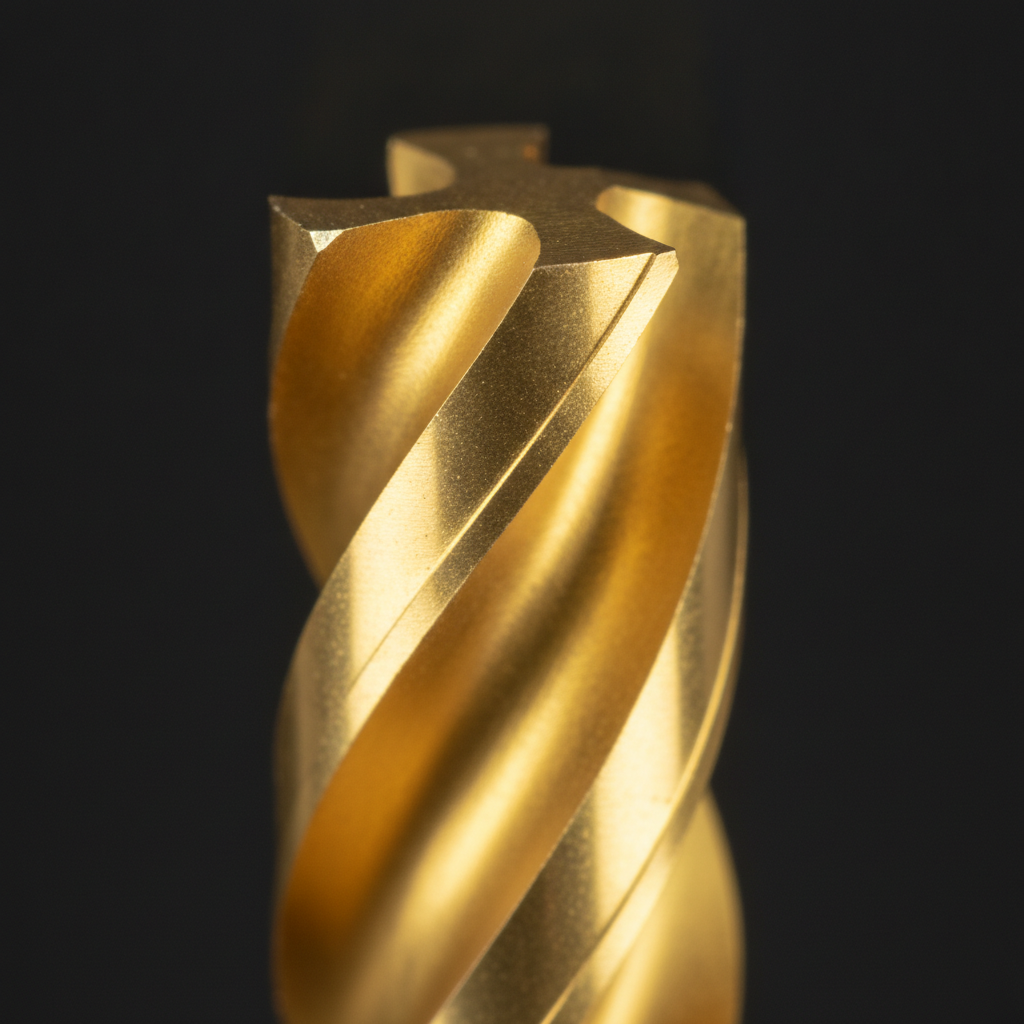
Types of PVD methods and where they fit
Common PVD methods include magnetron sputtering, cathodic arc evaporation, and DLC processes. Choose sputtering for smooth films and complex alloys, arc for very hard, dense coatings, and DLC for ultra-low friction on precision components and tooling.
Different mechanisms, different strengths. Here’s how we guide selection.
- Magnetron sputtering: Ejects atoms from targets using plasma. Great for smooth films, alloys, and tight thickness control.
- Cathodic arc evaporation: Evaporates cathode material with high-energy arcs. Produces hard, dense films; modern filtering manages droplet content.
- DLC (diamond-like carbon): Carbon-based films engineered for low friction and scuff resistance on sliding or reciprocating components.
- Reactive variants: Introduce nitrogen, carbon, or oxygen to build nitrides, carbides, and oxides for application-specific performance.
We’ll often combine method and chemistry to match your wear mode. For example, AlTiN for hot hardness in dry machining, or CrN where corrosion resistance and polishability both matter—like on plastic injection tooling.
For deeper chemistry notes, our Woodbridge PVD thin-films page outlines how film design balances hardness, adhesion, and tribology.

PVD vs. CVD vs. HVOF: which should you use?
Use PVD when you need thin, hard, low-friction films with tight dimensional control. Choose CVD for high-temperature diffusion layers on heat-tolerant substrates. Select HVOF/Thermospray when you need thicker, corrosion/erosion-resistant overlays.
Different deposition families solve different problems. We support PVD and Thermospray (including Pulsed HVOF) in-house, and we’ll advise when CVD is the better fit.
| Criterion | PVD | CVD | HVOF/Thermospray |
|---|---|---|---|
| Typical thickness | Thin films (microns) | Thin to moderate (diffusion-driven) | Thick overlays (tens to hundreds of microns) |
| Base material impact | Low thermal load; preserves geometry | High process temps; needs heat-tolerant alloys | Minimal heat; adds build for erosion/corrosion |
| Primary strengths | Hardness, low friction, edge retention | Diffusion strength, high-temp stability | Thickness, barrier protection, repair |
| Common uses | Cutting tools, stamping, molds, precision parts | Heat-resistant tooling and wear parts | Valves, shafts, pumps, corrosive/erosive duty |
Not sure which path is right? Our Thermospray cell and PVD lines let us run side-by-side trials and validate performance—useful when you’re balancing friction, heat, and corrosion in the same assembly.
Best practices that make PVD perform
Great coatings start with great inputs: clean geometry, appropriate finishes, smart fixturing, and recipes tuned to your wear mode. Treat coating as a controlled process with defined specs, not a “send it and hope” step.
Surface and geometry prep
- Finish matters: Define pre-coat Ra/Rz windows. Polished cavities for plastic molds; controlled grind for cutting edges.
- Deburr and relieve: Remove raised burrs that shadow; add micro-reliefs where galling has been observed.
- Masking plan: Identify fits, threads, and datum features. Use consistent masking to keep assemblies drop-in compatible.
Recipe and method selection
- Match the wear: Abrasion, adhesion, corrosion, or heat—each calls for different chemistries and structures.
- Mind operating temps: Choose coatings that keep hardness and adhesion in your heat range.
- Friction strategy: Consider DLC or duplex stacks when low friction is the main driver.
Verification and documentation
- Thickness confirmation: Specify measurement locations and acceptance bands. Document per part family.
- Adhesion and finish: Use standardized checks and log after-coat Ra/Rz where finish is critical.
- Lot traceability: Keep run parameters with part IDs to correlate performance back to recipes.
We codified much of this in our deposition playbook, and it’s how we approach prototype-to-production transitions with local teams in Woodbridge.
Application notes by industry and process
Successful PVD is application-specific. Stamping, molding, machining, and aluminum die cast/extrusion each benefit from tailored chemistries, finishes, and masking. Start with the wear mode, then design the film and surface accordingly.
Stamping and forming
- Edges and radii: Prioritize edge retention and lubricity for progressive dies and high-strength steels.
- Release behavior: On draw dies, target chemistries that resist pickup and transfer films.
- What we provide: In-house stripping, polish, and lapping to return dies to spec, then re-coat for the next campaign.
Plastic injection molds
- Polishability: CrN and related chemistries are favored for high-gloss cavities and easy cleanup.
- Venting and micro-geometry: Maintain vent detail; avoid film bridging with proper masking and line-of-sight planning.
- What we provide: Fixture design to protect datums and finishes, plus after-coating lapping where Ra control is tight.
Machining and cutting tools
- Heat and abrasion: AlTiN-family films support hot hardness in dry or MQL environments.
- Chip flow: Low-friction stacks help chip evacuation and edge stability, especially in sticky alloys.
- What we provide: Consistent micron-level films for drills, end mills, and form tools across high-volume batches.
Aluminum die cast and extrusion
- Soldering resistance: Chemistry selections reduce sticking and washout on dies and pins.
- Thermal cycles: Design stacks for repeated heat shocks without spallation.
- What we provide: Duplex strategies and controlled finishes to slow down the known failure modes.
For a broader look at component-level work beyond tooling, see our DLC process explainer for parts that live and die by friction control.
Systems, scale-up, and repeatability
Repeatability comes from production-grade systems and controls. Sputtek’s SPUN 2,000 and SPUN 4,000 systems, combined with ISO 9001:2015 and Nuclear N299.3 workflows, support everything from trials to large-batch runs with consistent film quality and adhesion.
- High capacity: SPUN 2,000 and SPUN 4,000 platforms support large-batch throughput with controlled uniformity.
- End-to-end in-house: Sandblasting, microblasting, cleaning, stripping, polishing, and QC testing under one roof.
- Thermospray cell: Pulsed HVOF and related methods available when thicker overlays solve the problem faster.
We pair engineering-led fixturing with documented recipes so the third campaign looks like the first. That consistency is what most production teams actually need.
Tools, resources, and quality control
Control what you can measure. Define acceptance ranges for thickness, finish, and adhesion; lock recipes to part families; and treat fixturing as a critical asset. These habits prevent drift as volumes grow.
- Specification sheet: Per part family, list target film, thickness bands, finish windows, masking notes, and checks.
- Recipe locking: Freeze parameters after qualification; manage changes with ECN-style approvals.
- Incoming/outgoing logs: Track pre-coat condition and post-coat verification against the spec.
For context on what industrial coating environments can look like (outside of PVD), you can browse an automated coating portfolio example. It’s a reminder that “coating” spans many technologies—hence the value of a clear spec sheet.
Local considerations for Woodbridge
- Plan drop-offs and pickups around the Weston Rd / Highway 7 corridor to streamline logistics and avoid peak congestion.
- Winter brings temperature swings; protect precision tooling in transit with sealed containers and desiccant for stable pre-coat condition.
- When production timing is tight, coordinate masking and lapping instructions with our engineering team early for faster turnarounds.
Common mistakes to avoid
The biggest mistakes are treating coating as an afterthought, skipping surface prep, and assuming one film fits all. Define specs, prep consistently, and choose coatings to match real wear modes.
- No defined spec: Without thickness, finish, and adhesion criteria, results will vary run-to-run.
- Inconsistent prep: Oils, burrs, and uncontrolled finishes undermine adhesion and friction.
- One-size-fits-all: AlTiN isn’t always right; DLC isn’t always better. Application data beats assumptions.
- Overlooking alternatives: Some issues are barrier/coating thickness problems better solved with Thermospray overlays.
Consumer ceramic coatings on car paint are a different world than industrial PVD. If you’ve seen discussions about ceramic over paint protection film, that’s not the same objective as precision thin films for tools and dies. For a visual of that consumer space, see this ceramic-over-PPF example.
Case insights from the shop floor
Real results come from pairing the right chemistry with disciplined preparation and verification. The most reliable gains show up when teams close the loop from observed wear to recipe choice to documented outcomes.
- Stamping dies, automotive: After mapping pickup zones on AHSS draws, we adjusted finish and chemistry to stabilize release through extended runs.
- Plastic injection tooling: For a medical mold with gloss requirements, a CrN-based stack and controlled lapping improved cleanup and surface retention.
- Cutting tools: For sticky aluminum alloys, a low-friction stack and edge prep delivered smoother chip flow and steadier edge life.
- Aluminum extrusion: Duplex strategies on wear pins reduced soldering tendencies and made maintenance intervals more predictable.
These patterns repeat across Woodbridge manufacturing cells. The common thread: define the failure mode, then design the surface for it. Our thin films overview maps those choices to typical shop-floor symptoms.
Frequently asked questions (FAQ)
These quick answers address the most common questions manufacturing and quality teams ask when planning or scaling PVD coating programs.
What is the difference between PVD and DLC?
PVD is the family of vacuum processes used to deposit many coating chemistries. DLC is one specific class within that family—carbon-based films engineered for very low friction and scuff resistance. We apply both, selecting by wear mode and operating temperature.
Will PVD change my part dimensions?
PVD films are engineered in microns and preserve geometry when the spec is set correctly. We agree thickness targets and masking plans upfront so fits, threads, and sharp edges remain within tolerance post-coat.
How do I choose between PVD and Thermospray (Pulsed HVOF)?
Use PVD for thin, hard, low-friction films where dimensional control is critical. Choose Thermospray/HVOF when you need thicker overlays for corrosion or erosion resistance. We support both in-house and can help you trial options on the same part family.
Can PVD be reapplied after tool refurbishment?
Yes. We strip, recondition, and reapply coatings routinely. The key is consistent prep—restore geometry, define the finish window, and ensure masking matches your assembly needs before the next deposition run.
Key takeaways
Treat coating as an engineered process, not a commodity. Define specs, match films to wear modes, and verify outcomes. That’s how PVD translates into real uptime, quality, and predictable maintenance intervals.
- Start with a clear, application-specific spec sheet and stick to it.
- Choose methods and chemistries for the actual wear and temperature regime.
- Control prep, masking, and fixturing to protect geometry.
- Document film thickness, finish, and adhesion on every run.
- Use PVD and Thermospray as complementary tools when problems overlap.
Conclusion: Bring surface engineering into your standard work
When PVD is integrated into standard work—with specs, preparation, and verification—you get stable surfaces that support longer runs and steadier quality. That discipline is what turns coating from a cost into a capability.
If you operate in Woodbridge, we can review your tooling or component portfolio and recommend a practical path—prototype to production—backed by ISO 9001:2015 and Nuclear N299.3 controls. Let’s align surface engineering with your manufacturing playbook.
Next step: Request a quick coating assessment with Sputtek’s engineering team. We’ll align on wear modes, candidate films, and verification so you can scale with confidence.