
PVD deposition is a vacuum coating process that deposits hard, thin films like TiN, TiAlN, AlCrN, and DLC onto tools and components to reduce wear and friction. Typical thickness ranges from 2–6 microns with strong adhesion for high-cycle manufacturing. For Woodbridge manufacturers, it’s a proven path to longer tool life and more stable throughput.
By Ron — Sputtek
Last updated: 2026-06-26
Overview and table of contents
This guide explains what PVD deposition is, how it works, where it excels versus CVD and HVOF, and how Woodbridge manufacturers can apply it. You’ll learn coating types, best practices, QA methods, and real examples from Sputtek’s engineering-led operations.
Use this complete guide to plan coatings with confidence. We combine definitions, practical checklists, and proven field insights from production runs across automotive, aerospace, oil and gas, nuclear, medical, pharmaceutical, and food & packaging programs.
- What is PVD deposition?
- Why PVD matters for manufacturers
- How PVD works (step-by-step)
- Types and methods of PVD
- PVD vs CVD vs HVOF
- Best practices and checklists
- Tools, QA, and resources
- Case studies and examples
- Frequently asked questions
- Conclusion and next steps
What is PVD deposition?
PVD deposition is a vacuum process that physically vaporizes solid source materials and condenses them as thin, hard films on parts. It delivers high adhesion and wear resistance at moderate substrate temperatures, making it ideal for tools, dies, molds, and precision components across regulated industries.
In practice, physical vapor deposition forms dense, engineered layers that fight abrasion, adhesion wear, and fretting. Coating families such as TiN, TiAlN, AlCrN, and DLC are tuned for heat, oxidation, lubricity, or corrosion resistance. Typical coating thicknesses are 2–6 μm, balancing edge retention with durability in high-throughput operations.
- Where it helps: Stamping dies, plastic injection molds, carbide tools, aluminum die cast cores, and motion components.
- Why it’s trusted: Consistent microstructure, repeatable thickness, and strong substrate bonding reduce unplanned changeovers.
- Certification context: Sputtek operates under ISO 9001:2015 and Nuclear N299.3 approvals for critical applications.
For a deeper primer aligned to local production, start with our PVD coating in Woodbridge article and expand into our PVD plating overview for terminology differences used on shop floors.
Why PVD matters for manufacturers
PVD improves uptime, part quality, and tool economics by lowering wear rates and stabilizing friction. Manufacturers see fewer emergency changeovers, tighter dimension control, and more predictable runs—key outcomes for automotive and aerospace supply chains.
Wear, friction, and corrosion cause scrap and downtime. PVD deposition targets those loss drivers with hard, low-friction films. For example, DLC’s typical dry coefficient of friction can be an order of magnitude below untreated steels, which reduces galling on sliding interfaces and helps stabilize cycle-to-cycle torque.
- Uptime impact: Longer intervals between regrinds or die maintenance; reduced tool pulls during PPAP and ongoing production.
- Dimensional stability: Thinner films (often 3–5 μm) preserve sharp edges on cutters and fine features on molds.
- Heat management: AlCrN and TiAlN families maintain hardness at elevated temperatures typical in dry machining.
- Qualification: Consistent film properties support OEM audits and capability studies, especially in regulated programs.
In our experience supporting high-volume lines, stabilizing friction during start-up ramps reduces scrap clusters. That’s why PVD is routinely paired with process FMEAs and capability tracking to verify steady-state performance over tens of thousands of cycles.
How PVD works (step-by-step)
PVD works by cleaning parts, evacuating a vacuum chamber, generating a metal or carbon vapor (via sputtering or arc), and condensing that vapor as a thin film on rotating parts. Process controls regulate temperature, bias, gas flows, and time to achieve target thickness and properties.
The core mechanism: atoms leave a solid target, travel through low-pressure gas, and condense onto cooler surfaces as a film. Achieving strong adhesion and a dense microstructure depends on pre-cleaning, energetic ion bombardment, and substrate bias. At Sputtek, we couple in-house sandblasting, microblasting, ultrasonic cleaning, and lapping to ensure a clean, receptive surface.
- Pre-clean: Degreasing, blasting, ultrasonic cleaning; verify surface activation. Residuals raise defect density.
- Load & fixture: Orient edges and features for line-of-sight; use rotation/planetary fixturing for uniformity.
- Pump-down: Evacuate to high vacuum; heat to drive off volatiles. Substrate temperatures are typically below tempering thresholds for tooling steels.
- Etch/ion clean: Plasma etch and bias bombardment to enhance adhesion.
- Deposition: Sputtering or arc evaporation with reactive gases (e.g., N, C, O) to form nitrides, carbides, or DLC.
- Cool & unload: Controlled cooldown mitigates thermal shock and preserves dimensional accuracy.
Batch capacity matters. Our SPUN-series PVD systems support up to 3,000 kg per cycle on large-format loads, enabling consistent films across high-mix racks with repeatable thickness control.
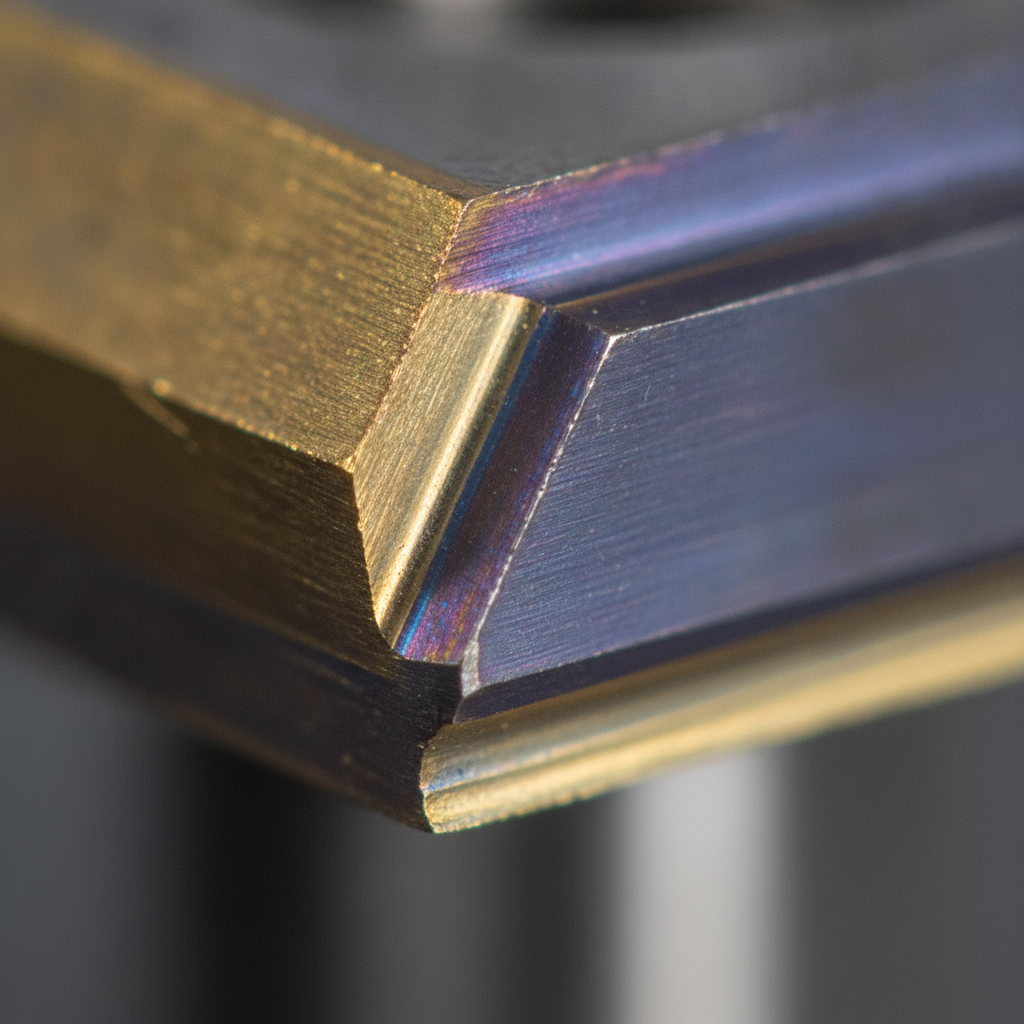
Types and methods of PVD
The main PVD methods are magnetron sputtering, cathodic arc evaporation, and hybrid processes that combine both. Common film chemistries include TiN, TiAlN, AlCrN, CrN, ZrN, and DLC, each tuned for heat resistance, lubricity, or corrosion performance.
Core deposition methods
- Magnetron sputtering: Ionized gas knocks atoms from a target; excellent thickness control and smooth morphology.
- Cathodic arc: Highly energetic metal plasma; high deposition rates and robust adhesion with careful macroparticle control.
- Hybrid PVD: Blends sputtering smoothness with arc energy to balance density, stress, and rate for complex loads.
Popular coating families
- TiN: General-purpose wear resistance and reduced friction; recognizable gold hue; versatile on steels and carbides.
- TiAlN / AlTiN: High hot-hardness and oxidation resistance for dry machining and high-speed cutting.
- AlCrN: Elevated-temperature stability; strong for abrasive, high-heat contacts and intermittent cuts.
- CrN: Good corrosion resistance and anti-galling on forming tools and motion components.
- DLC: Low friction and scuff resistance on sliding pairs, valve train parts, and precision components.
Selecting a stack is application-led. For example, TiAlN over a CrN adhesion layer often balances hot-hardness with base metal compatibility, while DLC variants can be tailored for hydrogen content to trade wear and lubricity for different contact regimes.
PVD vs CVD vs HVOF (when to use each)
Choose PVD when you need hard, thin films with excellent adhesion at moderate temperatures. Pick CVD for conformal coverage and extreme heat resistance. Use HVOF/Thermospray when thicker, dense metallic or cermet overlays are required for impact and corrosion duty.
Each process family solves a different problem. PVD is thin and hard for precision edges. CVD (chemical vapor deposition) can be thicker and more conformal but typically uses higher temperatures. HVOF/Thermospray produces very thick, dense overlays—ideal for rebuilding or shielding against abrasion, corrosion, or impact loading.
| Attribute | PVD | CVD | HVOF/Thermospray |
|---|---|---|---|
| Typical thickness | 2–6 μm | 5–15 μm | 50–500+ μm |
| Substrate temperature | Moderate | High | Low to moderate |
| Edge retention | Excellent | Good | Not intended for sharp edges |
| Conformality | Line-of-sight | High | High (thick build) |
| Use cases | Tools, dies, molds, components | Wear at high heat, diffusion layers | Wear/corrosion overlays, dimensional restore |
If you’re evaluating dense overlays, explore our Thermospray/Pulsed HVOF capability alongside PVD. Many Woodbridge programs pair both: PVD for edges and conformal DLC on sliders, HVOF for high-impact or corrosive zones.
Best practices and engineering checklists
Successful PVD programs start with surface prep, smart fixturing, and defined QA checkpoints. Engineering teams should standardize substrate specs, coating stacks, and acceptance criteria to lock in repeatable performance across batches and suppliers.
Surface prep and fixturing
- Specify substrates: Control hardness and microstructure; avoid over-temper ranges that weaken adhesion.
- Clean aggressively: Degrease, blast appropriately, and verify with dyne/white-glove checks before load.
- Fixture coverage: Use rotation and planetary motion; shield critical edges from droplet-rich zones in arc processes.
Process definition
- Stack design: Select adhesion layers (e.g., CrN) and topcoats (e.g., TiAlN) for heat and abrasion regime.
- Thickness targets: Typical 3–5 μm on cutting edges; sliders may benefit from thinner, low-friction DLC.
- Bias and temperature: Define allowed windows that protect base metal properties and dimensional accuracy.
Quality and documentation
- Incoming inspection: Baseline part finish; document Ra/Rz and edge prep.
- In-process checks: Use witness coupons for thickness and adhesion proxies.
- Acceptance: Define adhesion (scratch, Rockwell indentation), thickness (XRF/cross-section), and functional trials.
For terminology and finishing steps, see our PVD finishing guide. If your application prioritizes ultra-low friction, consult our DLC coating guide and the DLC coating process explainer for stack options and validation tests.
Local considerations for Woodbridge
- Align drop-offs and pickups with shift changes near SmartCentres Woodbridge to streamline logistics and avoid midday congestion.
- Plan PPAP and capability runs before summer heat waves; stable chamber cooling and shop climate reduce process drift.
- When coordinating fixtures or rack trials, time them with busier routes like Weston Rd / Highway 7 to optimize driver availability.
Tools, QA methods, and resources
Use high-capacity PVD systems, calibrated XRF for thickness, optical or SEM cross-sections for microstructure, and standardized adhesion tests. Document recipes, fixturing, and witness data in a controlled system to ensure repeatability and audit readiness.
- PVD systems: SPUN 2,000 (up to ~1,200 kg per cycle) and SPUN 4,000 (up to ~3,000 kg per cycle) for large-batch reliability.
- Thickness metrology: XRF on coupons and spot checks; cross-sections for critical PPAPs or failure analysis.
- Adhesion: Scratch testing and Rockwell indentation mapping; track failure modes to adjust pretreatments.
- Surface finish: Pre/post Ra and edge prep standards; after-coating lapping to hit target microfinish.
- Documentation: ISO 9001:2015-aligned travelers, recipe controls, and lot traceability for audits.
Broader coating automation case studies can inform layout and flow planning; for example, see this industrial coating automation example. While different from PVD, it highlights fixturing density and line logistics you can adapt to batch workflows.

Case studies and examples
Engineering the right PVD stack reduces scrap and extends maintenance windows. These brief, de-identified examples mirror common Woodbridge programs and show how stack choices and QA gates translate to measurable outcomes on the line.
Automotive stamping die (DP steels, anti-galling)
- Challenge: Adhesion wear and surface pick-up caused rework after 8–12 hours.
- Approach: CrN base layer for compatibility, TiAlN top for heat; aggressive pre-clean and microblast.
- Result: Extended uninterrupted runs; fewer polishing interventions; improved panel appearance consistency.
Plastic injection mold (abrasion and release)
- Challenge: Micro-abrasion at gates and vent lines; release inconsistencies on complex geometry.
- Approach: AlCrN in wear zones; DLC on slides/cores for release and lower ejector loads.
- Result: More consistent cycle times; reduced scuff marks; smoother ejection profiles.
Cutting tools (edge retention under heat)
- Challenge: Edge breakdown at elevated speeds and intermittent cuts.
- Approach: TiAlN over adhesion layer; controlled 3–4 μm thickness; post-coat edge polish.
- Result: Improved edge life; more predictable wear patterns aiding tool-life modeling.
To go deeper on finishing standards and material pairings, review our PVD plating and finishing practices. For sliding components and low-friction needs, our DLC services guide covers stack variants and validation plans.
Frequently asked questions
These quick answers address the questions engineers and buyers ask most about PVD deposition—covering thickness, materials, timelines, and how to choose between PVD, CVD, and HVOF for a given application.
What materials can be coated with PVD?
Most tooling steels, stainless steels, carbides, and many nickel alloys are good candidates. Aluminum and copper alloys can also be coated with appropriate pretreatments and adhesion layers. The key is temperature compatibility and surface preparation quality.
How thick are PVD coatings?
Typical thickness is 2–6 microns for tools and precision components. Edges on cutters often run closer to 3–4 microns to maintain sharpness, while sliding components may use thinner DLC to prioritize low friction and smooth motion.
When is PVD better than CVD or HVOF?
Choose PVD when you need a hard, thin film, great edge retention, and moderate process temperatures. Pick CVD for high-temperature diffusion layers and more conformal coverage. Use HVOF/Thermospray for thick, dense overlays to handle impact or corrosion.
Do PVD coatings change part dimensions?
Films add only a few microns, so dimensional impact is minimal compared to overlays. That’s why PVD is common on cutting edges and fine mold features. Define thickness targets and finishing steps up front to keep tolerances tight.
Conclusion and next steps
PVD deposition delivers hard, thin, high-adhesion films that cut wear and stabilize friction. With the right prep, stacks, and QA, manufacturers extend tool life, reduce scrap, and gain predictable runs across automotive, aerospace, and other regulated programs.
Here are the key takeaways and actions to move forward with confidence.
Key takeaways
- PVD is ideal for tools, dies, molds, and motion components needing thin, durable films.
- Stack design and surface prep drive adhesion, friction, and heat performance.
- QA gates—thickness, adhesion, and functional trials—lock in repeatability.
- Use PVD with HVOF overlays when parts face impact or corrosion.
Suggested next steps
- Map wear and friction modes on your parts and define success metrics.
- Choose a coating family and thickness window; pilot on a controlled lot.
- Standardize fixturing and acceptance tests for ongoing batches.
- Explore our PVD guide for Woodbridge and PVD on stainless steel for application nuances.
Need a quick consult? Our Woodbridge engineering team can review drawings, recommend stacks, and define pilot validations for your next run. If you’re exploring broader surface options, note that consumer ceramic coatings (e.g., for vehicles) differ from industrial PVD; see this ceramic coating overview for contrast with thin-film engineering. For a tungsten-carbide perspective often used in tools, this tungsten carbide explainer offers a materials lens that complements PVD thin films.
For production layout inspiration, review this coating automation case study, then adapt the fixturing and flow ideas to PVD batch processing.