

Physical vapor deposition guide: compare methods and choose a vendor
This physical vapor deposition guide helps manufacturing and tooling engineers decide which PVD method to trial and what to demand from a vendor when moving from prototype to volume. Read this for a concise, evidence-based comparison of sputtering, evaporation and e-beam, and plasma-assisted PVD, plus a prioritized vendor checklist and a 10-minute decision flow. For deeper technical background, see the canonical physical vapor deposition guide.
How PVD works, and the core performance variables you must compare
Physical vapor deposition covers vacuum processes that convert a source material to vapor or plasma, then condense it onto a substrate. This mechanism and its implications for process choice are summarized in technical overviews such as the LNF Wiki on physical vapor deposition. Choosing the right PVD approach requires comparing a small set of variables that determine performance and manufacturability.
Key variables to evaluate
- Source energy and form, for example thermal evaporation, electron-beam, or magnetron sputter.
- Film chemistry and purity, including whether reactive gases are required to form compounds such as titanium nitride or DLC variants.
- Deposition rate and achievable film thickness, which affect cycle time and process economics.
- Adhesion and pre-treatment needs, such as abrasive blasting, ion cleaning, or substrate biasing.
- Step coverage and conformality for complex geometries, influenced by vapor directionality and plasma conditions.
- Substrate temperature limits and thermal sensitivity, which determine if parts can tolerate the chosen process.
- Fixture design and per-cycle load capacity for batch throughput and repeatability.
These variables are the practical knobs engineers change when they select a process and qualify a supplier. For practical comparisons of PVD variants, see industry primers and method comparisons such as the overview at SputterTargets or the e-beam versus thermal versus sputter analysis at NineScrolls.
Side-by-side comparison, sputtering vs evaporation and e-beam vs plasma-assisted PVD
Below are concise method profiles with strengths, limits, and typical industrial use cases. Each profile highlights the engineering signals that point to that method.
Sputtering
- What it is: Ion bombardment ejects atoms from a solid target, which then deposit on the substrate.
- Strengths: Good film uniformity, dense films, and strong control of chemistry, including reactive sputtering to form nitrides and oxides.
- Weaknesses: Lower deposition rates than some evaporation methods and more complex plasma control.
- Best for: Hard tool coatings, compound coatings, and applications needing tuned film stress and adhesion.
- Engineering signal: Choose sputter when you need dense, adherent films or plan reactive gas chemistries for compounds. See the methods overview at SputterTargets for additional detail.
Evaporation and electron-beam (e-beam)
- What it is: Source material is heated until it vaporizes, via resistive heating or e-beam, then condenses on parts.
- Strengths: High deposition rates and simple source chemistry for pure metals and some alloys.
- Weaknesses: Line-of-sight deposition leads to poorer step coverage on complex parts. Some materials are difficult to evaporate without contamination.
- Best for: Thin pure-metal layers, decorative coatings, and flat or simple geometries where throughput matters.
- Engineering signal: Consider e-beam or thermal evaporation when you need high throughput for simple surfaces. See the NineScrolls comparison for system-level trade-offs.
Plasma-assisted and specialized PVD
- What it is: Variants use plasma biasing, ion plating, or enhanced ionization to improve film density and adhesion.
- Strengths: Improved adhesion, denser films at lower substrate temperatures, and better conformality than simple evaporation.
- Weaknesses: More complex equipment and process development, higher per-cycle cost.
- Best for: DLC coatings, thin nitride layers, and cases where adhesion and functional surface properties are critical.
- Engineering signal: Use plasma-assisted PVD when adhesion or specific friction and wear properties are required, and when process windows must be tightly controlled.
Match PVD methods to substrates, coatings, and application goals
Match the method to the material and performance goals rather than seeking a single best technology. These practical mappings connect common production problems to typical PVD choices.
Common manufacturing problems and PVD answers
- Premature wear on stamping dies, forming tools, or cutting edges: choose sputter PVD with hard nitrides or DLC variants for dense, wear resistant films.
- Friction or galling on aluminum or stainless parts: consider DLC-style PVD or plasma-assisted coatings to reduce coefficient of friction.
- Corrosion-prone components: use reactive sputtering to form stable nitride or oxide barrier layers.
- Plastic injection molds with complex cavities: prefer plasma-assisted PVD for improved conformality and adhesion at lower temperatures.
- Where thick, impact-resistant overlays are required: thermospray or Pulsed HVOF may be more appropriate than thin PVD films. Consult a thermal spray specialist when coating thickness or extreme wear resistance is needed.
These matchings follow practical selection frameworks used by industry guides. For additional reading on method selection across applications, see the PVD methods primer at SputterTargets and the system-selection summary at NineScrolls.
Scaling from prototype to high-volume production, process and vendor capacity checks
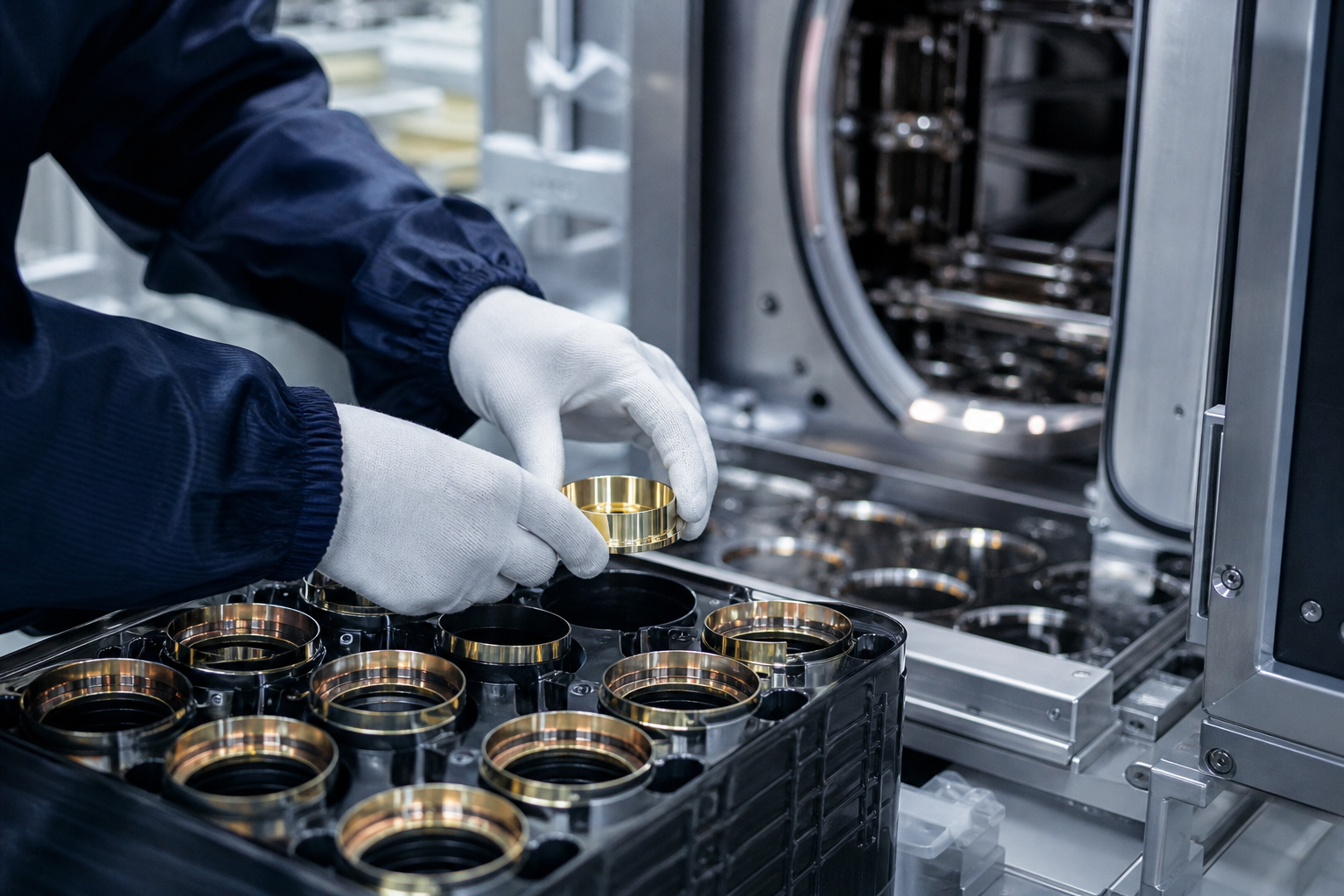
Moving from single-part trials to batches introduces new constraints. Verify per-cycle mass, fixture design, repeatability, and how the supplier controls the process window. Vendor claims about throughput and load capacity should be verifiable with machine specs and reference runs.
What to verify for scale
- Per-cycle load capacity and maximum workmass, because some PVD systems restrict the total mass that can be processed reliably.
- Fixture strategies for part orientation and masking, which affect effective throughput and yield.
- Process control capability, including reproducibility over consecutive cycles and documented process windows.
- In-house pre- and post-processing, such as blasting, cleaning, stripping, and lapping, to reduce lead times and quality variation.
As an example of a supplier-level capacity metric, some companies document SPUN-style PVD systems with per-cycle capacities that support larger batches. Manufacturers should verify these claims during vendor qualification by requesting machine specifications and reference runs. See supplier pages for verifiable capacity and services details.
Vendor selection checklist, prioritized criteria engineers and procurement must evaluate
Below is a prioritized checklist you can use when evaluating vendors. Ask for evidence for each item and record the response in your supplier scorecard.
Prioritized checklist
- Certifications and approvals, request proof of ISO 9001:2015 and any industry-specific vendor approvals required for your parts. Verify documentation directly from the supplier.
- Capacity and machine specifications, request per-cycle mass limits, chamber sizes, and typical cycle times for comparable parts.
- In-house pre/post-processing, confirm sandblasting, degreasing, stripping, polishing, and lapping capabilities to avoid fragmented supply chains.
- Quality control and laboratory testing, require laboratory reports for adhesion, hardness, thickness, and wear tests as part of trial runs.
- Traceability and documentation, insist on lot tracking, material certificates, and process records for each batch that affects qualification.
- Qualification support, ensure the vendor will run qualification trials, provide sample test data, and support OEM audits if needed.
- Local logistics and responsiveness, for iterative development prefer vendors within reasonable proximity to reduce turnaround and support on-site meetings.
A short decision flow you can follow now, and the minimum technical questions to ask a vendor
Use this 5-step decision flow when you need to decide quickly.
- Define the problem: wear, friction, corrosion, or cosmetic. If wear is extreme and requires thicker overlays, consider thermospray or Pulsed HVOF instead of PVD.
- List substrate and temperature limits. If the substrate is heat sensitive, prefer low-temperature plasma-assisted PVD or specify maximum substrate temperature to the vendor.
- Ask the vendor for trial metrics: coating chemistry and thickness, adhesion test method and results, hardness, coefficient of friction, and accelerated wear test data.
- Confirm scale: request per-cycle load, cycle-to-cycle variability data, and a sample batch run that mirrors your intended production volume.
- Require documentation: certified process parameters, inspection reports, and traceability for qualifying the coating for production use.
When asking for tests, require specific methods. For adhesion, accept scratch or Rockwell tests where applicable, and request hardness by microindentation or nanoindentation depending on film thickness. These verification steps follow common PVD qualification practice summarized by process selection analysts.
Common objections from procurement and production, and how to resolve them

Here are common objections and practical verification steps to resolve them.
PVD is too costly
Ask for a lifecycle cost comparison, not just coat price. Verify how longer tool life or reduced downtime changes total cost of ownership. Request supplier-provided test data showing relative wear rates for candidate coatings.
Turnaround will slow production
Request documented lead times and inquire about in-house pre- and post-processing to compress the schedule. Local vendors with full in-house capabilities typically reduce handoffs and turnaround risk.
Adhesion concerns
Require adhesion test reports and sample parts. If adhesion is marginal, review pre-treatment steps, such as microblasting or ion cleaning, and insist the vendor include those in the documented process.
Canada and Toronto context: compliance, certifications, and local capacity
For Canadian manufacturers, procurement gates often include ISO 9001:2015 and industry-specific approvals such as nuclear vendor standards. Verify certificates directly with the supplier and request scope documents. A local supplier can shorten qualification cycles when iterative trials and on-site audits are necessary. As an example, some Canadian providers publish facility size, high-capacity SPUN PVD systems, and specific vendor approvals on their websites; confirm such claims by requesting certificates and machine specifications during qualification.
Final checklist and next steps
To act now, run a two-step procurement test: 1) request a one-off trial with the minimum test matrix listed below, and 2) get written confirmation of per-cycle capacity and the quality documentation you will need for qualification. Use the vendor checklist above as your supplier scorecard.
Minimum test matrix to request
- Coating chemistry and thickness profile across representative parts.
- Adhesion test results and method used.
- Hardness and coefficient of friction measurements.
- Short-term wear or abrasion test data relevant to your application.
- Machine and cycle specifications demonstrating scale capability.
Frequently asked questions
Which PVD method should I try first for high-wear stamping dies?
Start with sputter PVD using hard nitride or DLC-type films because sputtering produces dense, adherent coatings tuned for wear resistance. Request adhesion and wear test data from the vendor during the trial and examine cycle-to-cycle variability.
How do I verify adhesion and repeatability from a PVD vendor without a full production run?
Require standardized adhesion tests and a short sample series run across multiple cycles. Ask the vendor to provide process records, cycle-to-cycle parameters, and inspected sample reports showing variability.
When is thermospray or Pulsed HVOF a better choice than a PVD coating?
When your application requires thick, impact-resistant overlays or extreme wear resistance beyond thin-film capabilities, thermospray or Pulsed HVOF are appropriate. Consult a thermal spray specialist and compare lifecycle cost and qualification requirements before switching from thin PVD films.
What certifications and documentation should I insist on for regulated industries like automotive, aerospace, or nuclear?
Insist on ISO 9001:2015 at minimum and any industry-specific vendor approvals required by your procurement rules. Request the certification scope and relevant audit reports. Suppliers serving nuclear or safety-critical sectors should provide evidence of vendor approvals and process traceability.
How do batch mass and fixture design affect the choice of PVD vendor for high-volume production?
Per-cycle mass limits and fixture strategies determine how many parts can be processed per cycle and how uniform the coating will be. Ask the vendor for chamber dimensions, maximum workmass, and examples of fixture designs used for similar parts to confirm throughput capability.
For a Canadian supplier example and to request a qualification quote, see the company website at Sputtek or consult the links cited above for additional technical background.