
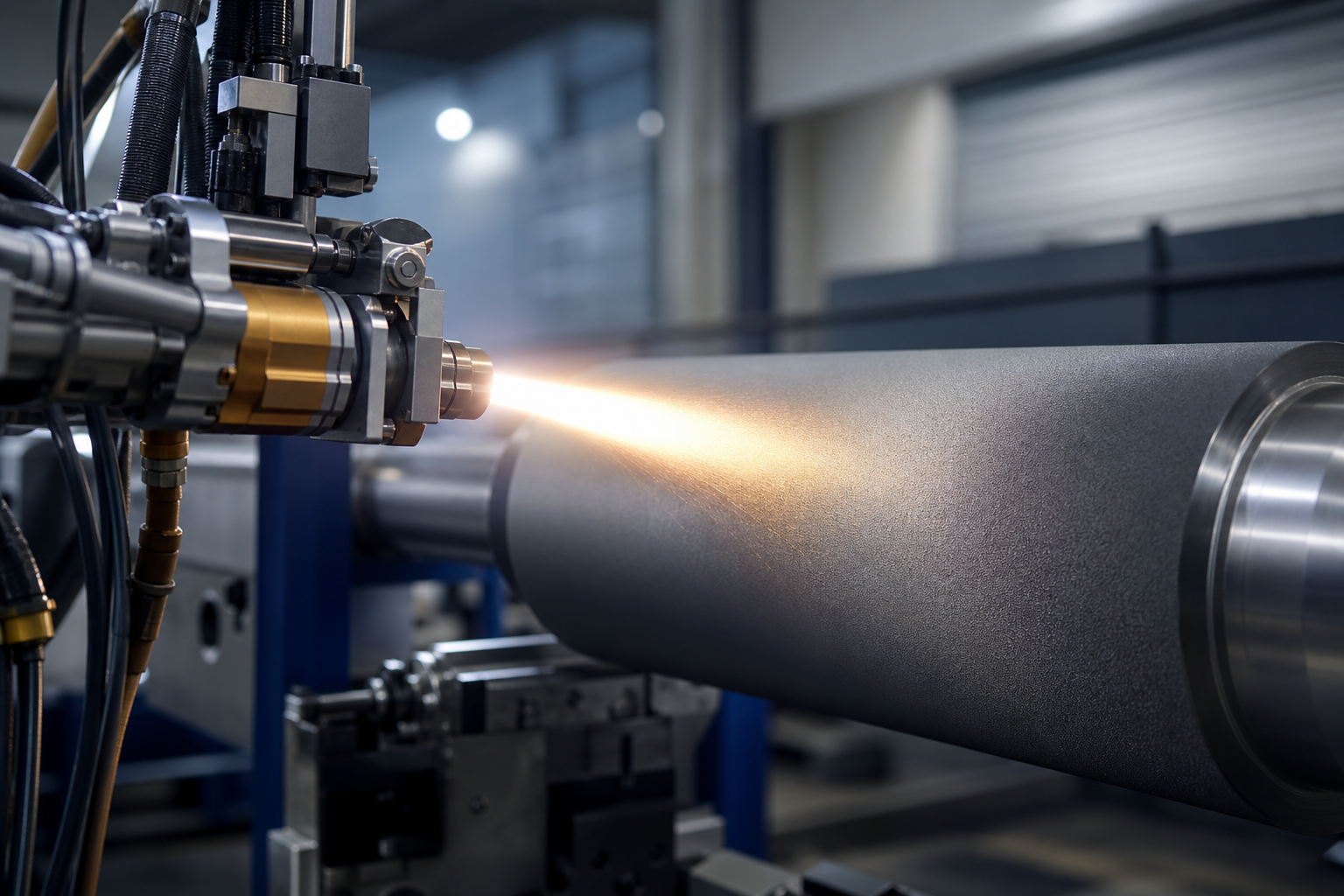
Thermal spray: which process: is right for your parts?
Thermal spray refers to a family of coating processes used to add wear, corrosion or build-up protection to metal and composite parts. This guide helps manufacturing and tooling teams pick between HVOF (including pulsed HVOF), detonation, plasma and cold‑spray approaches, outlines Ontario‑specific safety points for aluminum thermal spray, and gives an RFQ and production‑scaling checklist engineers can use when briefing suppliers.
Key Takeaways
- Thermal spray processes vary in particle velocity and heat input, influencing bond strength and coating properties.
- HVOF and pulsed HVOF are ideal for wear resistance, while cold spray is suitable for heat-sensitive substrates.
- Aluminum thermal spraying requires specific safety measures to mitigate fire and explosion hazards.
- Documented surface preparation and post-processing are critical for reproducible coating performance.
- Planning for production runs involves understanding part volume, cycle times, and qualification steps.
Thermal spray process overview and when to use each
Thermal spray methods differ primarily by particle velocity and heat input, which determine bond strength, porosity and whether the substrate can tolerate the process heat. Key process families and common use cases:
- HVOF and pulsed HVOF: High particle kinetic energy produces dense, low‑porosity metallic or cermet coatings that are commonly chosen for wear resistance on tooling, cutting edges and highly loaded sliding surfaces.
- Detonation spray: Produces hard, adherent deposits in thin layers and is used where specific chemistry and thin, wear‑resistant overlays are required.
- Plasma and atmospheric plasma spray (APS): Widely used for ceramic thermal barriers and bond‑coat systems where controlled thermal input and specific microstructures are needed.
- Cold spray: A low‑heat process for building bulk metal deposits; useful for heat‑sensitive substrates, dimensional repair, and when metallurgical transformations from high temperatures must be minimized.
Process selection depends on application goals (wear vs corrosion vs bulk build), allowable substrate heating, required coating microstructure, and acceptance tests your industry requires. For comparative studies and method development, consult reviews and articles in the Journal of Thermal Spray Technology and related process‑development literature to understand microstructure and method tradeoffs (see NRC Journal of Thermal Spray Technology entries and EPA HERO listings for advanced plasma spraying research). A practical shop‑level overview of spray families and typical equipment is available at the thermal spraying coating resource.
Selected literature and reviews summarize process physics, typical microstructures, and performance correlations engineers use to match material and process to application requirements (for example, reviews on cold spray technology and atmospheric plasma method development are catalogued in the Journal of Thermal Spray Technology and EPA HERO listings).
Safety and regulatory controls for aluminum thermal spray (Ontario focus)
Aluminum thermal spraying introduces a fire and explosion hazard when fine aluminum dust or overspray accumulates. Ontario’s government specifically advises installing and maintaining dust collection and ventilation systems “to minimize or eliminate the chance of an aluminum dust explosion.” Engineers specifying aluminum spray for Ontario operations should budget for engineered local exhaust ventilation, routine housekeeping for dust, and explosion‑mitigation at collection points; see the Ontario alert for thermal spray aluminum coating for provincial guidance.
Relevant provincial regulation and guidance to consult when specifying or approving aluminum spray work includes R.R.O. 1990, Reg. 851 (Industrial Establishments) under the Occupational Health and Safety Act. Ask potential suppliers or facility owners to confirm how their controls align with these provincial obligations and to provide supporting documentation.
Practical checklist items to request before approving aluminum thermal spray work:
- Engineered dust‑collection and local exhaust ventilation designs, including maintenance schedules and inspection records.
- Housekeeping and filter‑cleaning plans for collection systems to avoid dust layering in collectors and baghouses.
- Explosion‑venting or suppression measures at collection points and relevant compliance documentation.
- Worker training records and PPE plans specific to aluminum dust and thermal‑spray operations.
- Emergency response and spill/ignition procedures that reference local regulation and site controls.
Pre‑ and post‑processing checklist to make coatings reproducible
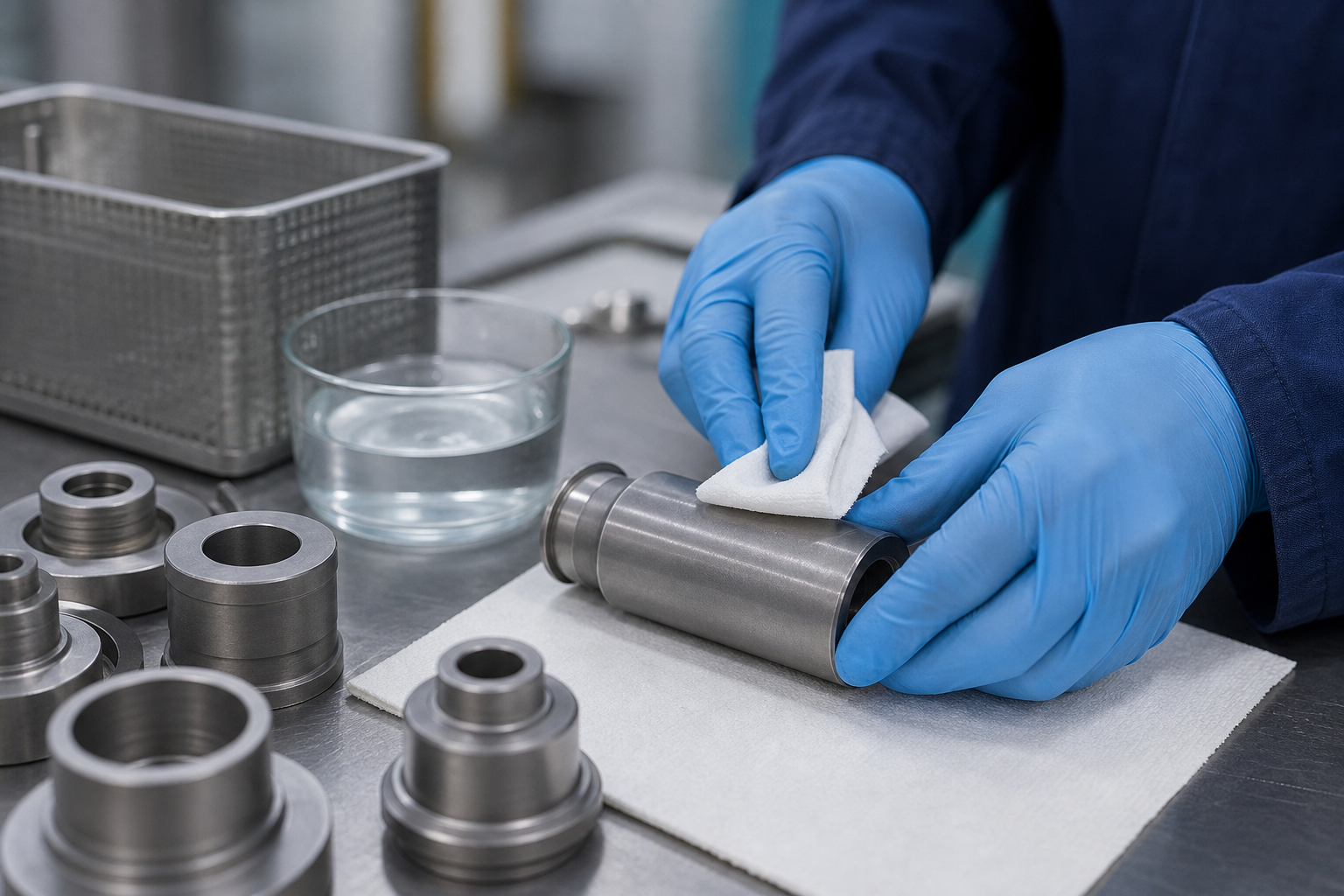
Reproducible coating performance requires consistent, documented surface preparation and post‑processing. Require vendors to document each step and include evidence in proposals and lot records. Typical items to specify in an RFQ or contract:
- Surface preparation: specified grit or microblast media, target surface profile (RA or Rz), and verification method (profile comparator or profilometer).
- Cleaning: degreasing and validated aqueous or solvent cleaning processes with residue checks.
- Masking and fixturing controls: methods to protect dimensional tolerances and critical features during spray operations.
- Post‑spray treatments: stripping, grinding, polishing or lapping for mating faces and dimensional control.
- Traceability and documentation: batch records tying feedstock lots to parts, incoming inspection records, and final QC reports with test results.
Make these pre/post items explicit in the RFQ so vendors provide comparable process flow documentation and acceptance evidence with their proposals.
Planning prototype-to-production runs and capacity considerations
Scaling from a trial to steady production requires planning batch size, equipment availability, qualification steps, and segregation for regulated parts. Use three inputs to size a supplier: expected part volume (pieces/week), per‑part handling and cycle time, and supplier per‑cycle load capacity.
Ask vendors for typical cycle weight or per‑cycle capacity, how many cycles per shift they run in steady state, and their segregation procedures for regulated parts. Include production‑flow questions in your RFQ so vendors return comparable throughput and lead‑time assumptions.
Qualification planning: budget multiple iterations—surface prep → initial spray → destructive and non‑destructive tests → adjusted runs—before approving steady‑state production. Specify the number of qualification parts, acceptance criteria, and rework limits so both parties plan time and cost for validation.
QC, test methods and qualification steps for regulated industries

Qualification packages for aerospace, nuclear, medical and other regulated sectors typically require rigorous testing and documentation. For more information on industry standards and practices, refer to the ISO 9001:2015 standards and relevant regulatory guidelines.