
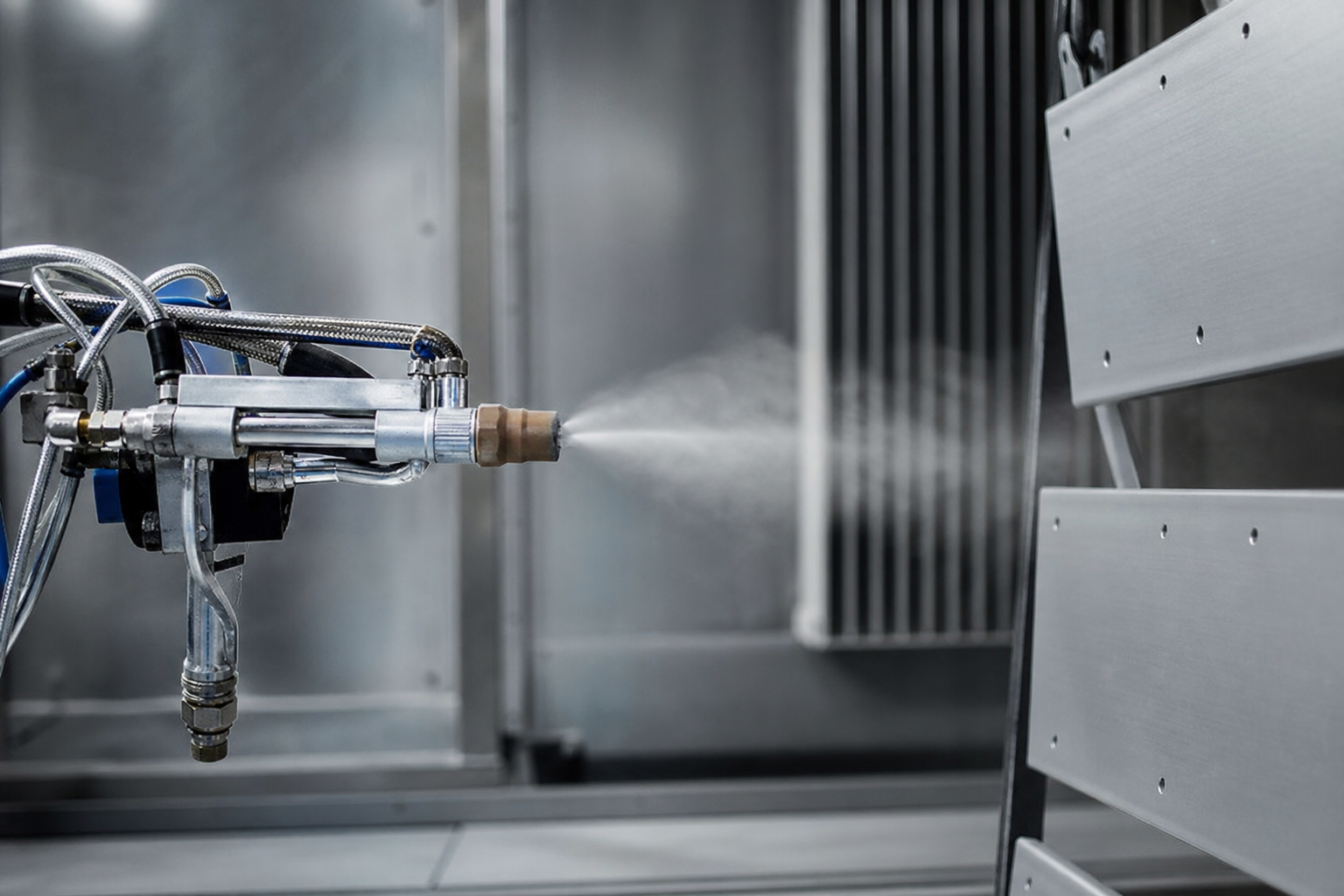
Choose spray coating equipment step by step
This article walks you through an ordered, decision-focused process for choosing spray coating equipment. Each step includes explicit stop points and safety limits you can use as decision gates. Follow the sequence to define requirements, compare technologies, evaluate capacity, run verification trials, and document procurement criteria before buying or leasing equipment.
Key Takeaways
- Choosing the right spray coating equipment is crucial for process efficiency and cost-effectiveness.
- Each step in the selection process serves as a decision gate to ensure all specifications are met before moving forward.
- Documenting acceptance criteria and conducting trials are essential to validate equipment performance.
- Supplier evaluation should include service, parts availability, and training support.
- Implementing standard operating procedures (SOPs) post-purchase is vital for maintaining equipment performance.
Why choosing the right spray coating equipment matters
Selecting appropriate spray coating equipment affects process repeatability, material compatibility, occupational safety, and total cost of ownership. Use this step-by-step approach to reduce rework, avoid mismatched hardware, and to ensure you have clear exit criteria before advancing to procurement or trials.
Step 1: define product and process specs (stop point)
Start by writing concise, verifiable specifications for the parts and the coating process. Treat this as a decision gate: do not progress to vendor evaluation until specs are confirmed.
- List the parts to be coated, including dimensions, batch size, and critical features that affect coating access.
- Specify the coating material family (e.g., polymers, ceramics, metal-atomized suspensions) and any required surface properties you must measure after coating.
- Document acceptable surface preparation methods and tolerances for surface cleanliness or roughness.
- Note environmental or regulatory constraints: explosive atmospheres, food-contact approvals, or other requirements.
Stop point: if any item above is uncertain, pause and run a small qualification exercise (material compatibility test, dimensional fit check, or a lab trial) before moving on.
Step 2: compare spray technologies and matching equipment
Match the process specs to a spray technology class. Typical technology groups include air-atomized spray, airless high-pressure spray, HVLP (high volume, low pressure), electrostatic spray, and thermal/flame spraying. For each candidate class, document:
- Suitability for the coating material family you listed in the applicable specification.
- Typical transfer efficiency and overspray behaviour (qualitative comparison).
- Maintenance needs and consumable types (nozzle wear, filters, pumps).
- Installation requirements: power, compressed air, and ventilation.
Stop point: if you cannot confirm material compatibility with a technology class, stop and request a vendor materials-data-sheet or a lab compatibility test. Safety limit: do not select equipment that requires solvent or thermal conditions you cannot meet safely on site.
Step 3: evaluate capacity, footprint and plant layout
Match equipment scale to your planned throughput and available floor space. Consider cycle times, batch vs continuous operations, and how the equipment integrates with handling fixtures or conveyors. Key checklist items:
- Maximum part size the system can accept and any fixture or indexing needs.
- Throughput targets per shift and realistic cycle times for loading, spraying, curing, and unloading.
- Required utilities (electrical service, compressed air quality, compressed-air volume, and ventilation/exhaust points).
- Maintenance access and spare-parts storage requirements.
Stop point: if the supplier’s stated capacity or footprint conflicts with your plant constraints, pause and ask for a site layout sketch or a scaled footprint drawing. Safety limit: do not commit to a system if you cannot provide the minimum recommended exhaust or ventilation configuration.
Step 4: assess controls, automation and quality verification
Decide how much process control and automation you need. Automated dosing, recipe control, and closed-loop temperature or pressure monitoring can reduce variability. Consider the following:
- Does the system provide recipe storage and repeatable dosing? Look for electronic process logging when traceability is required.
- What measurement tools are available or compatible for in-line or off-line quality checks (thickness gauges, adhesion testers, gloss meters)?
- Is the control interface suitable for your operators or will it require specialized training?
Stop point: if the proposed control features do not meet traceability or QC reporting needs, require a software demonstration and sample data logs before proceeding.
Step 5: plan trials, acceptance criteria and verification limits
Run a controlled trial before final purchase. Define acceptance criteria in advance and use the trial as a go/no-go gate. Include:
- A written trial plan listing sample parts, target coating parameters, measurement methods, and pass/fail criteria.
- Number of samples and replicate runs needed to demonstrate repeatability.
- Who will evaluate results and what tests will be performed (adhesion, thickness, visual, functional).
Stop point: accept the equipment only if trial results meet documented criteria. Safety limit: cease trials immediately if a test reveals an unsafe condition (excessive fumes, unexpected thermal behaviour, or electrical faults) and document the incident.
Step 6: choose suppliers, support and contract terms
Evaluate suppliers on service, parts availability, training, and warranty terms. Your procurement checklist should include:
- Lead times for spare parts and typical consumables.
- Availability of on-site commissioning, operator training, and preventive maintenance plans.
- Clear warranty scope and responsibilities for installation and acceptance testing.
- References or demonstration sites where the vendor’s equipment performs a similar application.
Stop point: if a supplier cannot provide clear commissioning and training plans, pause procurement and request written commitments. Safety limit: require the vendor to supply equipment safety data sheets and confirm that on-site installation will follow applicable local regulations.
Step 7: implement, document procedures and set maintenance limits
After purchase, implement documented standard operating procedures (SOPs) and a maintenance schedule. Define limits that trigger corrective action, for example:
- Acceptable ranges for line pressure, pump flow, or spray pattern quality. If values drift outside the range, stop production and perform corrective maintenance.
- Consumable replacement intervals and how to log part changes.
- Operator checks at shift start and documented escalation for abnormal readings.
Stop point: do not resume production until corrective actions are completed and results are logged. Safety limit: if a safety interlock is triggered, do not bypass it to continue production; document the condition and repair before restart.
Resources and references
Further reading and hands-on resources you can consult while choosing equipment:
- Automatic Coating — an example resource covering automated coating technologies.
- NACE International — a leading authority on corrosion prevention and control.
- ASTM International — standards for materials and testing methods relevant to coating processes.
- ISO 9001:2015 — information on quality management systems and standards.
- SAE International — resources for aerospace and automotive engineering standards.