
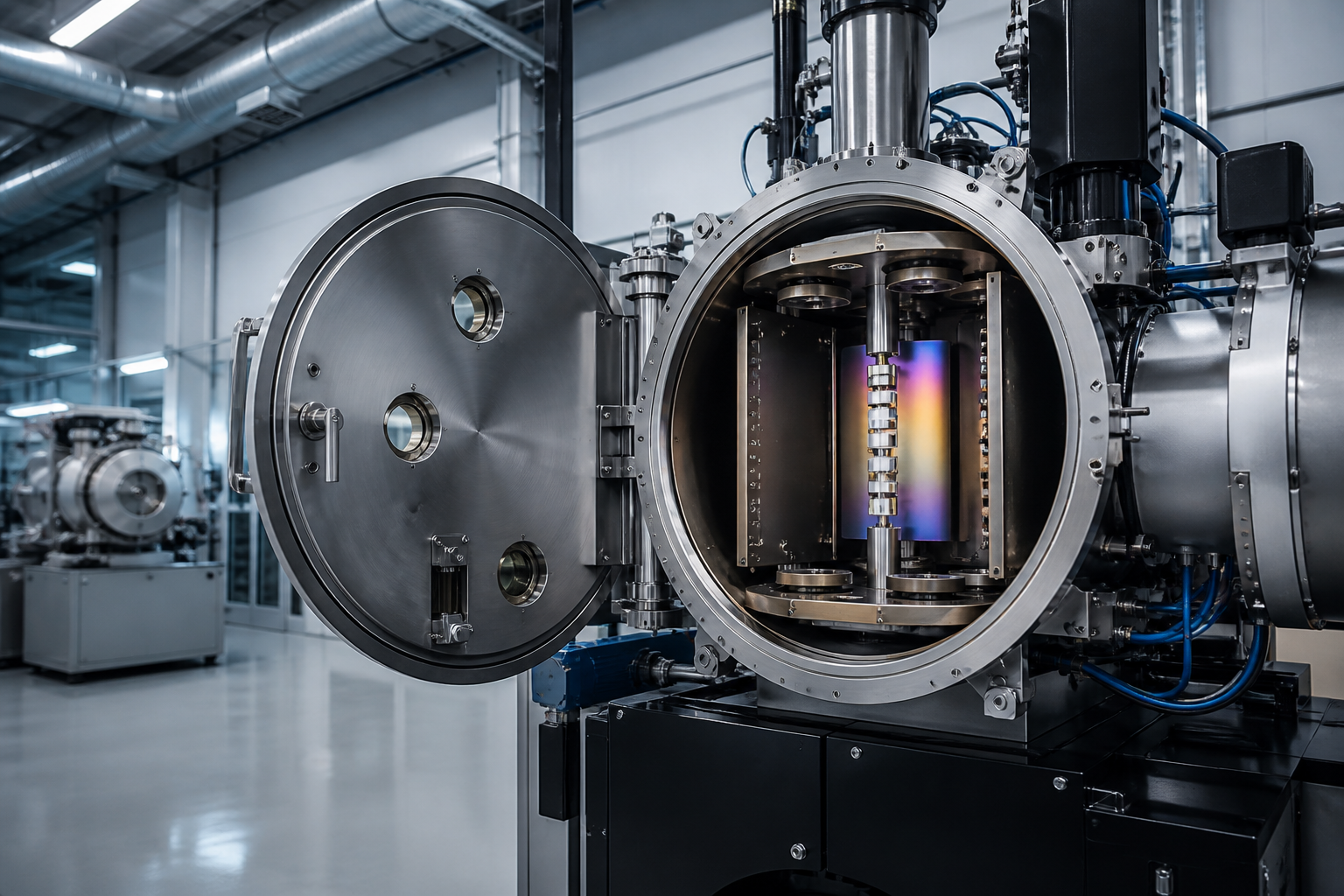
Coating machines: a practical selection checklist for durable, high‑precision finishes
When teams search for coating machines, they usually need more than a catalog spec sheet. They need a structured way to map real production needs—materials, geometry, takt time, quality targets—to a process and a machine class that can meet them. This article breaks down common technologies, the decision criteria that matter most, and a step‑by‑step checklist you can use to shortlist systems with fewer surprises downstream.
What coating machines do—and what success looks like
Coating machines apply thin or thick layers to a substrate to achieve specific surface properties. Depending on the method, the coating can improve hardness and wear resistance, tailor friction behavior, add corrosion protection, enhance release, or impart decorative appearance. “Success” is not only a coating that adheres; it is a repeatable process that meets target performance, uptime, and cost per part across the full production window.
- Inputs: substrate material and condition, geometry, cleanliness, fixture strategy, process gas or feedstock, power, and recipes.
- Transformation: physical or chemical deposition, thermal spray build‑up, or hybrid approaches.
- Outputs: coated parts with defined thickness, adhesion, roughness, and uniformity—plus the data proving it.
Major technology families to consider
Different coating machines use different physics. Matching the mechanism to your application is the first filter in your selection process.
Physical Vapor Deposition (PVD)
PVD systems form hard, dense, thin films in vacuum by vaporizing a solid source (often via sputtering or arc) and depositing it on the substrate. They are widely used for wear‑resistant and friction‑tailored layers, including diamond‑like carbon (DLC) and various nitrides or carbides. PVD is commonly chosen for tooling, precision components, and applications needing tight thickness control and clean, well‑bonded films.
Chemical Vapor Deposition (CVD)
CVD relies on chemical reactions of vapor‑phase precursors at elevated temperatures to grow films on the surface. It excels when conformal coverage and certain film chemistries are required, but substrate temperature tolerance becomes a critical constraint.
Thermal spray, including HVOF and related thermospray processes
Thermal spray systems propel molten or semi‑molten particles to build thicker, protective layers. Variants such as high‑velocity oxy‑fuel (HVOF) and other thermospray methods can create tough, wear‑ and corrosion‑resistant coatings on larger surfaces or components where thin films are insufficient. Feedstock options (powders, wires) and spray parameters drive deposit density and properties.
Hybrid and specialty routes
Some production lines integrate pre‑/post‑process steps—blasting, polishing, lapping, and cleaning—to stabilize incoming surface condition and final roughness. In many cases, success depends as much on these surrounding capabilities as on the coater itself.
Key selection criteria: a quick‑scan framework
Use this framework to score candidate coating machines before you dive into detailed trials.
-
Surface performance targets
- Primary goal: wear resistance, friction control, corrosion resistance, release, or appearance.
- Measurables: target thickness range, hardness or modulus proxy, coefficient of friction range, porosity limits, roughness after coating, and adhesion benchmarks relevant to your parts.
-
Substrate constraints
- Material and heat sensitivity (e.g., temper loss thresholds).
- Geometry: aspect ratios, blind features, line‑of‑sight limitations, and masking complexity.
- Cleanliness and prep: required blasting, microblasting, or chemical cleaning steps.
-
Throughput and lot strategy
- Parts per shift and takt time targets.
- Batch size versus flow/inline needs; changeover frequency for different SKUs.
- Utilization assumptions and buffer capacity for demand spikes.
-
Uniformity and repeatability
- Thickness and property uniformity across the fixture.
- Recipe locking, drift controls, and in‑process monitoring.
- Fixture design repeatability for multiple geometries.
-
Operating window and flexibility
- Supported materials/targets or feedstocks and easy‑change capability.
- Temperature limits for the part and for the chamber environment.
- Masking/fixturing versatility to reduce NPI lead time.
-
Facilities and EHS
- Power, gases, cooling water, ventilation, and floor loading.
- Consumables, waste handling, and relevant safety procedures.
-
Quality control and data
- Pre‑ and post‑process metrology for adhesion, thickness, roughness, and appearance.
- Traceability: recipe versioning, batch records, SPC hooks, and audit trails.
-
Serviceability and lifecycle
- Preventive maintenance intervals, target/feedstock change workflows.
- Parts availability and system uptime expectations.
Throughput, scheduling, and cost‑per‑part
Coating machines are often purchased to solve a quality problem, but they justify themselves through stable throughput and predictable cost. Run a simple model before you shortlist equipment.
- Define the full cycle, not just deposition: loading, pump‑down or preheat, deposition/spray time, cooling, venting, unloading, and any post‑processing steps (polishing or lapping, for instance).
- Establish realistic utilization. Account for recipe changes, routine cleaning, target or feedstock swaps, and planned maintenance.
- Balance batch size with risk. Large batches reduce handling but can magnify scrap costs if a parameter drifts. Smaller, more frequent lots improve feedback loops.
- Quantify cost drivers: energy, gases, targets/feedstocks, fixtures/masks, labor, and QC sampling frequency.
- Map bottlenecks. In many lines, pre‑cleaning or post‑finishing, not deposition, governs takt.
If multiple SKUs share a machine, simulate a week of production with changeovers included. The goal is to spot conflicts before they become late orders.
Process control, fixturing, and quality assurance
Even the best coating machines cannot compensate for inconsistent inputs. Build control into the entire chain.
- Incoming condition: specify surface roughness and cleanliness windows, along with approved prep sequences (e.g., degrease, blast, microblast).
- Masking/fixturing: design for repeatable placement, stable line‑of‑sight (for PVD), and thermal/electrical contact as required.
- Recipe governance: version control, access permissions, and change logs that link to trial results.
- Inline and offline checks: witness coupons, thickness mapping plans, adhesion testing cadence, and cosmetic inspection criteria.
- Corrective action: clearly defined rework/strip‑and‑recoat pathways, including impact on dimensional tolerances.
Where appearance matters, pair deposition with controlled polishing or lapping to hit final roughness or gloss without thinning the coating below spec.
Installation, facilities, and EHS planning
Before issuing a purchase order, confirm the plant can support the chosen platform. Early facilities checks prevent costly delays.
- Footprint and floor loading: confirm access routes, crane or forklift needs, and vibration isolation if applicable.
- Power and cooling: three‑phase power quality, breaker sizing, and closed‑loop or facility chilled water requirements.
- Vacuum and gases: roughing and high‑vacuum pump requirements (for PVD/CVD), process gases, and safe manifold layouts.
- Ventilation and safety: exhaust for by‑products or heat load, guarding, interlocks, and emergency procedures.
- Environmental considerations: consumables handling, filtration, and waste streams aligned to your internal policies.
Maintenance, uptime, and consumables
Lifecycle planning protects your business case. Consider what it takes to keep the process stable at scale.
- Scheduled cleaning: chamber wipe‑downs, shield replacements, nozzle or gun maintenance (for spray), and fixture refurbishment.
- Consumables: target life and change protocols (PVD), precursor or powder logistics, and spares for high‑wear items.
- Calibration: gauges, flow controllers, pyrometry/thermocouples, and motion systems.
- Training: operator certification paths, safety refreshers, and recipe owner responsibilities.
- Documentation: maintenance logs tied to lot records for end‑to‑end traceability.
Validation and documentation for repeatable outcomes
Whether you operate in a highly regulated sector or simply want bulletproof repeatability, define documentation up front. Clear standards shorten onboarding and audits alike.
- Qualification plan: define acceptance tests for the machine, fixtures, and metrology.
- Process window studies: map the safe operating range for thickness, adhesion, and roughness while monitoring drift over time.
- Sampling plans: frequency and methods for coupons or part measurements.
- Change control: criteria to revalidate after parameter changes, maintenance, or software updates.
- Records: tie batch IDs to recipes, operator IDs, maintenance entries, and QC results.
Application fit: quick matches between needs and methods
Use these general tendencies as a starting point, then verify with trials on your parts and materials.
- Thin, hard, low‑friction surfaces for tooling or precision components: often a PVD option (including DLC) is shortlisted.
- Conformal films where certain chemistries or higher temperatures are acceptable: CVD may be appropriate.
- Thicker protective layers for erosion, wear, or corrosion on larger geometries: thermal spray (including HVOF or other thermospray approaches) is frequently evaluated.
Remember: geometry, heat tolerance, and downstream finishing can shift the decision toward one method or a hybrid workflow.
Specification checklist you can copy
Capture this data before you engage vendors or plan trials. It keeps conversations concrete and comparable.
- Part summary: materials, annual volumes, part families, and critical features.
- Targets: surface function, thickness window, adhesion minimums, roughness targets, and visual standards.
- Geometry notes: line‑of‑sight issues, deep features, masking zones, and allowable coating on nonfunctional areas.
- Thermal/electrical constraints: max allowable part temperature; grounding or biasing needs (if applicable).
- Throughput plan: takt time, batch size candidates, SKU mix, and changeover expectations.
- Quality plan: in‑process monitors, coupon strategy, and offline metrology capabilities.
- Facilities: power, gases, cooling, ventilation, and floor space; EHS considerations.
- Service and training: on‑site support expectations, spares strategy, and operator certification requirements.
- Data and traceability: recipe control, audit trails, and report formats you need.
FAQ
How do I choose between PVD and thermal spray for my parts?
Start with thickness and function. If a thin, dense, low‑roughness film with tight thickness control is the goal—often for tooling or precision components—PVD is a common candidate. If you need a thicker protective build‑up for wear, corrosion, or erosion resistance on larger surfaces, thermal spray methods (including HVOF and other thermospray approaches) are frequently evaluated. Heat tolerance, geometry, and post‑finishing options will refine the choice.
What drives uniformity in coating machines?
Uniformity is a system‑plus‑fixture outcome. Chamber geometry, source placement and motion (or spray path planning), part orientation, rotation or oscillation strategies, and recipe controls all matter. Fixturing that stabilizes distance, angle, and thermal/electrical contact (when relevant) is usually the fastest lever to improve uniformity.
How much pre‑ and post‑processing should I plan for?
Plan for consistent pre‑cleaning at a minimum; many applications benefit from controlled blasting or microblasting to set a repeatable starting roughness. After coating, polishing or lapping can tune surface finish or appearance without cutting below minimum thickness. The exact sequence is part‑ and process‑dependent, so verify with trials.
Can one machine handle multiple coatings and part families?
Often yes, but flexibility depends on how easily you can change recipes, targets or feedstocks, and fixtures. Each changeover carries time and contamination risks. If you serve many SKUs, simulate the weekly schedule with realistic changeovers to see whether a single system can sustain your takt time.