
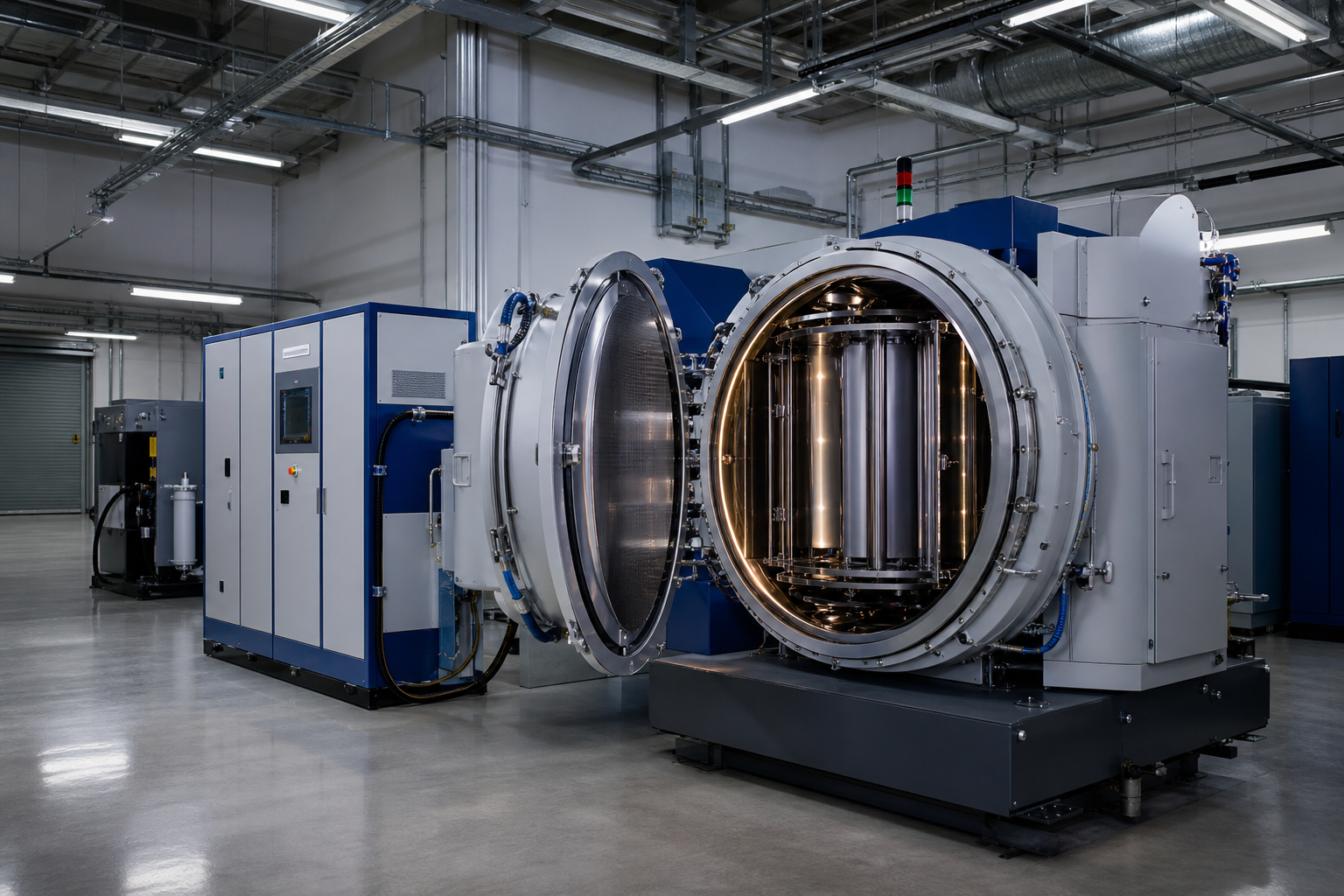
PVD machines: selection checklist from prototype to high-volume production
Choosing pvd machines is ultimately a capacity, capability, and quality decision. The right system should align with your parts mix, target coatings, and production cadence—while supporting reliable quality control from the first prototype through stable, high-volume manufacturing. This article offers a structured checklist you can apply directly to your evaluation process, using durable criteria you can verify with vendors and in trials.
Define your operational objectives
- Lifecycle coverage: Will the machine primarily run prototypes, pilot batches, or high-volume production—or all three?
- Primary challenges to address: Are you targeting wear, friction, or corrosion concerns on tooling or components?
- Industries served: Note any sector-specific expectations for automotive, aerospace, oil & gas, nuclear, defence, medical, pharmaceutical, or food & packaging applications.
- Parts portfolio: Summarize part sizes, weights, and geometries you must support.
- Quality expectations: Identify inspection, documentation, and traceability requirements up front.
Capacity and throughput planning
Right-size batch capacity and throughput to your demand profile. When you model takt time and batch logistics, include handling, masking, and load/unload considerations alongside cycle time.
- Batch mass and volume: Some high-capacity systems are rated up to 1,200 kg/cycle and others up to 3,000 kg/cycle. Use these figures as checkpoints when mapping to your near-term and future loads.
- Scalability: Ensure the platform can scale with growth—either by accommodating larger fixtures or by adding parallel machines of the same family.
- Changeover rhythm: If your part mix is diverse, evaluate fixturing strategies that make frequent changeovers practical without compromising quality.
Tip: Build two throughput models—one for today’s demand and one for a higher-volume scenario—so you can test whether a single system or a phased cell strategy will serve you best.
Coating scope and application fit
Clarify which coating categories your operation needs to run consistently. Keep the application list tight and traceable to your parts and industries.
- Target coating families: Include specific needs such as DLC and other high-performance PVD coatings aligned to wear, friction, and corrosion objectives.
- Application sets: Note coverage for stamping, plastic processing, machining and cutting tools, aluminum die cast and extrusion, and other components.
- Qualification path: Identify how each coating in scope will be qualified from prototype to production.
Quality systems and certifications
For regulated or safety-critical work, validate that the machine platform and your operating environment can support the required quality systems and documentation.
- Quality framework: Confirm alignment with ISO 9001:2015 practices where applicable.
- Sector approvals: If your work touches nuclear programs, plan for requirements associated with a Nuclear N299.3 approved vendor environment.
- Traceability: Define what you will record per batch and per fixture (load maps, recipes, and inspection data).
End-to-end process integration
Consistent coating results depend on stable upstream and downstream steps. When evaluating pvd machines, also map the surrounding processes you will bring in-house or coordinate closely with.
- Surface preparation: Sandblasting and microblasting readiness.
- Cleaning: Degreasing and cleaning capacity matched to your throughput and part geometry.
- Repair and refresh: Stripping and polishing capabilities to extend tool and fixture life.
- Finish steps: After-coating polishing (lapping) to hit final roughness targets.
- Verification: A quality control laboratory routine that closes the loop on process adjustments.
Fixturing and load engineering
Fixtures determine how effectively you use chamber volume and how repeatable your results are across parts and programs.
- Coverage and uniformity: Define fixture rules of thumb for part spacing and orientation.
- Changeover speed: Standardize quick-adjust features and labeling so setup is error-resistant.
- Maintaining cleanliness: Include fixture cleaning, inspection, and rotation in your standard work.
Prototype-to-production ramp
Plan a controlled path that takes you from first articles to steady production without surprises. Treat each phase as a gate with evidence.
- Feasibility: Establish a baseline process window and confirm part handling, masking, and preparation steps.
- Pilot: Run representative batches covering the full application set (e.g., stamping, plastic processing, machining and cutting tools, aluminum die cast and extrusion, and general components).
- Stability: Lock in recipes, fixtures, and inspection checkpoints; document corrective actions for edge cases.
- Scale: Balance chamber utilization against takt time; add parallel capacity only after proving the playbook.
Equipment family and upgrade path
When your volumes grow, staying within a compatible machine family shortens learning curves and keeps quality consistent. Consider whether your roadmap benefits from models with clearly differentiated batch capacities.
- Right-sizing: Use indicative tiers—systems rated up to 1,200 kg/cycle and others up to 3,000 kg/cycle—to map today’s and tomorrow’s needs.
- Common controls and recipes: Favor platforms where process know-how transfers easily across units.
- Spare parts and maintenance alignment: Shared components simplify stocking and technician training.
In-house vs. outsourced operations
Some teams purchase pvd machines and run them internally; others rely on a specialized service provider. Many adopt a hybrid: outsource during early development, then bring stable, high-volume work inside.
- In-house advantages: Immediate access to the chamber and fixtures, tighter integration with your prep and QC routines, and direct control of scheduling.
- Outsourced advantages: Access to established systems, coating menus, and associated processes such as blasting, cleaning, stripping, polishing, lapping, and a QC lab—without standing up the entire workflow yourself.
- Hybrid approach: Use external capacity for prototyping and surge demand; transition mature programs inside once volumes and recipes stabilize.
Operational controls and QC
Build a predictable routine around the machine so results stay consistent across shifts and product families.
- Standard work: Clear recipes, load maps, and sign-offs for each application category.
- Preventive maintenance: A calendar that aligns with production to minimize disruptions.
- Escalation path: Predefined checks and corrective actions when inspection triggers an out-of-window result.
- Process improvement: Capture learnings from prototypes and pilots, and revalidate after major changes.
Total cost and resource planning
While line-item pricing varies by supplier and configuration, you can still structure a comprehensive view of effort and ownership.
- People: Operators, maintenance technicians, and quality staff aligned to your shift pattern.
- Time: Realistic allowances for prep, loading, cycle, unload, inspection, and rework.
- Space: Footprint for the machine plus adjacent prep, storage, QC, and safe material flow.
- Utilities and services: Requirements that match your facility standards.
- Spare parts and consumables: A stocking plan that reflects expected duty cycles.
Vendor due diligence checklist
Use this list to keep your conversations and trials focused on verifiable essentials.
- Proven support for your target applications: stamping, plastic processing, machining and cutting tools, aluminum die cast and extrusion, and other components.
- Clarity on batch capacity and a growth path using platforms at approximately 1,200 kg/cycle and 3,000 kg/cycle tiers.
- Documentation and alignment with quality systems such as ISO 9001:2015; readiness for sector needs like Nuclear N299.3 where applicable.
- Availability of end-to-end steps: sandblasting, microblasting, degreasing and cleaning, stripping and polishing, after-coating lapping, and QC laboratory routines.
- Support model spanning prototype to high-volume production.
- Clear training plan, spare parts logistics, and on-site or remote technical support expectations.
Pilot trial structure
A structured pilot helps you compare vendors and derisk the ramp to production. Keep scope tight and evidence-driven.
- Define success: Link trial metrics to your wear, friction, or corrosion objectives and to your inspection plan.
- Select representative parts: Cover all your application categories without overextending the pilot.
- Lock the playbook: Freeze fixtures, prep steps, and recipes for the trial window.
- Run multiple loads: Check repeatability and throughput under realistic scheduling constraints.
- Capture full traceability: Record load maps, process settings, and QC results for each batch.
FAQ
What does “PVD” stand for in pvd machines?
PVD stands for Physical Vapor Deposition. In the context of equipment selection, focus on how the machine and its surrounding processes help you meet your coating objectives and production cadence.
How do I decide between bringing a PVD system in-house and outsourcing?
Map your near-term mix of prototypes and production, your internal readiness for preparation and QC steps, and the certifications you must support. Many teams start with outsourced capacity to prove recipes, then bring stable, higher-volume work in-house.
Which certifications should I look for if I work in regulated sectors?
Align your operation with quality frameworks such as ISO 9001:2015, and plan for sector requirements like those associated with a Nuclear N299.3 approved vendor environment when relevant.
What batch capacity should I target?
Model today’s demand and a growth scenario. As reference points, some platforms are rated up to 1,200 kg/cycle and others up to 3,000 kg/cycle. Choose a tier that meets current needs with a clear path to scale.
What adjacent processes most influence coating consistency?
Stable preparation and verification. In practice, that means disciplined sandblasting or microblasting, thorough degreasing and cleaning, access to stripping and polishing when needed, after-coating lapping where finish is critical, and a QC laboratory routine that feeds back into process control.