
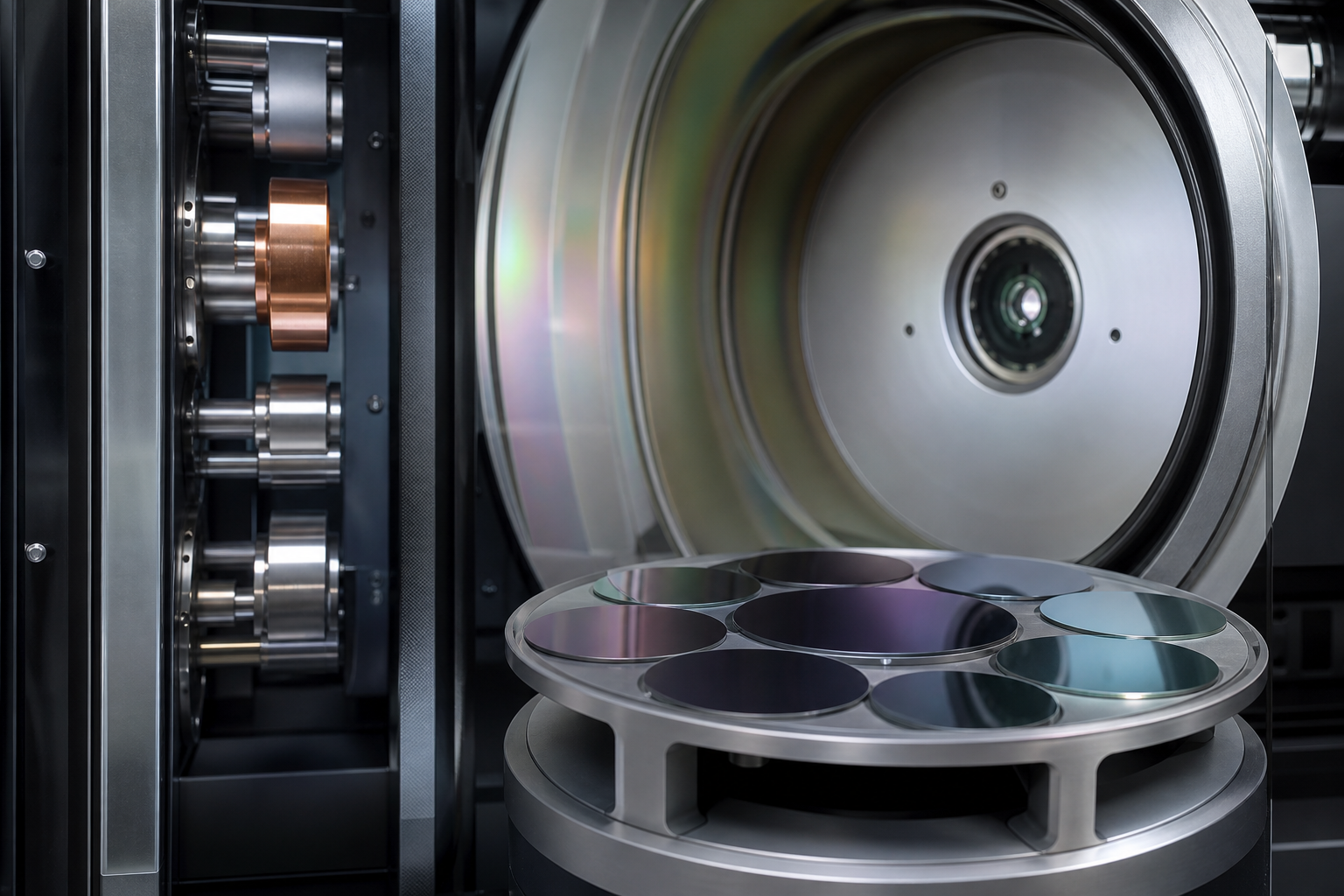
Coating systems: selection, specification, and scaling for industrial performance
Coating systems protect and enhance surfaces so parts, tools, and assemblies perform reliably under load, heat, friction, and corrosive environments. Whether you are targeting wear resistance on cutting tools, friction control on sliding pairs, or corrosion protection on components, success depends on choosing the right technology, preparing the substrate correctly, validating performance, and scaling production without surprises. This article provides a concise decision framework and specification checklist to help engineering, quality, and procurement teams align on the coating strategy that fits their application and throughput.
Understanding the basics of coating systems
A coating system is more than the deposited layer. It is a stack of interdependent choices that together determine performance and consistency at scale:
- Substrate and baseline finish: alloy, hardness, heat treatment state, roughness, cleanliness.
- Surface preparation: blasting, etching, masking, degreasing, and activation steps that drive adhesion.
- Deposition or application technology: the process that forms the layer (physical, chemical, thermal, or liquid-based).
- Coating material and architecture: chemistry, thickness, multilayers, gradients, and topcoats.
- Post-processing: tempering, polishing/lapping, or other finishing that tunes roughness and friction.
- Quality control: inspections and tests to verify thickness, adhesion, hardness, roughness, and defects.
Treat each element as a lever. Adjusting one without considering the others often leads to issues such as poor adhesion, premature wear, or variability between lots.
Evaluating application requirements
Start with operating conditions and failure risks. Translate these into measurable coating targets.
Key questions to align stakeholders:
- Primary objective: wear resistance, corrosion resistance, friction control, thermal barrier, or decorative function?
- Contact and motion: abrasive, adhesive, erosive, rolling, or sliding? Dry or lubricated?
- Environment: temperature range, humidity, chemicals, sterilization cycles, vacuum, or food contact?
- Loads and dynamics: contact pressures, impact, vibration, or cavitation?
- Geometry and masking: blind holes, sharp edges, internal bores, and critical tolerances.
- Throughput and takt: batch size, cycle time, and acceptable WIP.
- Inspection: which parameters must be certified per lot (thickness, hardness, adhesion, roughness)?
Convert answers into specification targets such as thickness range, coefficient of friction (where applicable), maximum allowable roughness after coating, and minimum adhesion rating by a recognized test method. Aligning on targets early reduces iteration loops during prototyping.
Comparing common coating technologies
Different coating systems are optimized for distinct mechanisms of protection and production constraints. Below is a practical, high-level comparison to guide screening. Always validate against your exact parts and substrates.
- PVD (Physical Vapor Deposition): line-of-sight vacuum process that forms hard, dense, thin films with strong adhesion on properly prepared substrates. Common for wear resistance, friction control, and decorative hard coatings. Typical materials include nitrides, carbides, oxides, and carbon-based layers such as DLC variants. Sensitive to geometry for uniformity; masking often required.
- CVD (Chemical Vapor Deposition): higher-temperature gas-phase process that can yield conformal coverage and robust coatings. Heat sensitivity of substrates and dimensional changes need consideration.
- Thermal spray (including HVOF and related variants): kinetic/thermal deposition that builds thicker layers for wear and corrosion protection. Useful where impact or erosion is dominant and thickness tolerance permits. Surface prep and bond coatings can be critical.
- Electroplating and electroless plating: aqueous processes providing functional and decorative layers; good for uniform coverage on complex geometries. Consider hydrogen embrittlement risk and post-bake requirements for high-strength steels.
- Anodizing and conversion coatings: substrate-specific chemistries (e.g., aluminum, magnesium) that create protective oxide layers. Often combined with sealants and dyes.
- Liquid paints and powder coats: versatile, cost-effective barriers with broad color and finish options; suited for corrosion protection and branding where thickness and hardness demands are moderate.
Shortlist two or three candidates that align with your objectives, substrate, and throughput, then run controlled trials with the same prep, geometry, and inspection plan you will use in production.
Materials and substrate preparation
Adhesion and performance depend heavily on prep. Many coating failures trace back to contamination, inconsistent roughness, or residual stresses rather than the coating material itself.
- Cleanliness: implement controlled degreasing and handle parts with gloves to avoid recontamination.
- Surface activation: blasting or microblasting can tune anchor profile; match media type and pressure to substrate hardness.
- Edge conditioning: break sharp edges to reduce stress concentrations and flaking risk without violating fit.
- Heat treatment compatibility: confirm that pre- and post-coat temperatures do not temper or distort critical properties.
- Masking strategy: plan durable, repeatable masking for threads, bores, and datum features.
- Baseline finish: define Ra/Rz windows pre-coat to avoid excessive post-polishing or friction spikes.
Document your “golden sample” prep route alongside metrology data. This becomes the control reference for future lots and for alternate suppliers if you dual-source.
Performance testing and quality validation
Build your quality plan around the risks you are mitigating. Typical verification includes:
- Thickness and uniformity: cross-sections, calo testing, or non-destructive gauges depending on the technology and geometry.
- Adhesion: standardized scratch testing or pull-off tests; define acceptance criteria by substrate and coating.
- Hardness and modulus: microhardness or nanoindentation for thin films.
- Surface roughness: before and after coating; capture directional effects if sliding is involved.
- Tribology: coefficient of friction and wear rate via pin-on-disk or application-specific rigs.
- Corrosion resistance: salt spray, cyclic corrosion, or chemical immersion as relevant.
- Functional trials: cutting tests, forming runs, or endurance cycles that replicate duty conditions.
For production, implement incoming inspection sampling plans, process capability tracking for critical metrics, and periodic requalification of golden samples. Make sure traceability covers substrate heat lots, prep steps, coating machine runs, and post-process finishing.
Production scaling and economics
Cost and throughput are a function of cycle time, batch capacity, handling, and rework rates. When comparing coating systems for production:
- Batch density: how many parts per load without shadowing or quality loss?
- Cycle time: from incoming to outgoing, including prep and post-finish.
- Yield and rework: common defect modes, recoat feasibility, and scrap drivers.
- Changeover: time and cost to switch materials, colors, or masking kits.
- Logistics: WIP buffers, kitting accuracy, and packaging that prevents transit damage.
- Automation: fixtures, racking, and handling aids that reduce touch labor and variability.
A basic total cost of ownership comparison should include unit coating cost, expected life extension or maintenance interval, downtime avoided, scrap reduction, and any metrology or cleaning investments required. Normalize by identical test cycles to avoid optimistic assumptions.
Specification checklist you can adapt
Use this template to build a clear, auditable coating specification.
- Scope and objective: what risk the coating mitigates and how success is measured.
- Substrate details: alloy, hardness, heat-treat, initial roughness window, critical dimensions and tolerances.
- Preparation: cleaning chemistry, blasting media/pressure, masking map, and acceptance checks.
- Coating technology and material: process family, chemistry, target thickness (min/nominal/max), and allowable color/appearance ranges if applicable.
- Post-processing: bake/temper parameters, polishing or lapping targets, final roughness limits, and cleanliness class.
- Quality tests and sampling: methods, instruments, sample sizes, and acceptance criteria per lot.
- Functional validation: application-specific trials (cycles, loads, environment) and pass/fail thresholds.
- Documentation and traceability: traveler content, serial/lot IDs, and retained sample policy.
- Change control: what requires requalification (material change, thickness window shift, prep route change, equipment revision).
Keep the specification concise but complete. Add drawings that identify masked and measured features and define measurement locations to minimize interpretation differences.
Common failure modes and how to prevent them
Recognizing early symptoms prevents line stops and costly scrapping. Typical modes include:
- Poor adhesion or flaking: often linked to contamination, inadequate activation, or sharp edges. Countermeasures include stricter cleaning controls, edge breaks, and prep audits.
- Premature wear or polishing-through: thickness too low, wrong material pairing, or excessive roughness. Review thickness windows, consider multilayers, and tune post-finish.
- Cracking or crazing: high residual stress or thermal mismatch. Adjust deposition parameters or choose a more compliant architecture.
- Non-uniform coverage: shadowing on complex geometries. Improve fixturing orientation, add rotation, or consider more conformal processes.
- Corrosion creep at defects: pinholes or porosity in barrier layers. Increase density via process adjustment or add sealers/topcoats.
Establish a feedback loop between production issues, metrology trends, and process parameters to catch drift before it becomes scrap.
Integration with design and manufacturing
Coatings perform best when considered early in design and routings:
- Design for coating: specify radii and access to reduce shadowing; plan tolerances to accommodate thickness and post-finish.
- Bill of materials: treat masking kits and fixtures as controlled items.
- Routing: allocate time for prep, coating, stabilization, and post-finish; avoid back-to-back processes that trap contamination.
- Supplier alignment: share objectives, drawings, and acceptance tests up front to avoid rework later.
Jointly reviewing parts in the context of their coating route often reveals simple geometry or tolerance tweaks that improve consistency.
FAQ
What is the difference between a coating material and a coating system?
A coating material is the deposited film chemistry (for example, a nitride or a carbon-based layer). A coating system includes the substrate condition, surface preparation, deposition process, coating architecture, and post-processing—plus the quality plan that proves performance. Two suppliers can apply the “same” material with very different outcomes because their systems differ.
How do I choose between PVD, thermal spray, and plating?
Start from your objective and constraints. If you need a thin, hard, low-friction film with tight tolerances, PVD is often a strong candidate. For thicker, impact-resistant overlays or erosion service, thermal spray methods are frequently considered. For conformal coverage at moderate cost, plating may fit. Always prototype with the real substrate, geometry, and inspection plan before committing to production.
What thickness should I specify?
Thickness depends on duty, allowable dimensional change, and the coating’s mechanical properties. Provide a minimum and maximum range rather than a single value to allow stable processing. Pair thickness with final roughness and adhesion targets so trade-offs are clear. Validate the range via functional trials before freezing the spec.
How should I verify adhesion?
Use a recognized method compatible with your coating and substrate—commonly a scratch test for thin hard films or pull-off tests for thicker overlays. Define acceptance criteria, sample size, and test locations. If failures cluster near edges or masked transitions, add an edge-prep or masking review to your corrective actions.
Can coatings reduce friction without lubricants?
Certain coatings are engineered for low friction and can reduce dependence on lubricants in some applications. Results are highly application-specific, and you should validate with controlled tribology tests that reflect your load, speed, temperature, and environment before modifying lubrication strategies.