
We see the same problem every month from Woodbridge stampers: a die that should run 50,000 hits is getting pulled at 20,000 because surface prep upstream of coating was rushed. Our job is to fix the failure mode—then spec the right coating and finish so you hit the run length you planned.
By Ron • Last updated: July 9, 2026
Overview
Surface conditioning pairs heat‑treated cores with coatings tuned for the failure you’re fighting—galling, abrasive wear, erosion, or corrosion. Sputtek unifies PVD/DLC and Thermospray (Pulsed HVOF) with blasting, cleaning, masking, lapping, and QC in one Woodbridge facility to deliver repeatable, production‑ready finishes.
| Facility size | Modern 15,000 sq ft center |
|---|---|
| Methods | PVD/DLC thin films; Thermospray/Pulsed HVOF overlays |
| In‑house steps | Sand/microblasting, degreasing, stripping, polishing, lapping, QC lab |
| Systems | SPUN 2,000 and SPUN 4,000 (large‑batch reliability) |
| Approvals | ISO 9001:2015 and CSA N299.3 (nuclear) |
| Industries | Automotive, aerospace, oil & gas, nuclear, medical, pharma, food & packaging |
Woodbridge traffic/window tip
Pickups near SmartCentres Woodbridge flow smoother outside the Weston Rd / Highway 7 rush. We can stage curbside hand‑offs or carrier docks to protect your tool change windows.
What Surface Heat Treat & Coatings Actually Means for Manufacturers
Surface heat treat & coatings create hard cores with tailored surfaces. Thin films (1–5 µm) lower friction and wear; thermal spray overlays (100–300 µm) add bulk protection or restore size. Keeping prep/finish in one workflow is what stabilizes outcomes in production.
Numbers your engineers expect:
- Typical PVD thickness: 2–4 µm (TiN/AlTiN), 1–3 µm (DLC); substrate temps ~200–450 °C—keep below your last tempering step.
- Hardness (Vickers): TiN ~1,800–2,200 HV; AlTiN ~2,500–3,300 HV; DLC commonly 2,000–3,000 HV (ta‑C can be higher).
- Thermospray/HVOF overlays: 100–300 µm typical; WC‑Co ~1,100–1,400 HV; bond strength often >70 MPa; low porosity when processed correctly.
Two quick scenarios from recent runs:
- AHSS draw die: Full degrease + controlled microblast + ~3 µm AlTiN moved life from ~18,000 hits per pull to ~38,000 before touch‑up. Same alloy and lube; gains came from prep discipline and chemistry suited to >980 MPa steel.
- Packaging knife: DLC at ~2 µm with post‑lap to Ra ≤0.08 µm doubled service life and stopped film tear‑offs that were causing intermittent jams.
PVD Coating Services — Applications by Industry
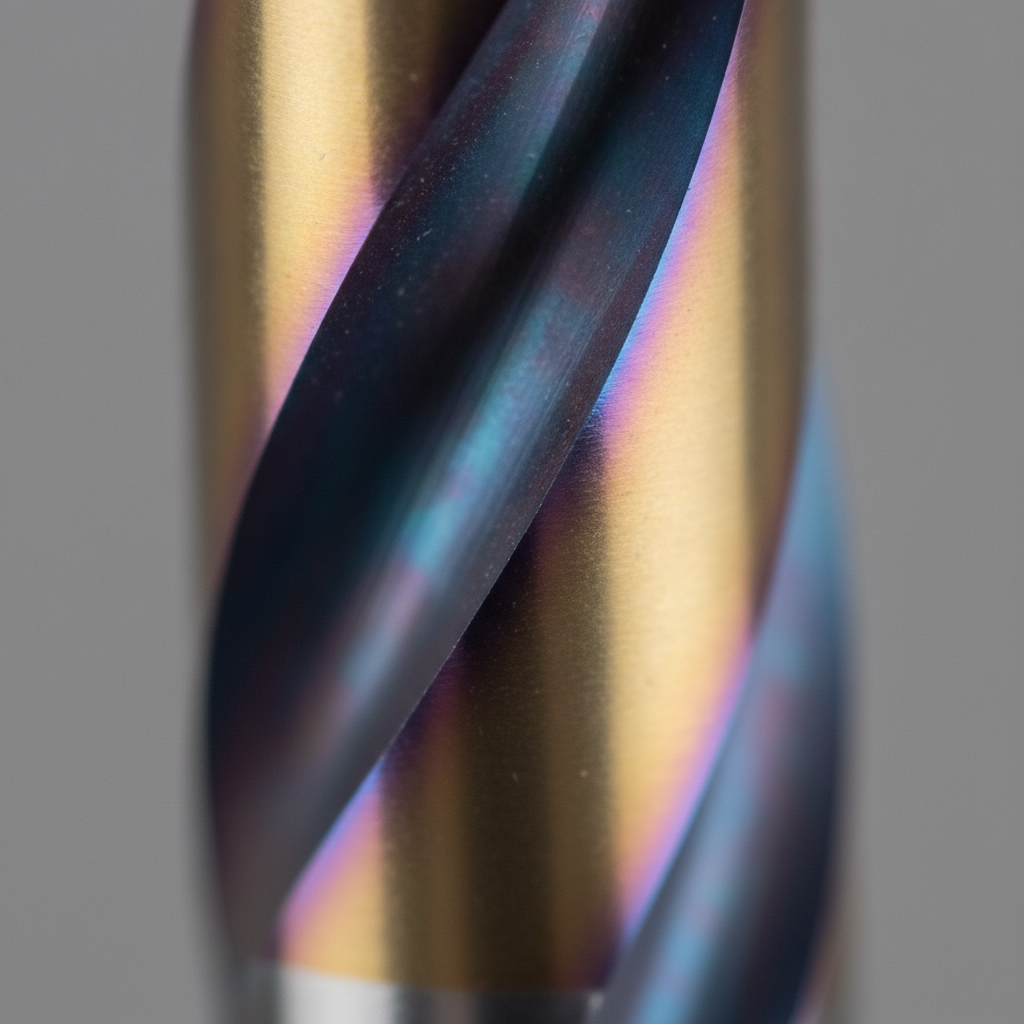
Use PVD/DLC when you need thin, hard, low‑friction layers that won’t alter geometry. We run controlled prep, 2–4 µm films, and post‑coat lapping so tools return production‑ready—no extra vendor queue.
- Stamping (AHSS/DP/TRIP): We default to AlTiN around 3 µm for >980 MPa grades because oxidation resistance at the die face matters more than raw hardness. TiN tends to glaze and fail early on these steels.
- Machining & cutting: Multilayer AlTiN/TiAlN on carbide end mills and drills improves edge retention; we avoid DLC on ferrous cutting due to graphitization risk at high heat.
- Plastic injection: DLC on gates, slides, and cores lowers release force and protects textures; typical 1.5–2.5 µm with a post‑lap to restore detail without rounding.
- Medical/pharma: Smooth, low‑energy films for reduced stiction and easier cleaning; we hold repeatable Ra where validation requires it.
For fixture and line‑of‑sight trade‑offs as you build internal capability, see our PVD systems guide, the PVD method overview, and local notes in thin‑film PVD in Woodbridge.
Thermospray & Pulsed HVOF Coatings — When PVD Isn’t Enough
Pick Thermospray/HVOF when impact, erosion, corrosion allowance, or diameter restoration are the drivers. We apply carbides and alloys 100–300 µm thick, then finish‑grind or lap in‑house back to your fit and texture.
- Best fits: Roll faces, mandrels, pump shafts, valve components, guides, and wear plates.
- Our stance: We don’t recommend thermal spray on small end mills or drills under ~6 mm—the thickness kills edge geometry. Use PVD multilayers instead.
- Process control: Masking, controlled preheat to protect metallurgy, and finish grinding for press‑fits and seals.

Full Pre‑ and Post‑Processing In‑House (The Differentiator)
One roof, one traveler. We handle blasting, cleaning, masking, fixturing, coating, stripping, polishing/lapping, and QC in the same facility. That’s how we cut days of shipping idle time and remove variation from vendor handoffs.
- Prep discipline: Degrease, microblast to spec profile, verified cleanliness before loading.
- Coat: Multiple PVD/DLC chambers; Thermospray cell with Pulsed HVOF capability.
- Finish: Stripping where appropriate, polishing, lapping back to target Ra and edges.
- Quality: Traceable records; approvals aligned to ISO 9001:2015 and CSA N299.3 programs.
For deeper process and finish trade‑offs, review our PVD finishing guide and PVD deposition guide.
PVD Coating Systems: SPUN 2,000 and SPUN 4,000
Bringing coating in‑house? SPUN 2,000 suits development and specialty throughput; SPUN 4,000 handles larger payloads for volume with uniformity and adhesion as priorities. We also engineer custom fixtures and recipes for tricky geometries.
- SPUN 2,000: Prototyping, toolrooms, and pilot lots—tight control for recipe development.
- SPUN 4,000: Large‑batch reliability and bigger parts where load capacity matters.
- Custom: Fixture design and movement strategies to improve line‑of‑sight coverage.
Choosing the Right Coating for Your Application
Start from the failure mode, then constrain thickness and finish. Use PVD/DLC for thin, hard, low‑friction films; choose Thermospray/HVOF for impact/erosion or dimensional restoration. Validate on like‑for‑like geometry before scaling.
| Method | Key strength | Typical use | Typical spec |
|---|---|---|---|
| PVD/DLC | Low friction, high hardness | Stamping, cutting, molding, precision parts | 2–4 µm (DLC 1–3 µm), Ra as‑lapped |
| Thermospray/HVOF | Thick, tough overlay | Impact/erosion zones, shaft repair | 100–300 µm, bond >70 MPa, low porosity |
| Heat treat (base) | Core strength | Foundation for load‑bearing | Keep PVD temp below last temper |
- Qualify with a small lot. Hold substrate, geometry, and prep constant; change one variable.
- Measure deltas: hits between pulls, tool offsets, Ra, and scrap causes.
- Lock the traveler and document acceptance criteria for PPAP/FAI ease.
Serving Hamilton, Stoney Creek, and the Golden Horseshoe
From Woodbridge we support Hamilton, Stoney Creek, and the Golden Horseshoe with prototypes, PPAP lots, and volume programs. One coordinated workflow means predictable turnarounds and stable results.
Teams often compare regional options such as Surface Heat Treating (ASTG), Atlantic Heat Treating, and Surface Engineering in Mississauga. Our edge is combining PVD, Thermospray, and the full prep/finish chain in‑house—so you don’t manage three vendors to get one surface right.
FAQ
Here are straight answers we give production managers planning trials and ramp‑ups. If you need a fast read, scan the bold lines first.
What substrate temperature limits should we watch for PVD?
Most PVD runs roughly 200–450 °C (392–842 °F). Keep the peak below your last temper to preserve hardness, especially on D2, H13, and similar tool steels. If you’re near the limit, we adjust dwell and prep to protect the core properties.
How smooth should surfaces be before and after coating?
For thin films, smoother is better: we often prep to a fine microblast then lap post‑coat to target Ra (for release surfaces we see ≤0.08 µm work well). Thermal spray needs a bond profile first, then finish‑grind or lap to the functional texture.
Can we strip and re‑coat without losing tolerance?
Often, yes. We use controlled stripping for many chemistries, then polish/lap back to spec and re‑coat. Feasibility depends on substrate, prior history, and the tolerance stack you have available on edges and sealing lands.
Key takeaways
Match coatings to failures, control prep and finish in one workflow, and validate with like‑for‑like trials. Sputtek brings PVD, Thermospray, and full pre/post processing together in Woodbridge to shorten turnarounds and extend part life.
- AlTiN > TiN on >980 MPa AHSS stamping due to oxidation resistance.
- DLC shines on molds/slides; avoid it on hot ferrous cutting edges.
- Skip thermal spray on sub‑6 mm cutting tools; protect edge geometry with PVD.
- Keep PVD below last temper; protect hardness on tool steels.
Ready to plan a trial? Share your substrate, alloy, and failure mode. We’ll help you pick a path and lock the traveler before you scale.