
Sputtering physical vapor deposition is a vacuum coating method that ejects atoms from a solid target and condenses them onto parts as a thin, dense film. It delivers uniform coverage, strong adhesion, and tight thickness control for industrial tools and components. In Woodbridge, Sputtek runs this in daily production across tooling and precision parts.
By Ron · Last updated: 2026-07-08
| Facility | Modern 15,000 sq ft coating center (GTA) |
|---|---|
| Certifications | ISO 9001:2015; Nuclear N299.3 approved vendor |
| Core services | PVD coating; Thermospray (Pulsed HVOF); PVD systems (SPUN series) |
| In-house processes | Sandblasting, microblasting, degreasing, stripping, polishing, lapping, QC lab |
| High-capacity PVD | SPUN 2,000 up to ~1,200 kg/cycle; SPUN 4,000 up to ~3,000 kg/cycle |
| Industries | Automotive, aerospace, oil & gas, nuclear, defense, medical, pharma, food & packaging |
Overview
Sputtering PVD creates dense, adherent thin films for wear, friction, and corrosion control. Because Sputtek controls prep, fixtures, and QC in-house, Woodbridge manufacturers get repeatable results from prototype to production without shipping parts out to multiple vendors.
We built this guide to bridge theory with production reality. You’ll see where sputtering beats evaporation, how it compares with Thermospray (Pulsed HVOF), and which specs actually move the needle for your tools and components.
What Sputtering PVD Actually Does to a Surface (and Why It Outperforms Evaporation for Most Industrial Parts)
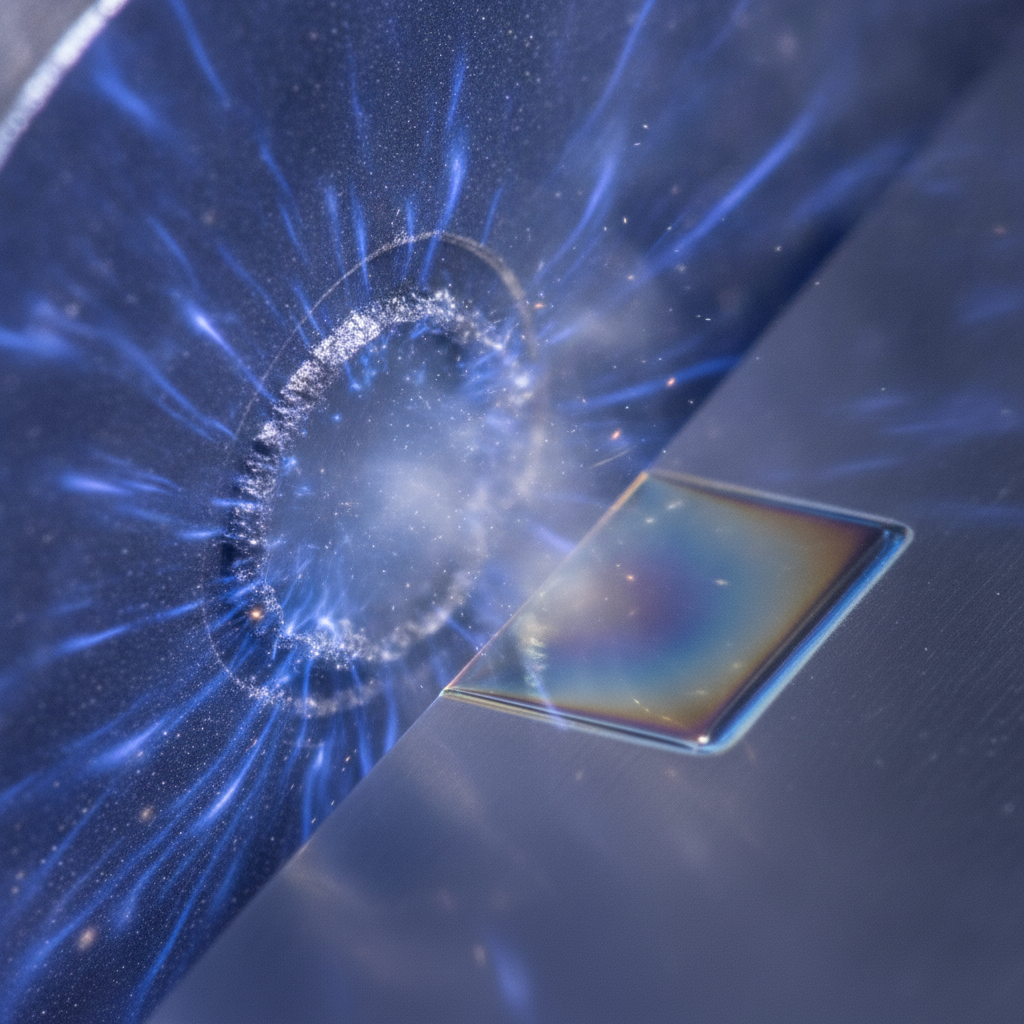
Sputtering bombards a solid target with plasma ions, ejecting atoms that condense on your part in a low-pressure vacuum. The higher energy of arriving atoms produces dense, well-adhered, uniform films—better than evaporation for complex tooling and tolerance-critical parts.
Here’s the operational impact engineers care about:
- Coverage on features: Good step coverage on edges, cavities, and fine details preserves tolerances.
- Dense microstructure: Reduces porosity pathways that can start corrosion or chipping.
- Lower roughness change: Keeps sealing surfaces and mold finishes within spec; lapping can refine further.
Practical specs we commonly recommend (application-dependent):
- TiN for steels: ~2–4 µm thickness; ~1,800–2,300 HV microhardness; use where appearance and balanced wear matter.
- TiAlN for hot tooling: ~3–5 µm; ~2,500–3,200 HV; stronger hot hardness for aluminum die cast/extrusion tooling.
- CrN for stainless & molds: ~2–4 µm; smooth, corrosion-tolerant; good for plastic injection mold cores/cavities.
- DLC (carbon-based): ~1–3 µm; very low friction; great for galling-prone contact pairs and sliding components.
For a plain-language primer on industrial coating workflows, see this industrial coating project example. It’s not sputtering-specific but helps visualize production constraints that influence coating choices.
How the Sputtering Process Works — Step by Step
Sputtering PVD follows a controlled sequence: surface prep, fixturing, vacuum pump-down, plasma ignition, deposition, cool-down, and QC. Each step influences adhesion, film density, and uniformity—tight control yields repeatable results batch-to-batch.
- Surface preparation: In-house sandblasting/microblasting, degreasing, and optional stripping/polishing expose a clean, activation-ready surface.
- Fixturing/masking: Parts are oriented for line-of-sight; critical fits may be masked to hold dimensions.
- Pump-down: High vacuum removes moisture and contaminants; partial in-situ cleaning may be used.
- Plasma ignition: Argon plasma sputters atoms from the target (Ti, Cr, C-based) toward the rotating substrate.
- Deposition control: Target power, working pressure, substrate bias, and temperature shape density, stress, and adhesion.
- Cool-down/unload: Thermal stabilization prevents shock; parts move to QC.
- QC and finishing: Thickness and adhesion checks; after-coating lapping when finish or tolerance demands it.
Control knobs that move results
- Working pressure: Adjusts mean free path; influences step coverage and density.
- Substrate bias: Enhances ion bombardment for adhesion and densification.
- Rotation/fixturing: Balances line-of-sight effects on complex geometries.
- Substrate temperature: Promotes adhesion and phase formation while respecting metallurgical limits.
Typical sputtering deposition rates are on the order of fractions to a few micrometers per hour; we set thickness to what the failure mode requires rather than chasing raw speed. For materials background, these materials primers explain how base material behavior affects surface engineering decisions.
Which Substrates and Applications Benefit Most from Sputtering PVD
Sputtering excels on hardened steels, stainless steels, and many tool steels used in stamping, molds, cutting tools, die cast/extrusion tooling, and precision components. It balances adhesion, uniformity, and surface finish while keeping film build within tight tolerances.
- Stamping dies (HSLA, AHSS): We target anti-galling chemistry and smooth finishes; typical film 2–5 µm.
- Plastic injection molds: CrN or DLC improves release and resists gate/runner abrasion; 1–4 µm is common.
- Cutting tools: TiAlN or AlTiN variants hold edge integrity at heat; 2–4 µm is typical for drills/end mills.
- Aluminum die cast/extrusion: TiAlN at 3–5 µm resists soldering and erosion at elevated temperatures.
- Precision components: Barrier and low-friction films protect shafts, valves, and wear faces without altering fits.
Failure modes we target (and fixes)
- Galling on stamping dies: You see pickup streaks and rising scrap. Action: switch to a low-friction, dense film (e.g., DLC or a modified TiN) at 2–4 µm and tighten prep; add after-coating lapping where sealing is critical.
- Soldering on die cast tooling: Aluminum bonds to steel surfaces. Action: TiAlN at ~3–5 µm with disciplined preclean and rotation strategy; avoid TiN here—hot hardness matters.
- Built-up edge (BUE) on cutters: Edge smearing and chatter. Action: high-Al TiAlN in the 2–3 µm range with bias control; pair with proper edge prep.
- Corrosion-fretting on stainless: Dark staining and wear at contacts. Action: CrN 2–4 µm balances corrosion resistance and wear without over-thickening.
If you need a deeper overview of PVD options by part family, our PVD types overview maps common tool/component scenarios to coating approaches.
Coating Properties You Can Expect from a Sputtering PVD Service
Expect dense, fine-grained films with strong adhesion, tight thickness control, and smooth as-deposited finishes. With the right target/recipe, sputtered coatings control friction, resist wear, and add corrosion barriers—without compromising part tolerances.
Typical specs we recommend (application-driven)
- Thickness control: ±0.5–1.0 µm on most tooling geometries with proper fixturing/rotation.
- Surface finish: Minimal Ra change; optional lapping returns critical faces to pre-coat roughness targets.
- Hardness: TiN ~1,800–2,300 HV; TiAlN ~2,500–3,200 HV; CrN offers balanced hardness with corrosion tolerance.
- Friction behavior: DLC can reach very low apparent friction in boundary lubrication; TiN/TiAlN reduce adhesive wear versus bare steel.
Numbers vary with alloy, heat history, and geometry. We align specs to the failure mode you’re solving—galling, abrasion, soldering, or corrosion—rather than pushing a single “one-size” film.
Sputtering PVD vs. Thermospray (Pulsed HVOF) — Choosing the Right Process for Your Part
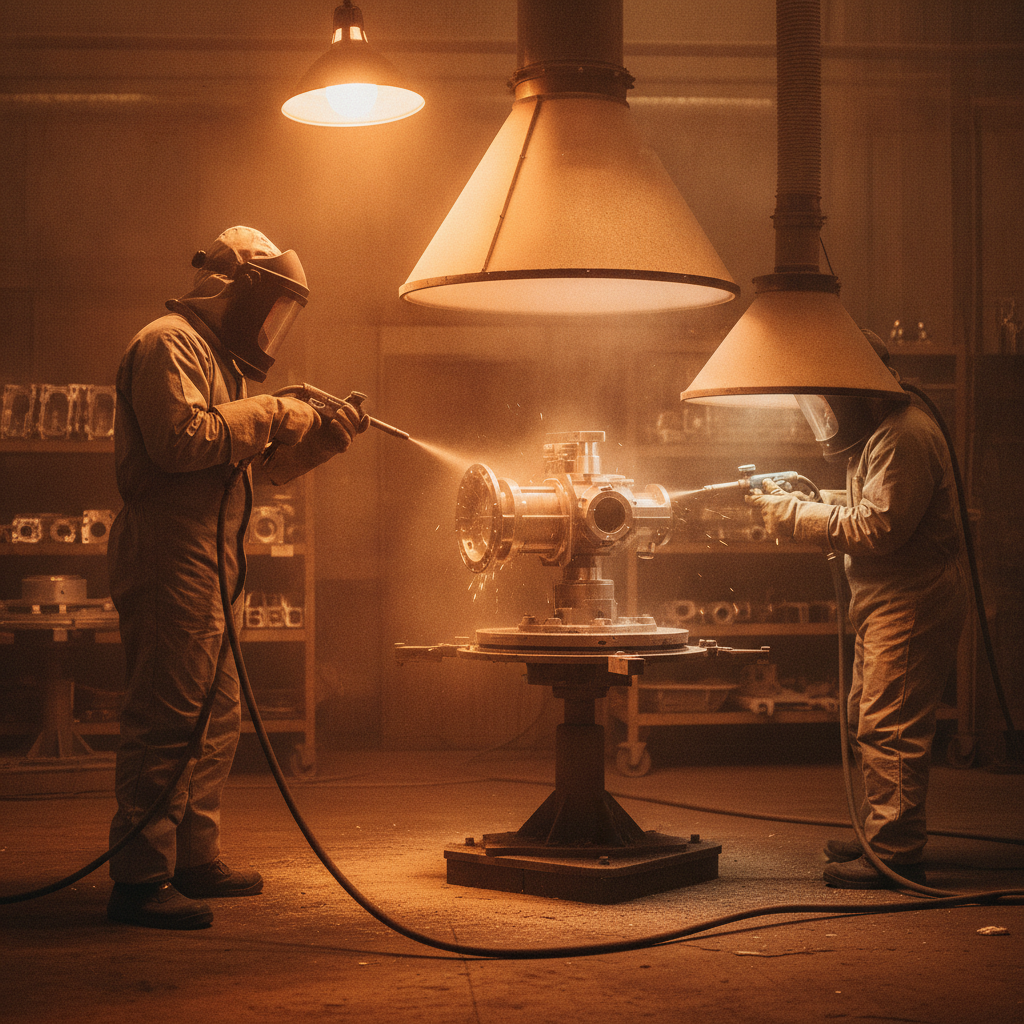
Choose sputtering for thin, dense, high-adhesion films where tolerances are tight. Choose Thermospray (Pulsed HVOF) for thicker, impact- and erosion-resistant overlays or when restoring worn surfaces. The failure mode and allowable build drive the decision.
| Factor | Sputtering PVD | Thermospray (Pulsed HVOF) |
|---|---|---|
| Typical thickness | 1–6 µm (tolerance-critical) | 50–500 µm (overlay/rebuild) |
| Dimensional impact | Minimal; preserves fits | Noticeable; plan for machining if needed |
| Primary wins | Friction, wear, barrier films | Erosion, impact, thermal protection |
| Best for | Dies, molds, cutters, precision parts | Rolls, shafts, valves, large wear zones |
Few providers run both processes under one roof. Because Sputtek does, we’ll steer you based on failure evidence—not a single-process bias. For a general materials-process explainer, this materials guide helps frame how base materials and processing choices interact.
What to Look for in a Sputtering PVD Service Provider
Evaluate prep depth, process control, capacity, and certifications. The strongest partners control pre/post steps in-house, run high-capacity systems, maintain ISO-certified QA, and share repeatable recipes from prototype to volume.
- Integrated prep and finishing: Sandblasting, microblasting, degreasing, stripping, polishing, and lapping under one roof stabilize adhesion and finish.
- Capacity and scalability: High-capacity systems (SPUN 2,000 and SPUN 4,000) keep schedules predictable for large batches.
- Certifications: ISO 9001:2015 and Nuclear N299.3 approvals signal disciplined QA and traceability.
- Engineering support: Fixturing, masking, and recipe tuning for your actual geometries and failure modes.
- Transparent data: Ask for sample thickness/adhesion results on similar substrates and geometry classes.
Free part review: Share substrate, geometry, and failure mode. We’ll recommend sputtering or Thermospray routes, define prep, and outline a validation run—grounded in production experience in Woodbridge.
Local support advantage in Woodbridge
When a die starts picking up at night, proximity matters. We’re near SmartCentres Woodbridge and the Weston Rd / Highway 7 corridor, so pick-ups and drop-offs are fast. In-house prep avoids third-party queues, trimming days off turnaround versus shipping to multinational coating houses.
Local considerations for Woodbridge
- Coordinate drop-offs around the Weston Rd / Highway 7 transit corridor to reduce idle time and dock congestion.
- Plan seasonal work: humidity spikes can affect incoming part cleanliness—our degreasing and controlled storage mitigate it.
- For urgent trials, in-house sandblasting/microblasting lets us re-prep and rerun quickly without leaving Woodbridge.
Frequently Asked Questions
These concise answers focus on common buyer questions—how to pick a process, what substrates need, and what to expect for film build and finish. Use them for quoting and design review.
How do I decide between sputtering and Thermospray?
Match process to failure mode and allowable build. If tolerances are tight and you need functional films (1–6 µm), choose sputtering PVD. If you need thick overlays (50–500 µm) for erosion, impact, or restoration, Thermospray (Pulsed HVOF) is the better fit.
What prep do you need for hardened tool steels?
Clean, activated surfaces are essential: microblasting to create a uniform texture, thorough degreasing, and controlled handling to avoid recontamination. Where finish is critical, we coat within the required build, then lap back to the target roughness.
Can sputtering help reduce galling in aluminum stamping?
Yes. Pair a low-friction, dense film (often DLC or a modified nitride) at 2–4 µm with disciplined prep and rotation. The smoother, harder surface reduces adhesive transfer and stabilizes scrap rates over longer runs.
Do you serve highly regulated sectors?
Yes. Sputtek operates under ISO 9001:2015 with Nuclear N299.3 vendor approval. We support automotive, aerospace, oil & gas, nuclear, defense, medical, pharma, and food & packaging with documented QA and traceability.
Key Takeaways
Use sputtering PVD for thin, dense, tolerance-friendly films; pick Thermospray for thick, impact-resistant overlays. Control of prep, fixtures, and vacuum parameters is what turns theory into repeatable results on your floor.
- Sputtering PVD: 1–6 µm functional films; strong adhesion and uniformity for dies, molds, and precision parts.
- Thermospray (Pulsed HVOF): 50–500 µm overlays for erosion/impact or restoration—plan for added build.
- Application-specific picks: TiAlN for hot aluminum tooling; CrN/DLC for molds and galling-prone pairs.
- In-house prep (sandblast, microblast, degrease) is non-negotiable for adhesion and consistent finish.
Conclusion
If your tooling is fighting wear, friction, or corrosion—and tolerances matter—sputtering physical vapor deposition is a proven route. An integrated, ISO-certified partner in Woodbridge can shorten turnaround and stabilize results from pilot to volume.
- Document failure modes and allowable film build.
- Run a small validation lot to confirm adhesion, thickness, and finish.
- Standardize fixtures and QC checks before releasing to production.
Want a fast recommendation? Start with our PVD coating guide and book a part review. We’ll compare sputtering and Thermospray using your parts and performance targets.