
Physical vapour deposition (PVD) is a vacuum-based thin-film coating process that deposits hard, wear-resistant layers like TiN, AlTiN, CrN, and DLC onto tools and components. Typical films are 1–5 µm thick, reach about 2,000–3,500 HV hardness, and reduce friction significantly, improving tool life and process stability for manufacturers in Woodbridge and beyond.
By Ron — Sputtek · Last updated: 2026-06-28
Overview and Table of Contents
This guide explains what PVD is, why it matters, how it works, common coating types, and best practices for high-adhesion results. You’ll also find tools, selection frameworks, mini case studies, and FAQs to help engineering teams standardize coatings with confidence.
Here’s what you’ll find below at a glance:
- Clear definition and key performance specs
- Why PVD moves uptime, yield, and Cp/Cpk in the right direction
- How the process runs from preparation to post-coating QC
- When to choose TiN, CrN, AlTiN, DLC, or multi/nanolayers
- Practical best practices and checklists your team can use
- Tools, standards, and partner selection considerations
- Real-world examples in stamping, molding, machining, and components
What Is Physical Vapor Deposition (PVD)?
Physical vapor deposition converts solid targets into a vapor under high vacuum and condenses them as hard, thin films on parts. Films commonly run 1–5 µm thick, with ~2,000–3,500 HV hardness and low friction, providing durable wear, adhesion, and corrosion resistance for demanding tools and components.
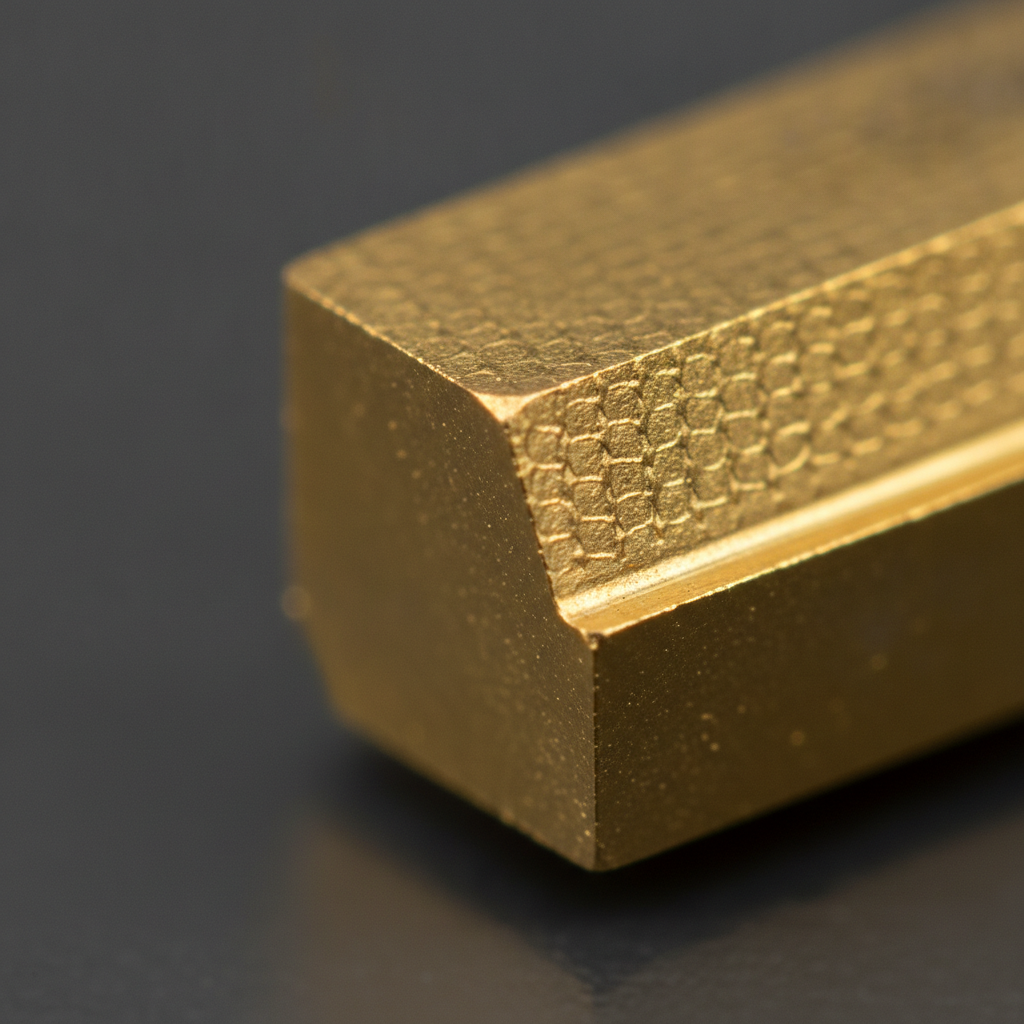
If you’ve seen the gold finish on drills (TiN) or slick black surfaces on pump parts (DLC), you’ve seen PVD in action. In American English, the term is “physical vapor deposition;” the British spelling “physical vapour deposition PVD” describes the same process. Both deliver dense, high-adhesion films that extend service life and stabilize quality.
Three quick reference points keep expectations grounded:
- Typical thickness: 1–5 µm; specialty multilayers can extend beyond that when failure modes require it.
- Film hardness: roughly 2,000–3,500 HV depending on chemistry and architecture.
- Friction: TiN often around 0.4 in dry; DLC can reach ≤0.05 in boundary-lubricated regimes.
For manufacturers, those numbers translate into fewer unplanned stoppages, steadier dimensions across runs, and longer intervals between regrinds or maintenance—especially when the coating recipe is locked and verified under a disciplined quality system.
Why PVD Matters for Manufacturing Teams
PVD improves uptime and part quality by cutting friction, adhesion, and abrasive wear. Plants see fewer jams and cleaning pauses, steadier dimensions, and longer tool-change intervals. That means higher throughput per shift and tighter capability without redesigning tools or fixtures.
Manufacturing leaders tend to focus on three KPIs: uptime, yield, and consistency. PVD influences all three by creating a hard, low-friction skin that resists abrasion (e.g., silica-filled resins), adhesion (e.g., galvanized sheet in stamping), and corrosion (e.g., caustic or moisture exposure). Many programs see double-digit extensions in tool life and fewer line stoppages tied to material sticking or edge breakdown.
- Uptime: Lower friction and better release reduce built-up edge and galling; cleaning intervals stretch, and changeovers stabilize.
- Yield: Dimensional drift slows because wear is dramatically reduced at the working surface; scrap tied to surface defects drops.
- Consistency: Controlled stoichiometry and multilayer stacks keep performance steady lot-to-lot, helping maintain Cp/Cpk.
For Woodbridge operations, proximity matters. Local technical support shortens debug loops, keeps engineering change orders on schedule, and simplifies pilot-to-production rollouts. Teams often pilot on a subset of tools, validate SPC improvements over 2–4 weeks, then standardize coating specs in their control plans.
Local considerations for Woodbridge
- Plan drop-offs and pickups to avoid peak traffic near Weston Rd / Highway 7 when coordinating coating runs.
- Schedule higher-volume campaigns before seasonal shutdowns so coated spares are ready right after maintenance.
- When qualifying new substrates or chemistries, coordinate quick-turn trials close to SmartCentres Woodbridge to compress feedback cycles.
How PVD Works: From Prep to Post-Process
PVD uses high vacuum to vaporize solid targets (arc or sputter) and condense atoms onto parts. Success hinges on preparation, fixturing, temperature and bias control, plasma activation, and post-coating finishing—then verifying thickness and adhesion every batch.
The process combines several controlled steps that each impact adhesion and uniformity:
- Pre-clean and activation: Aqueous degreasing, solvent rinses, and microblasting (often 50–120 µm media) remove contamination and create an anchor profile. Plasma etch strips residual oxides.
- Fixturing and masking: Orient edges toward the incoming flux. Mask fits, bores, and gage points to preserve tolerances and prevent unwanted deposition.
- Heating: Typical setpoints range from 200–500 °C depending on substrate and film. Thermal budgets protect heat-treated hardness and dimensional integrity.
- Deposition: Cathodic arc evaporation or magnetron sputtering forms nitrides/carbides (e.g., TiN, CrN, AlTiN) or DLC stacks with controlled stoichiometry.
- Cooling and de‑fixturing: Controlled cooldown reduces residual stress and preserves adhesion at edges and corners.
- Post-process: Light polish/lap returns edge keenness and target Ra. Metrology validates 1–5 µm thickness and uniformity across features.
Useful operating figures your team can track:
- Base pressure typically reaches 10⁻³–10⁻⁵ Torr to limit gas inclusions and improve film density.
- Bias voltage and working pressure tune ion energy at the substrate (e.g., −50 to −200 V), balancing densification and stress.
- Deposition rates vary from ~0.5 to 5 µm/h depending on process and target material.
Great PVD is repeatable PVD. Documented recipes, calibrated thermocouples, and routine adhesion tests (Rockwell C indentation, progressive scratch) keep performance within control limits across batches and fixtures.
PVD Types and Coatings: When to Use What
Use arc evaporation for high-rate, hard nitride films; use magnetron sputtering (including HiPIMS) for smoother, dense layers and complex stacks; use DLC for ultra-low friction. Map coating to substrate, contact mechanics, heat, and the working media.
Process variants and common films:
- Cathodic arc evaporation: High ionization and rate; ideal for hard nitrides on steels and carbides. Some macroparticles demand post-polish on high-finish features.
- Magnetron sputtering: Lower roughness with excellent control. Enables multilayers, nanolayers, and precise stoichiometry on complex stacks.
- HiPIMS sputtering: Pulsed high power improves ionization for dense films and strong adhesion on challenging geometries.
- DLC (a‑C:H, ta‑C): Coefficients of friction can drop to ≤0.05 in boundary regimes; strong choice for sliding/rolling and poor lubrication.
- TiN: ~2,000 HV, general-purpose wear resistance; the gold color aids quick visual inspection and tool ID.
- AlTiN/TiAlN: Hot-hard and oxidation-resistant to ~800–900 °C; common on end mills and drills at elevated SFM.
- CrN: Tough and corrosion‑resistant; preferred for forming galvanized or pre‑painted steels and for pump components.
- ZrN: Decorative plus functional; lower affinity with nonferrous metals, often used on food-contact tooling.
- Multilayers/nanolayers: Alternating stacks (e.g., CrN/TiN) balance toughness and hardness, resisting crack propagation.
Application snapshots:
- Stamping dies: CrN or multilayer CrN/TiN combat adhesive wear on galvanized sheet; 2–4 µm typical with post-lap to the target Ra.
- Plastic injection molds: DLC on lifters/slides enhances demolding on glass‑filled resins; TiN on gates/runners improves abrasion resistance.
- Cutting tools: AlTiN/TiAlN provide hot-hardness for high-speed machining; nanolayers on carbide help edge retention under interrupted cuts.
- Die cast/extrusion: Nitrides offer soldering resistance on H13; respect thermal budgets to protect core hardness.
- Pumps/valves: DLC or CrN reduce mixed-media wear and corrosion; friction reductions support longer seal life.
Where DLC shines: boundary lubrication, start/stop, fretting. Where nitrides win: edge retention, abrasion, hot wear. Many plants standardize two to three proven stacks per substrate family to simplify planning and tighten SPC.
PVD vs Other Coating and Plating Processes
PVD creates hard, thin, low-friction films at relatively low temperatures with excellent adhesion and minimal dimensional change. Compared to CVD it runs cooler; compared to thermal spray it’s much thinner; compared to electroplating it avoids hex-chrome and reaches higher hardness.
| Method | Typical thickness | Process temp | Key strengths | Watch-outs |
|---|---|---|---|---|
| PVD (arc/sputter) | 1–5 µm | 200–500 °C | High hardness (2,000–3,500 HV), low friction, minimal tolerance impact | Line-of-sight; requires fixturing/masking and rigorous cleaning |
| CVD | 2–10+ µm | 700–1,000 °C | Conformal coverage; robust high-temp films (e.g., TiC) | Heat can alter substrate hardness/dimensions and require stress relief |
| HVOF / Thermal spray | 25–300+ µm | Moderate heating | Thick, tough overlays for erosion/corrosion duty | Higher thickness often needs post-machining to tolerance |
| Electroplating | 5–50+ µm | Low temp | Good coverage; familiar specs | Environmental concerns (e.g., hex‑chrome), lower hardness |
Many facilities run PVD and thermal spray side by side: thin hard skins on cutting/forming surfaces; thick overlays on shafts, sleeves, and wear rings that see erosion or cavitation. For a deeper dive into the broader deposition family, see our short overview of metal vapor deposition.
Mid-article tip: If you’re balancing thin hard skins and thick overlays, align your coating callouts with both your PVD and thermal spray specs so PM and changeover routines remain consistent across lines.
Designing for PVD: Tolerances, Finish, and Geometry
Design parts and tools with coating in mind: protect fits with masking, specify post-lap Ra, orient edges toward flux, and confirm the thermal budget. Clear drawing callouts prevent tolerance creep and ensure repeatable adhesion and thickness.
Engineering for physical vapour deposition PVD is straightforward when details are explicit:
- Callouts on drawings: Film type, target thickness (e.g., 2–4 µm), post-lap Ra, and adhesion verification method.
- Fits and gages: Mask bores/shafts to keep running fits and gage points unchanged.
- Edges and corners: Orient sharp features toward the flux; avoid deep shadowed cavities or plan for alternate fixturing.
- Surface prep: Baseline pre-coating Ra and specify allowable post-coating Ra.
- Thermal budget: Validate 200–500 °C setpoints against substrate heat treatment and soak times.
In molding, polymer chemistry also drives sticking and friction behavior. If your team is comparing thermoplastic to thermoset tooling considerations, this background on polymer differences can help frame demolding risks in general terms (polymer types overview). When filled resins or additives shift, your release conditions may need revalidation.
Quality, Testing, and Documentation
Treat coatings like any critical special process: document recipes, calibrate instruments, and keep batch records. Verify thickness (XRF), adhesion (indent/scratch), and surface finish every run. Retain coupons and results as part of your QMS for traceability.
In our experience, stable performance follows disciplined measurement:
- Thickness: XRF spot mapping on critical features with acceptance bands around nominal (often ±10–15%).
- Adhesion: Rockwell C indentation or scratch tests on coupons representative of part geometry.
- Finish: Ra checks before and after light lapping/polish on functional surfaces and edges.
- Hardness & microstructure: Microhardness sampling for film properties; optical/SEM to categorize defects if they appear.
For regulated sectors, quality systems and approvals matter. Sputtek operates under ISO 9001:2015 with Nuclear N299.3 vendor approval, pairing process control with full-lifecycle support from prototypes to high-volume production. That traceability helps during PPAPs and audits.

Where PVD Delivers: Sector-by-Sector Examples
Across automotive, aerospace, oil and gas, nuclear, medical, pharma, and food & packaging, the right PVD stack reduces wear and sticking, lengthens maintenance intervals, and stabilizes quality metrics. Start with pilots, then standardize successful recipes by substrate family.
Automotive and metal forming
- CrN and multilayer CrN/TiN reduce galling on galvanized and AHSS; 2–4 µm target with post-lap to controlled Ra.
- Trim steels and draw beads show steadier wear patterns, cutting mid-run cleaning pauses.
- Documented recipes ease PPAP submissions and lot-to-lot consistency.
Machining and cutting tools
- AlTiN/TiAlN maintain edge integrity at high SFM; nanolayers help with interrupted cuts.
- Edge prep plus post-lap (e.g., 0.05–0.2 µm Ra) keeps cutting forces predictable.
- Regrind intervals extend while maintaining dimensional capability on precision features.
Plastic injection molding
- DLC on slides, cores, and ejectors lowers friction and improves demolding on glass‑filled and abrasive resins.
- TiN at gates/runners handles abrasion from fillers and pigments; surface uniformity reduces visual defects.
- Changes in polymer formulation can alter sticking; background on polymer considerations can inform troubleshooting.
Oil & gas and general components
- DLC and CrN resist corrosive wear in mixed-media service and start/stop conditions.
- Lower friction supports longer seal life, fewer leaks, and reduced torque requirements.
- Routine adhesion and thickness checks maintain reliability across campaigns.
Medical, pharma, and food & packaging
- Smooth nitride stacks on punches lower sticking and help with weight uniformity at high press speeds.
- ZrN provides a light, functional finish often selected for utensils and food-contact tooling.
- Material changes or additives? A quick review of polymer analysis basics can help isolate demolding variables.
These sectors share a simple pattern: define failure modes, match coating chemistry and thickness, pilot, measure, then standardize. A consistent, documented approach yields reproducible results.
Best Practices for High-Adhesion, Consistent PVD
Success with PVD is 70% preparation, 20% process control, 10% post‑finish. Standardize cleaning and microblasting, control temperature and bias, and verify adhesion and thickness every batch. Put the recipe on the drawing and in the control plan to lock in repeatability.
Preparation and fixturing
- Start clean: aqueous degrease, solvent rinse, controlled dry. Even sub‑ppm residues seed defects.
- Microblast to spec: choose media size/pressure to achieve an anchor profile without rounding edges.
- Mask and orient: protect fits; point edges toward flux; plan around deep cavities to minimize shadowing.
Process control
- Thermal budget: stay within 200–500 °C as allowed by heat treat; log dwell times and cooldown rates.
- Ion energy: tune pressure/bias to balance densification and stress; track rates in µm/h and confirm uniformity.
- Chemistry: lock recipes (e.g., N₂ partial pressure) and use approved target lots per traveler.
Post-coating finishing and QC
- Light lap/polish to restore edge keenness and target Ra (for cutting edges, often 0.05–0.2 µm).
- Thickness mapping on critical features; accept within ±10–15% of nominal program value.
- Adhesion check by method (Rockwell indentation, scratch) and retain coupons for records.
Documented control reduces variance. You can also cross-reference our page on high-performance coatings for additional considerations when combining PVD with other surface treatments.
Tools, Systems, and Resources
Pair disciplined process control with the right equipment: reliable cleaning and microblasting, robust fixturing, SPC on thickness and adhesion, and scalable PVD systems. Training with clear standards speeds up qualification and stabilizes results.
- Metrology: XRF for thickness, microhardness for film properties, optical/SEM for defects.
- Standards: ISO 9001:2015 quality systems, vendor qualifications, and documented special processes.
- Systems for scale: From small-batch R&D chambers to high-capacity SPUN-class equipment for steady, large runs.
- Capacity planning: Sputtek’s SPUN 2,000 (up to ~1,200 kg/cycle) and SPUN 4,000 (up to ~3,000 kg/cycle) support prototype-to-volume transitions with consistent adhesion and uniformity.
Training pays back quickly. Teams that baseline thickness, Ra, and adhesion often see narrower distributions after just a few cycles, which stabilizes changeovers and part dimensions.
Mini Case Studies and Real-World Examples
Across stamping, molding, machining, and components, the right PVD stack reduces friction and wear, extends maintenance intervals, and steadies Cp/Cpk. Pilot on a subset, track SPC for 2–4 weeks, then scale to the full tool family.
- Stamping (galvanized steel): Switching to a 3 µm CrN reduced galling on trim steels and cut unplanned cleaning pauses, improving first-pass yield.
- Plastic injection (30% GF nylon): DLC on lifters/ejectors improved release, reduced ejector marks, and steadied cycle times.
- Carbide end mills: AlTiN nanolayers maintained edge integrity at elevated SFM, extending regrind intervals without sacrificing finish.
- Pump shafts: CrN mitigated corrosive wear in mixed-media service, extending seal life and inspection intervals.
- Pharma punches: Smooth nitride stacks lowered sticking during high-speed pressing and improved weight uniformity.
Each program followed a common approach: characterize the failure mode, select film and thickness, pilot under controlled conditions, then roll into standard work. Keep before/after metrology and SPC for audits.
Selecting a PVD Partner in Woodbridge
Choose a partner with certified quality systems, in-house prep/post processes, and scalable capacity. Prioritize engineering support, documented recipes, and local turnaround to accelerate pilots and stabilize production outcomes.
When you evaluate a vendor for physical vapour deposition PVD work, look for:
- Certifications: ISO 9001:2015 and, for some sectors, Nuclear N299.3 vendor approval.
- End-to-end capabilities: In-house sandblasting, microblasting, cleaning, stripping, polishing, lapping, and QC lab support.
- Capacity and scale: Multiple PVD systems, including high-capacity chambers for consistent large-batch results.
- Engineering-led process: Recipe development, fixturing support, and assistance embedding specs on drawings.
- Local support: Faster pilot loops, easier logistics, and hands-on troubleshooting in Woodbridge.
Sputtek was built around these requirements—Canada’s largest PVD/DLC service provider with a modern, high-capacity facility, certified quality systems, and an engineering-led team focused on prototype-to-production stability.
Key Takeaways
PVD adds a hard, thin, low-friction skin that reduces wear and sticking without altering fits. Standardize your recipe, control preparation and bias/temperature, and verify thickness and adhesion every run to lock in predictable, repeatable performance.
- PVD films are typically 1–5 µm thick with ~2,000–3,500 HV hardness and low friction.
- Map film choice to contact mechanics, heat, and media (e.g., DLC for sliding; AlTiN for hot wear).
- Document the recipe and verify adhesion/thickness every batch for stable SPC.
- Leverage local, certified support in Woodbridge to shorten pilots and stabilize production.
Frequently Asked Questions
Engineers most often ask about substrates, thickness, temperature limits, and when to pick DLC vs nitrides. These concise answers are ready for your work instructions and control plans.
What substrates can be PVD coated?
Steels, carbides, stainless, and many nonferrous alloys can be coated if they tolerate the 200–500 °C thermal budget and can be cleaned to a high standard. Polymers generally aren’t candidates unless metallized in separate low‑temperature processes.
How thick are PVD coatings?
Most production films run 1–5 µm. That’s thin enough to protect edges and surfaces without affecting fits. Some multilayer stacks may be thicker for specific failure modes; part tolerance and Ra targets guide the decision.
When is DLC better than TiN or CrN?
Choose DLC when friction dominates (sliding, start/stop, poor lubrication). Choose TiN/CrN when abrasive wear and edge retention are primary. Many programs use DLC on ejector sleeves and slides, and nitrides on cutting and forming edges.
What temperatures are involved?
Deposition typically runs 200–500 °C depending on substrate and film. That’s why PVD is widely used on heat-treated steels and carbides with minimal impact on hardness or dimensions when soak times are controlled.
How do I qualify a PVD vendor?
Audit quality systems (ISO 9001), review process controls, and run a pilot on representative parts. Verify thickness, adhesion, and Ra on critical features. Standardize the recipe and include coating details on drawings and in your control plan.
Conclusion and Next Steps
Treat PVD like any special process: identify failure modes, match chemistry and thickness, lock the recipe, and measure outcomes. Done right, it becomes a quiet lever for higher uptime, steadier quality, and faster ramps.
- Start with a pilot on your highest-wear tool family; track before/after SPC for 2–4 weeks.
- Standardize two to three coatings per substrate family with nominal thickness and post-lap Ra.
- Build coating checkpoints into PM and changeover routines to keep results stable across shifts.
Ready to move? Book a discovery session in Woodbridge with an engineering-led, ISO‑certified team to pilot, validate, and scale physical vapour deposition PVD across your tools and components.