
Diamond-like carbon (DLC) coating is a hard, low-friction carbon film applied by PVD to reduce wear and extend component life. At 110 Sharer Rd in Woodbridge, ON, Sputtek applies DLC on tools and parts used in automotive, aerospace, medical, and packaging lines to stabilize quality and uptime across prototype and high-volume runs.
By Ron • Last updated: 2026-06-18
At a Glance
DLC is an ultra-hard, low-friction carbon coating deposited by PVD to cut wear, galling, and sticking. It typically achieves 0.05–0.20 friction coefficients, microns-thin thickness, and strong adhesion on steels, carbides, and some alloys—ideal for dies, molds, and cutting tools in demanding manufacturing.
Use this quick overview to see how DLC coating improves reliability, quality, and throughput for engineered parts. We’ll define DLC, explain how it works, compare it with other finishes, and show practical steps to qualify a coating program at production scale.
- What DLC is and why it matters for uptime
- How PVD DLC is deposited (process flow, QA)
- Where DLC excels: stamping, plastics, machining, components
- How to choose DLC types (a-C:H, ta-C) and surface prep
- Benchmarks vs. TiN, TiCN, and hard chrome
- Local notes for Woodbridge teams and the Regional Municipality of York
What Is DLC Coating?
DLC coating is a thin, amorphous carbon film containing diamond-like bonds that delivers high hardness and very low friction. Applied by PVD at controlled temperatures, it resists wear, scuffing, and adhesive pickup, helping parts keep tolerances and surfaces stable under load.
DLC combines sp3 (diamond-like) and sp2 (graphite-like) bonding. This hybrid structure provides both hardness and lubricity. Common thickness ranges from 1–4 μm for precision tools to 5–15 μm for heavy sliding contact. Typical surface roughness after coating can remain under Ra 0.1–0.2 μm with proper lapping.
For industrial tooling, friction coefficients often sit between 0.05–0.20 in dry conditions, reducing heat and galling on sliding contacts. Hardness varies by chemistry: hydrogenated DLCs (a‑C:H) often reach ~1500–3000 HV, while hydrogen-free, tetrahedral carbon (ta‑C) can exceed 4000 HV.
To go deeper into fundamentals and use cases, see our DLC coating overview and our focused page on diamond‑like carbon specifics.
Why DLC Matters for Manufacturing
DLC matters because it cuts friction and wear at the source, stabilizing output quality and enabling longer tool and component life. Lower heat and adhesion reduce scrap and unplanned downtime, improving OEE across stamping, molding, machining, and motion systems.
Manufacturers fight three persistent enemies: friction, heat, and contamination. DLC shifts all three. With 20–60% lower sliding friction than many uncoated metals, it reduces interface temperature rise and mitigates seize-up risks at tight clearances. On food and pharma tooling, smoother, lower-energy surfaces shed residue faster, aiding cleaning validation.
- Throughput stability: Lower adhesion means fewer line stops for die cleaning or mold release issues. Coating thickness is micron-scale, so cavity dimensions remain within spec when surface prep is dialed in.
- Uptime and tool life: Higher hardness and low friction decrease abrasive and adhesive wear. It’s common to see multi-run stability across high-strength steel forming or glass‑fiber filled polymer molding.
- Quality compliance: DLC supports consistent Ra and Rz on working faces. Stable surfaces yield tighter dimensional control and less variability at inspection.
At Sputtek, we support prototype trials and then scale to large batches. Our high-capacity SPUN PVD systems are engineered for uniformity, helping keep property variation within tight bands run-to-run.
How DLC Coating Works (PVD Flow)
DLC is deposited in a vacuum PVD chamber after rigorous cleaning and activation. The process builds dense carbon layers at controlled temperatures, securing adhesion and uniform thickness, then finishes with post‑coat polish or lapping to meet surface targets.
Although formulations vary, the end-to-end flow follows a disciplined sequence. Repeatability hinges on prep quality, substrate compatibility, and chamber control.
- Assessment and fixturing: Review substrate grade, heat treat, and geometry. Design fixtures to ensure line-of-sight coverage and rotation. Complex dies may need multi-axis motion.
- In-house cleaning: Degrease, ultrasonic clean, and rinse until water-break free. Residuals at ppm levels can destabilize adhesion.
- Surface activation: Microblast or ion etch to set anchoring topography. Target Ra and Rz windows depend on thickness and wear mode.
- Adhesion interlayer (as specified): Metallic or carbide interlayers can buffer CTE differences and improve toughness at the interface.
- DLC deposition: PVD plasma builds the carbon film. Operating temperature is managed to protect core temper and dimensional stability.
- Post‑coat finishing: Light polish or lapping returns sliding faces to target Ra (often ≤0.2 μm) without thinning edges.
- QC lab checks: Thickness mapping, adhesion tests, and friction/roughness verification confirm compliance before release.
For background on PVD families and chamber controls, visit our PVD process types and deeper PVD sputtering guide.
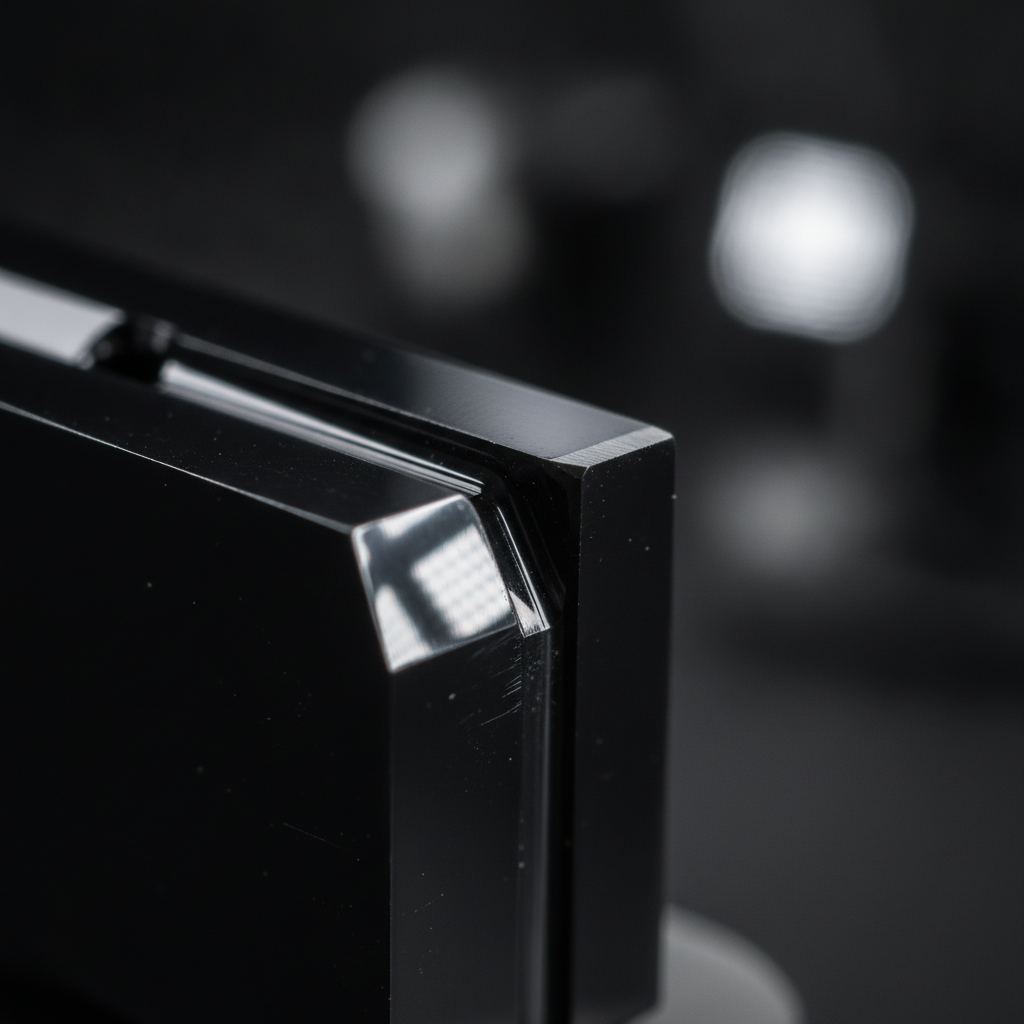
DLC Coating Types and When to Use Them
Choose DLC chemistry to match the job. Hydrogenated a‑C:H balances low friction with toughness for sliding parts. Hydrogen‑free ta‑C maximizes hardness for abrasive contacts. Interlayers and topcoats fine‑tune adhesion, corrosion behavior, and polishability.
Not all DLCs act the same. Matching film to wear mode (adhesive, abrasive, erosive) and temperature is critical. Below are common pathways we apply for industrial parts.
a‑C:H (Hydrogenated DLC)
- Use for: Stamping dies, forming rolls, guide surfaces, plastic injection components, and general sliding.
- Traits: Very low friction (≈0.08–0.15), solid toughness, broad substrate compatibility.
- Notes: Often paired with Cr‑ or Ti‑based interlayers for adhesion and compliance on steels and tool steels.
ta‑C (Tetrahedral, Hydrogen‑Free DLC)
- Use for: High-abrasion edges and micro-geometry retention on cutting inserts and microtools.
- Traits: Very high hardness (>4000 HV), strong edge-holding, darker optical appearance.
- Notes: Higher internal stress requires dialed-in prep and interlayers to maintain adhesion on sharp features.
Doped/Composite DLC (e.g., WC/C, Ti‑doped)
- Use for: Mixed wear modes, limited lubrication, or mild corrosive media.
- Traits: Tailored friction and electrical behavior; may reduce stick‑slip in reciprocating motion.
- Notes: Slightly higher thickness (3–8 μm) can provide a broader damage buffer for sliding pairs.
To see how we finish coated parts for precision roughness and release, check our PVD finishing guide.
Applications by Industry
DLC thrives where metal‑to‑metal or resin‑to‑metal contact drives defects. Expect meaningful improvements in stamping of AHSS, plastic injection of filled resins, cutting of gummy alloys, and component sliding under boundary lubrication.
Stamping and Forming
- AHSS and aluminum: DLC mitigates galling and pickup on dies, draw beads, and binders. Teams often report longer clean intervals and steadier pull forces.
- Surface targets: Working faces frequently specify Ra ≤0.2 μm to curb micro-welding on tight radii.
- Geometry: DLC’s thin build (1–4 μm typical) preserves sharp features on small radii and coining details.
Plastic Processing
- Filled polymers: Glass- or mineral-filled grades abrade gates, runners, and cores. DLC hardens surfaces yet keeps them slick for faster release.
- Demold forces: Lower friction cuts ejection spikes, which protects delicate features and reduces ejector wear.
- Cleanability: Lower surface energy aids residue removal—an advantage in medical and packaging tooling.
Machining and Cutting Tools
- Gummy alloys: Aluminum and some stainless grades smear and adhere to tools; DLC decreases built-up edge formation.
- Edge integrity: ta‑C excels at micro-geometry retention on small inserts and microtools at modest heat.
- Coolant strategy: Boundary or MQL environments benefit most from DLC’s low μ; adjust speeds/feeds accordingly.
Components and Motion Systems
- Slider pairs: Pins, plungers, and valve components show reduced scuffing under poor lubrication.
- Corrosive exposure: Composite DLC stacks can tune galvanic behavior when paired with stainless substrates.
- Thin walls: Micron-level thickness maintains fits and bore geometries.
For broader context on process families and alloy compatibility, see our overview of types of PVD.
DLC vs. Other Coatings: Quick Comparison
Compared with TiN, TiCN, and hard chrome, DLC typically offers lower friction and comparable or higher hardness at thinner builds. It’s preferred for anti‑galling and release. Temperature limits and chemistry specifics determine whether DLC or a nitride/ceramic is the better fit.
| Property | DLC (a‑C:H / ta‑C) | TiN | TiCN | Hard Chrome |
|---|---|---|---|---|
| Hardness (HV) | ~1500–3000 / >4000 | ~1800–2200 | ~2500–3000 | ~900–1100 |
| Friction (dry) | ~0.05–0.20 | ~0.4–0.6 | ~0.3–0.5 | ~0.15–0.25 |
| Typical Thickness | 1–4 μm (tools), 5–15 μm (slides) | 2–4 μm | 2–5 μm | 10–50 μm |
| Color/Appearance | Dark gray to black | Gold | Blue‑gray | Silver |
| Process | PVD (carbon plasma) | PVD (nitride) | PVD (carbo‑nitride) | Electroplating |
| Heat Tolerance | Moderate; ta‑C higher | Good | Good | Good |
Selection isn’t one-size-fits-all. For example, high-temperature cutting may still favor TiAlN/TiSiN ceramics, while boundary‑lubricated sliding often favors DLC for its μ and polish.
Best Practices for DLC Success
The best results come from precise surface prep, compatible substrates, and repeatable chamber controls. Specify roughness windows, edge prep, interlayers, and inspection criteria up front to lock in performance from prototype through production.
Design and Substrate
- Substrate choices: Hardened tool steels, carbides, and select stainless grades are common. Manage temper—keep process temperatures within safe margins.
- Edge strategy: Micro‑hone fragile cutting edges and break sharp internal corners to reduce stress risers.
- Critical fits: Account for 1–4 μm on precision bores and sliding surfaces; mask where needed.
Surface Preparation
- Cleanliness: Achieve water‑break‑free surfaces; residues at trace levels can compromise adhesion.
- Topography: Microblast to target Ra/Rz prior to coating; spec ranges based on wear mechanism.
- Fixturing: Use rotation and line‑of‑sight strategies for uniform coverage on complex shapes.
Specifications and QA
- Thickness mapping: Define measurement points and acceptable variation (for example, ±10–15%).
- Adhesion testing: Use scratch or indentation methods correlating to service conditions.
- Surface after coat: Specify Ra (often ≤0.2 μm) and visual standards for sliding faces.
Our in‑house cleaning, microblasting, stripping, polishing, lapping, and QC lab help control each variable. For an end‑to‑end perspective, visit our DLC specifics page.
Tools and Resources
Build your DLC program with structured checklists, uniformity audits, and substrate compatibility maps. Internal run cards, fixture libraries, and finish standards make prototype results repeatable at production scale.
- Qualification checklist: Substrate grade, heat treat, hardness, edge prep, masking plan, target Ra/Rz, thickness, interlayer, adhesion test, measurement points, sampling, release criteria.
- Uniformity tools: Use thickness coupons and multi-axis rotation on challenging dies to hold variation within tight bands.
- Knowledge base: Explore PVD process types and our finishing best practices to align prep with function.
Outside of industrial tooling, you’ll find coating concepts explained for other fields as well. For perspective on how protective coatings are framed in construction, see this epoxy rebar guide and a related overview on coated rebar. While not DLC, they illustrate durability themes that matter across sectors.
DLC Coating in Woodbridge and the Regional Municipality of York
In Woodbridge and the Regional Municipality of York, DLC helps automotive, aerospace, and packaging suppliers reduce die cleanings and mold stick‑slip. Local access at 110 Sharer Rd shortens lead time and supports same‑week engineering trials when schedules tighten.
Neighborhood access matters when lines are hot. With Sputtek’s modern 15,000 sq ft facility in Woodbridge, teams can move from sample to validated run with less logistical friction. Our high‑capacity SPUN systems (up to multi‑thousand‑kilogram cycles) keep large batches consistent, and our in‑house lab tightens QA loops.
Local considerations for Woodbridge
- Plan pickups to avoid traffic around SmartCentres Woodbridge during peak retail hours; morning windows help.
- Build seasonal maintenance into tooling swaps; winter temperature swings can change condensation risks during transit.
- Use nearby transit nodes like Weston Rd / Highway 7 for coordinated shipments when multiple vendors are involved.
Case Studies and Examples
Prototype-to-production is where DLC proves out. The strongest gains come when prep, geometry, and film type align with real wear modes. Below are anonymized scenarios that mirror common requests we see across automotive, plastics, and components.
Automotive Stamping: AHSS Draw Die
- Problem: Adhesive pickup on bead and binder surfaces caused cleanings every few thousand hits.
- Action: Microblast to target Ra ≈0.2 μm, apply a‑C:H with a Cr‑based interlayer, light post‑polish.
- Result: Longer intervals between cleanings and steadier load curves; geometry preserved due to 2–3 μm build.

Plastic Injection: Filled Resin Core Pins
- Problem: Abrasion and residue on core pins processing 30% glass‑filled nylon.
- Action: ta‑C specified for higher hardness; edges micro‑honed prior to coat; post‑coat Ra ≤0.15 μm.
- Result: Improved release, reduced ejector wear, and more stable cavity dimensions over extended runs.
Cutting Tools: Aluminum Machining Inserts
- Problem: Built‑up edge on aluminum 6000‑series produced chatter and dulling.
- Action: Apply low‑μ a‑C:H DLC; adjust feeds/speeds; verify chip flow.
- Result: Reduction in built‑up edge formation and smoother finish, supporting longer edge life.
Motion Components: Plunger/Guide Pair
- Problem: Scuffing under boundary lubrication during start‑stop cycles.
- Action: Composite DLC stack with tuned interlayer; lapped to Ra ≤0.2 μm.
- Result: Lower start friction spikes and less wear scar growth over inspection intervals.
For definitions that help compare across process families, review our PVD types overview.
How to Qualify DLC at Scale
Lock in a simple, auditable plan: define the part set, process window, and acceptance metrics; run pilot lots; compare against baselines; and freeze specs once results are stable. Document fixturing, surface prep, and QA so the 10th batch looks like the first.
- Define success: Pick 3–5 measurable outcomes (e.g., hits per clean, Ra after X cycles, dimensional drift, reject rate, inspection time).
- Baseline first: Quantify current tool life and failure modes before coating. Capture micrographs and force curves.
- Pilot lots: Coat a controlled set with agreed thickness and interlayer; inspect and document.
- Compare: Use identical materials and line settings; verify differences are coating‑driven.
- Freeze: Once stable, freeze Ra, thickness, interlayer, coupon plan, and inspection methods.
- Scale: Move to full batches on high‑capacity systems with mapped fixtures and coupon locations.
If you’re mapping DLC into a broader reliability program, this coating lifecycle example in construction shows how other industries approach durability over long service intervals (again, not DLC, but the planning mindset translates).
PVD Systems and Capacity
Capacity and control make results repeatable. Sputtek’s SPUN‑series PVD systems support large, uniform batches and tailored fixtures, enabling consistent adhesion, thickness, and finish from prototype to multi‑thousand‑kilogram cycles.
- Prototype to volume: We qualify on small sets, then scale to large fixtures without changing the film recipe.
- In‑house processes: Sandblasting, microblasting, degreasing, stripping, polishing, and lapping are kept under one roof to shorten loops.
- QC lab: Thickness, adhesion, roughness, and visual standards are documented per batch for traceability.
To understand where DLC sits among other thin-film options, see PVD process types and our page on DLC specifics.
Common Mistakes to Avoid
Most coating failures trace back to prep and specification gaps. Avoid under‑defined roughness, sharp stress risers, incompatible substrates, and vague acceptance criteria. Document fixturing, coupon locations, and post‑coat finish before the first run.
- Skipping baseline work: Without a clear before/after, you can’t prove the gain or tune the recipe.
- Ignoring edge prep: Feather fragile edges and break inside corners to reduce chipping and stress concentration.
- Thickness without function: More isn’t always better. Match μ and hardness to wear mode and heat.
- Loose QA: Define adhesion tests, point maps, and allowable variation early.
DLC Coating FAQ
These concise answers address the questions engineers and buyers ask most about DLC in production. Each response is based on practical experience coating tooling and components across automotive, plastics, machining, and motion systems.
What substrates work best with DLC?
Hardened tool steels, carbides, and some stainless grades are common. DLC is applied at controlled temperatures, but you should confirm heat‑treat compatibility and select suitable interlayers to manage adhesion and stress.
How thick is a typical DLC coating?
Most production tools run 1–4 μm for edges and precision surfaces. Sliding components may use 5–15 μm to add a wear buffer. Thickness mapping and coupon checks keep variation within tight bands across complex geometries.
When is DLC better than TiN or hard chrome?
Choose DLC for low friction and anti‑galling on sliding contacts, gummy alloys, and release‑sensitive molding. TiN/TiCN can be better at higher cutting temperatures, while hard chrome is thicker but higher friction and typically less wear resistant.
Does DLC change part dimensions?
Only minimally. DLC builds in microns, so fits and edges are largely preserved when you plan masking and target thickness. Post‑coat lapping returns critical surfaces to Ra targets without thinning edges.
Related Topics and Next Steps
If you’re mapping finishes across your plant, connect DLC with broader PVD options and finishing methods. One consistent, documented pathway—from prep to QA—makes results repeatable, batch after batch.
Explore how PVD families differ in our types of PVD guide, then review surface finishing in our finishing guide. For a lighter, consumer‑level contrast on surface durability concepts, here’s a coated rebar explainer from construction (not DLC, but still about protection in harsh environments).
Need a fast, production-ready DLC trial? Our engineering team at 110 Sharer Rd in Woodbridge supports same‑week evaluations and scales to large batches on SPUN systems. Share your prints and failure modes—let’s spec the right stack and QA plan.
To understand how sputtering and other PVD variants shape film properties, consult our sputtering guide and PVD overview. For another cross‑industry example of protective coatings in infrastructure, see this short rebar coating overview.