
PVD finishing is a high-vacuum coating process that deposits ultra-thin, hard films to reduce friction and wear on tools and components. From our 110 Sharer Rd facility in Woodbridge, we deliver engineered finishes that extend part life in regulated industries. For manufacturers, it’s a reliable path to lower scrap, longer maintenance cycles, and steadier output.
By Ron — Sputtek • Last updated: 2026-06-15
Above-Fold Overview and Table of Contents
This guide explains PVD finishing end to end: what it is, how it works, where it outperforms other methods, and how Sputtek applies it from prototype to high-volume runs. Use the sections below to jump to fundamentals, best practices, comparisons, tools, and real examples across stamping, molding, cutting, and die casting.
You want a no-nonsense playbook. Here’s how to use this page effectively and get value in minutes.
- Skim the Summary for quick definitions and fast answers.
- Use the comparison table to decide between PVD, HVOF, or plating.
- Apply the Best Practices checklists to current tooling.
- Share Case Studies with stakeholders to align on outcomes.
- Bookmark Tools/Resources for drawings, tolerances, and QC planning.
- What Is PVD Finishing?
- Why PVD Finishing Matters
- How PVD Finishing Works (Process)
- Types, Coatings, and Approaches
- PVD vs. HVOF, Plating, and Nitriding
- Best Practices (Design, Prep, QC)
- Tools and Resources
- Case Studies and Examples
- FAQ
Summary
Physical Vapor Deposition (PVD) finishing deposits dense, adherent coatings—often 1–5 μm thick—onto metals and selected polymers/ceramics. Typical film types include TiN, TiCN, AlTiN, CrN, and DLC. The result is higher surface hardness, lower friction, and better wear resistance, which stabilize processes and extend service life in production.
Think of PVD as a surface-engineering upgrade for your existing tooling. It doesn’t change your substrate’s core strength; it changes how the surface behaves under heat, load, and sliding contact. Typical coating temperatures range from roughly 150–500°C, depending on material and film chemistry. Layer stacks and bias settings tune adhesion and stress.
What Is PVD Finishing?
PVD finishing is a vacuum deposition method that vaporizes target materials and condenses them as thin, hard films on parts. The films increase surface hardness and reduce friction. This improves durability and repeatability across stamping, injection molding, cutting tools, and precision components.
At its core, physical vapor deposition uses a vacuum chamber to convert solid targets into a vapor (via sputtering or arc) that re-forms as a controlled thin film on your part. Film thickness is measured in micrometers; adhesion is driven by surface prep, bias voltage, and process energy. The result is a dense, engineered surface—often 2–30x harder than the base metal’s surface zone—without altering bulk geometry.
Key benefits in plain language
- Less friction, less heat: Lower coefficient of friction helps prevent galling and built-up edge.
- Hard-wearing surfaces: High microhardness resists abrasion and erosion in high-cycle tools.
- Stable dimensions: Micron-level thickness preserves fits and tolerances.
- Clean, repeatable finish: Improves part ejection, release, and surface quality in molding and stamping.
- Process uptime: Longer intervals between sharpening or maintenance.
In our experience supporting automotive and aerospace programs, “finishing” isn’t cosmetic—it’s operational. When a die sticks less, or a drill stays sharp longer, OEE trends up and scrap trends down. That’s the practical value of PVD finishing.
Why PVD Finishing Matters for Production Teams
PVD finishing matters because it extends tool life, stabilizes cycle times, and reduces unplanned downtime. In Woodbridge and across the Regional Municipality of York, manufacturers use PVD to hit quality targets in regulated programs without redesigning tools—an immediate path to higher availability and throughput.
When you’re chasing capacity, minor friction changes create major yield swings. PVD’s low-friction, hard surfaces reduce adhesion on dies, improve chip flow on cutters, and ease release in molds. That steadies cycle times and quality. Typical coating systems also tolerate high temperatures at the cutting edge, sustaining hardness during dry or near-dry machining.
Where the gains show up
- Stamping: Reduced pickup and galling on advanced high-strength steels and aluminum.
- Molding: Smoother release, less sticking, fewer ejector marks in complex molds.
- Cutting: Better edge retention and fewer tool changes per shift.
- Die cast/extrusion: Improved solder resistance and surface integrity under thermal cycling.
- Components: Controlled friction and wear in valves, pins, and precision assemblies.
We often see the biggest immediate wins in parts with recurring adhesion or thermal-softening issues. Solve the surface, and upstream variations stop rippling through the line.
How PVD Finishing Works (Process)
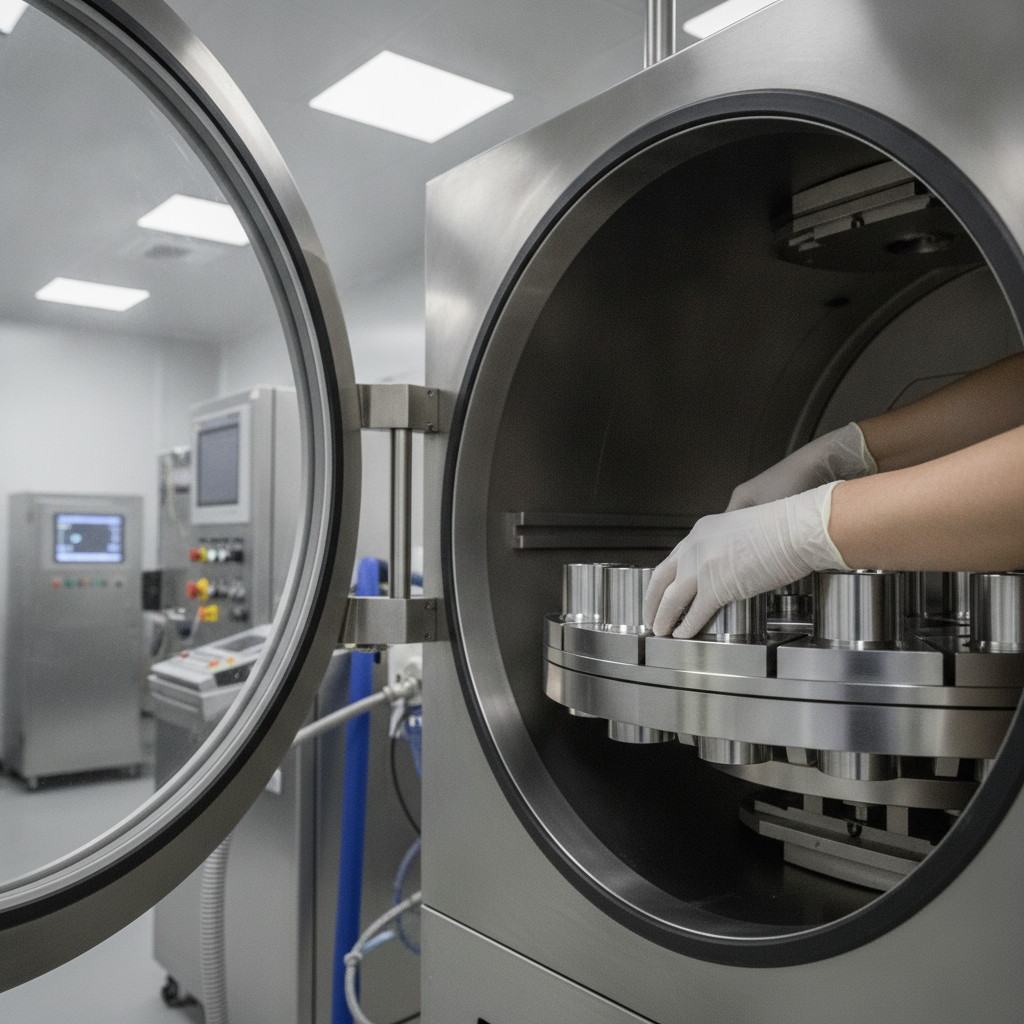
PVD finishing follows a proven sequence: clean and activate the surface, load parts on fixtures, evacuate to high vacuum, deposit the film via sputtering or arc, then cool and post-process. Tight control of prep, bias, temperature, and time produces consistent adhesion and thickness.
Here’s the process flow we run in our Woodbridge facility for prototypes and large batches alike.
Standard process sequence
- Intake and review: Confirm substrate, finish targets, tolerances, and masking needs from drawings.
- Surface preparation: In-house degreasing, microblasting or sandblasting to achieve the right Ra/Rz and activation.
- Fixturing and masking: Carousel or rack fixtures optimize line-of-sight; custom masks protect critical fits or sealing lands.
- Vacuum pump-down: Chamber evacuation to low pressure; heat for outgassing and pre-clean with glow discharge.
- Deposition: Reactive or non-reactive sputtering/arc forms films like TiN, CrN, AlTiN, or DLC in controlled atmospheres.
- Cool-down and unload: Controlled cooling protects film integrity; dimensional checks as required.
- Post-processing: Optional polishing/lapping to hit target Ra and surface energy; QC lab verifies thickness and adhesion proxies.
Typical film thickness ranges 1–5 μm for cutting tools and precision components; specialized barrier or decorative layers may differ. Sputtering excels at smooth, fine-grain films; arc is efficient for hard, adherent layers with higher ionization. DLC variants provide very low friction and can be tuned for toughness or hardness.
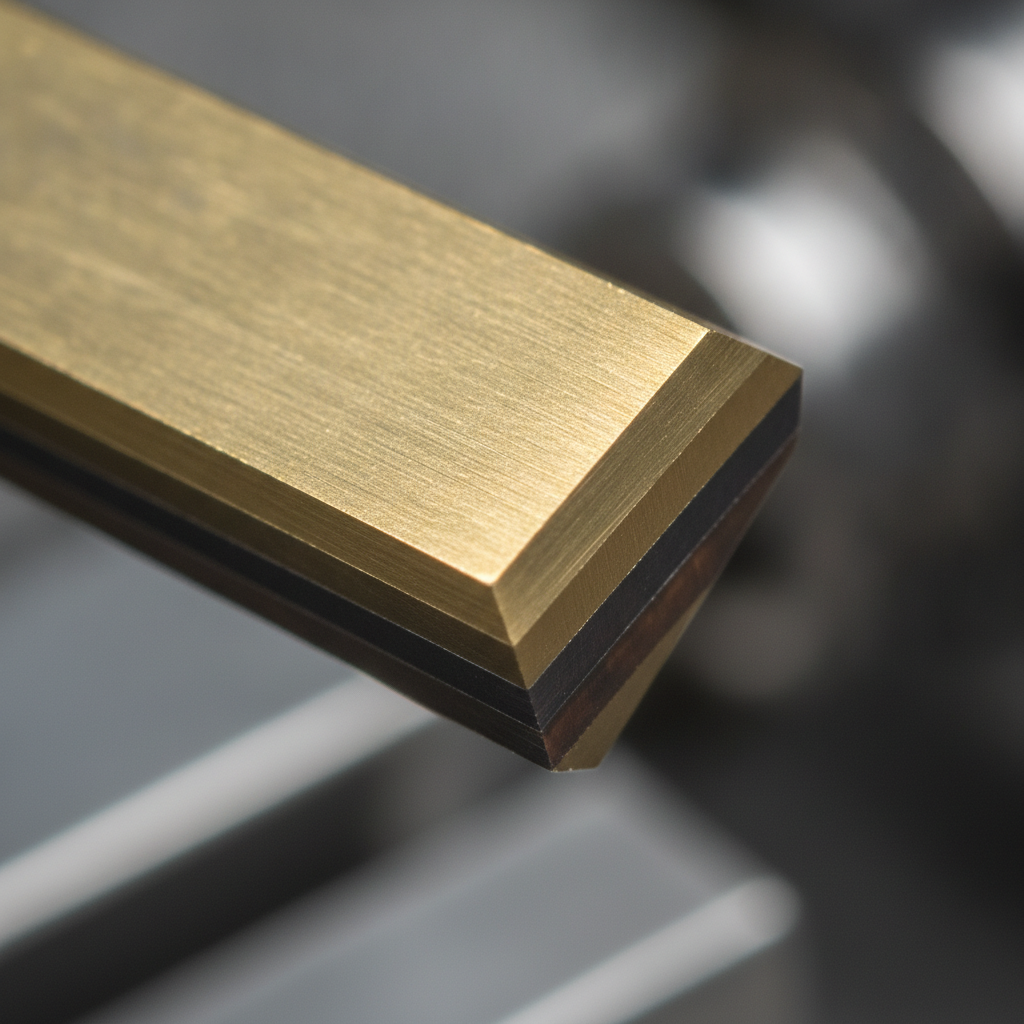
Quality signals to track
- Thickness uniformity: Within spec across critical surfaces; fixture rotation and part spacing matter.
- Adhesion behavior: No edge lifting or flaking; good bite after grit/microblast and plasma activation.
- Surface finish: Meets Ra target; post-lap as needed for ejection or fluid sealing.
- Color/hue consistency: Indicative of repeatable chemistry and energy during deposition.
Types, Coatings, and Approaches
PVD finishing spans sputtering and cathodic arc, with coating families such as TiN, TiCN, AlTiN/AlCrN, CrN, and DLC. Selection depends on heat, load, and counterface. Pairing the film with correct prep and post-lap often delivers the largest real-world improvement in uptime and part quality.
Not every film fits every job. We match chemistry, structure, and thickness to how your surface fails today—adhesive wear, abrasion, high-heat softening, or corrosive attack. Then we tune prep (blast media, Ra), bias/temperature, and optional lapping to produce the behavior you need in production.
Common coating families and where they shine
- TiN: General-purpose hard coating; recognizable gold hue; good for stamping and some cutting.
- TiCN: Lower friction than TiN; works well on forming and select cutters in sticky alloys.
- AlTiN / AlCrN: Hot-hard coatings for high-speed machining, dry or near-dry conditions.
- CrN: Tough and corrosion-tolerant; strong on molds and die-cast tooling where soldering is a risk.
- DLC: Very low friction; excellent for sliding components and select forming tools.
Substrates we commonly see
- Tool steels: D2, H13, A2, M2/M42, PM grades for dies and cutting tools.
- Carbides: Wear parts and indexable inserts.
- Stainless/alloys: 300/400 series, nickel alloys for components and medical tooling.
- Aluminum molds/dies: With prep and masking strategies to protect fits.
When a single method can’t solve the whole problem, we combine processes. For example, we deploy Thermospray (Pulsed HVOF) for erosion/corrosion resistance on exposed faces, then finish critical sliding areas with a low-friction PVD layer to control stick-slip.
PVD vs. HVOF, Plating, and Nitriding
Choose PVD finishing when you need micron-scale, hard, low-friction films with minimal dimensional change. Choose HVOF for thicker, highly wear/corrosion-resistant overlays; plating for uniform coverage on complex internals; nitriding to harden steel surfaces below the coating scale.
Each method has its place. Here’s a practical comparison you can share with your team.
| Method | Typical Thickness | Primary Strength | Thermal Impact | Best Use Cases |
|---|---|---|---|---|
| PVD finishing | ~1–5 μm | Low friction, high surface hardness | Moderate; 150–500°C typical | Cutting tools, stamping, molds, precision components |
| Pulsed HVOF (Thermospray) | ~50–300 μm | Thick, tough overlays; corrosion/erosion resistance | Localized heat; manage masking | Gate areas, sealing faces, aggressive media exposure |
| Electroplating | ~5–50 μm+ | Uniform deposit on complex geometries | Low thermal input | Internal passages, legacy specs, decorative needs |
| Nitriding | Case depth 0.1–0.6 mm | Subsurface hardening of steels | Process heat; growth to consider | Dies and shafts needing hardened skin |
We regularly help teams combine approaches—e.g., nitrided tool steel for load-bearing strength, topped with a PVD layer for friction control. The stack gives you substrate toughness plus a tuned surface behavior.
Best Practices (Design, Prep, QC)
Successful PVD finishing starts with the drawing. Define surfaces to coat, masking, target Ra, and allowable thickness. Then control prep Ra, fixturing, and plasma activation. Close the loop with thickness and adhesion proxies in QC, plus post-lapping where ejection or sealing is critical.
Design and drawing callouts
- Define coated and non-coated zones: Provide clear masks or CAD-based notes for critical fits.
- Specify surface finish: Pre- and post-coat Ra targets prevent surprises on ejection or sealing.
- Include thickness ranges: Call out 1–5 μm with tolerance where stack-up matters.
- State edge-radius preferences: Micro-chamfers reduce stress risers that can start edge-lift.
Preparation and fixturing
- Degrease thoroughly: Any residue becomes an adhesion defect at vacuum/heat.
- Microblast for activation: Consistent Ra supports mechanical keying and plasma cleaning.
- Optimize line-of-sight: Fixturing and spacing drive uniform thickness on complex parts.
- Mask to protect fits: Bushings, threads, or sealing lands should be masked precisely.
QC and post-processing
- Measure thickness: Use calibrated methods appropriate to film and substrate.
- Inspect edges and corners: Look for lift, flake, or color shifts indicating local energy variation.
- Lap and polish as needed: Post-lap to achieve ejection or sealing targets without over-thinning critical zones.
Our end-to-end in-house flow—degreasing, sand/microblasting, masking, coating, and lapping—keeps cycle control under one roof. That’s how we keep adhesion and hue consistent across big batches.
Tools and Resources
Use these tools to plan PVD finishing confidently: internal guides for process selection, sputtering best practices, and PVD types; plus external background on materials and QC concepts. Save the checklists for drawings, fixturing, and incoming inspection.
Deepen your knowledge or share with your team:
- Explore our overview in the Deposition cluster for context.
- Review our PVD types guide when selecting coatings.
- Dive into sputtering best practices for smoother films.
- For background on polymer QC concepts relevant to certain tooling elements, see this polymer quality control overview.
- Learn how gel permeation chromatography relates to polymer behavior in tooling accessories in this GPC primer.
- Read a brief industry story about metal manufacturing operations for broader context: innovation in metal products.
Checklist (copy into your RFQ or ECO):
- Surfaces to coat vs. mask, with CAD and photos.
- Target Ra pre- and post-coat; allowable thickness range by zone.
- Substrate alloy and prior heat treat; any nitriding calls.
- Fixture orientation; minimum spacing; balance for rotation.
- Incoming QC: thickness sample plan; visual acceptance criteria.
Case Studies and Real-World Examples
Sputtek applies PVD finishing and Thermospray across stamping, molding, cutting, die cast/extrusion, and precision components. These mini-examples show how surface engineering solved adhesion, wear, and release issues without redesigning the tool—delivering stability from pilot to full-rate production.
Stamping: Advanced high-strength steel (AHSS) dies
- Problem: Pickup and edge wear on trim dies caused quality drift mid-run.
- Approach: Microblast to target Ra, CrN-based stack for toughness, local post-lap on ejector faces.
- Result: Cleaner cuts, fewer stoppages for touch-up, steadier SPC across shifts.
Plastic injection molds: Complex release surfaces
- Problem: Sticking and ejector marks on textured cavities.
- Approach: DLC variant to lower friction; tight masking on shut-offs; post-lap to restore Ra.
- Result: Smoother ejection, less rework, improved cosmetic consistency.
Cutting tools: Carbide drills in nickel alloys
- Problem: Rapid edge rounding and built-up edge at high temperature.
- Approach: AlTiN stack for hot hardness; orientation for uniform thickness at the cutting lip.
- Result: More holes per tool and fewer mid-shift tool changes.
Die cast and extrusion: Soldering and thermal cycling
- Problem: Aluminum soldering on shot sleeves and dies under repeated thermal shock.
- Approach: Thermospray barrier on hot faces; CrN in sliding/contact zones; targeted post-lap.
- Result: Reduced solder adhesion, longer between-service intervals, cleaner surfaces.
Precision components: Pins, valves, and medical tooling
- Problem: Wear and stiction in stainless assemblies and fixtures.
- Approach: DLC for sliding pairs; CrN for corrosion-prone areas; careful masking on fits.
- Result: Lower friction, tighter dimensional stability over service intervals.
Working with Sputtek in Woodbridge
As Canada’s largest PVD/DLC provider, Sputtek runs multiple high-capacity systems (SPUN 2,000 and SPUN 4,000) in our modern Woodbridge facility. We handle prep, coating, and post-lap in-house under ISO 9001:2015 and Nuclear N299.3 approvals, scaling from prototypes to large, repeatable batches.
Our 15,000 sq ft facility is engineered for throughput and consistency: in-house sandblasting, microblasting, cleaning, stripping, polishing, lapping, and a QC lab. Engineering-led process development ensures stable parameters across cycles. We support automotive, aerospace, oil and gas, nuclear, defense, medical, pharmaceutical, and food & packaging programs.
Local considerations for Woodbridge
- Schedule drop-offs and pickups to avoid traffic near SmartCentres Woodbridge during peak retail hours.
- Plan trials around seasonal humidity swings; maintain consistent storage to protect prepared surfaces before coating.
- For large racks, coordinate loading times near Weston Rd / Highway 7 corridors to streamline logistics.
Thinking about a trial run? Our applications team can review drawings, recommend films, and plan fixturing. We’ll start small, validate adhesion and thickness, then scale confidently.
Frequently Asked Questions
These PVD finishing FAQs cover what most engineering and production teams ask us first: temperatures, thickness, rework, substrate fit, and when to consider alternatives. Each answer is brief and direct to speed reviews and stakeholder alignment.
What temperatures are involved in PVD finishing?
Most PVD finishes are processed between roughly 150–500°C, depending on film chemistry, substrate, and desired properties. We confirm temperature windows against your alloy and prior heat treatment to avoid softening or dimensional shift.
How thick are PVD coatings, and will they change my fits?
Typical PVD coatings are 1–5 μm thick. That’s thin enough to preserve geometry, but you should still call out masked fits and target Ra. We also offer post-lapping to dial in ejection or sealing without over-thinning critical zones.
Can damaged or worn tools be reworked and re-coated?
Often, yes. We strip previous films, re-establish surface finish via microblasting or polishing, and recoat. The key is to inspect for base-metal damage or geometry loss that would limit adhesion or performance.
When is HVOF a better option than PVD finishing?
Choose HVOF when you need a thicker, tougher overlay to resist erosion, impact, or corrosive media. We commonly use Thermospray on exposed faces, then add PVD on sliding areas for low friction and clean release.
Which industries benefit most from PVD finishing?
High-demand sectors with wear, heat, and friction issues: automotive, aerospace, oil and gas, nuclear, defense, medical, pharmaceutical, and food & packaging. We support both prototype trials and high-volume runs.
Key Takeaways
PVD finishing delivers low-friction, hard films with micron-level thickness, stabilizing cycle times and extending tool life. Match film chemistry to failure mode, control prep and fixturing, and close the loop with QC and post-lap. Where needed, combine PVD with HVOF or nitriding for full-stack durability.
- PVD finishing is about process stability, not just appearance.
- Micron-scale films preserve fits while changing surface behavior.
- Prep, masking, and fixturing drive thickness uniformity and adhesion.
- Pair coating with post-lapping for ejection and sealing performance.
- Hybrid stacks (e.g., HVOF + PVD) solve multi-mode wear.
Conclusion and Next Steps
If friction, wear, or sticking is hurting quality or uptime, PVD finishing is a fast, scalable lever. Start with a small trial to verify adhesion and thickness, then roll into production. Our Woodbridge team supports drawings, masks, fixtures, and QC to make ramp-up smooth.
Ready to evaluate PVD finishing on a live tool or component? We’ll review your prints, current pain points, and target outcomes—then recommend a coating stack and process window. From there, our SPUN 2,000 and SPUN 4,000 systems scale to reliable, large-batch runs.
Final CTA: Book a discovery session at our Woodbridge facility (110 Sharer Rd). We’ll align on surfaces, masking, and QC so your first run lands on-spec—and repeatably so.